Premium Uganda Arabica Green Coffee Beans
Direct Supplier Network
Sourced from Uganda’s fertile highland regions — supplying high-quality Arabica green coffee beans to international roasters, importers, and wholesale coffee buyers worldwide.
Premium Green Coffee Beans Suppliers Uganda | Direct Arabica & Robusta Exporter
Damex Imports and Exports Ltd is a Ugandan agricultural export company specialising in two of the world's most treasured commodities: coffee and vanilla. What makes us different? We don't just buy from the market – we grow both crops on our own farms and partner with a network of trusted outgrowers.
From the volcanic slopes of Mount Elgon to the lush vanilla gardens of Kasese and Bundibugyo, every bean and every pod carries the authentic taste of Uganda. As leading Uganda coffee exporters, we offer consistent bulk supply, competitive FOB pricing, and full traceability for international roasters, importers, and wholesalers.
Request Bulk Coffee Quote →
Uganda is Africa’s 2nd largest coffee producer and the continent’s #1 Robusta exporter — yielding over 6.2 million 60kg bags in the 2024/25 season (source: Uganda Coffee Development Authority, UCDA). International buyers turn to verified Uganda coffee exporters for:
- High‑caffeine Robusta (2.0–2.3%) – ideal for espresso blends, energy drinks, and instant coffee
- Specialty Arabica (Bugisu AA, SCAA 82–85) – washed/natural, with floral, chocolate, and berry notes
- Transparent farm‑to‑port logistics – full container loads (20/40ft FCL) via Mombasa or Dar es Salaam, 18–35 day transit to Asia/Europe
- Verifiable certifications – EU Organic / USDA NOP, Fairtrade, Rainforest Alliance (lot‑specific, with transaction certificates)
This guide provides real, actionable trade intelligence — from regional flavor profiles and export documentation to pricing benchmarks and compliance. No inflated claims, no generic fluff. Whether you are a green coffee buyer, distributor, or roaster, you will find accurate data and transparent export terms to build long‑term supply partnerships with licensed Uganda exporters like Damex.Uganda is Africa's second‑largest coffee producer and the continent's #1 Robusta exporter — yielding over 6.2 million 60kg bags in the 2024/25 season. Our Arabica thrives above 1,500 meters on the volcanic slopes of Mt. Elgon and the Rwenzori Mountains, producing beans with winey acidity and dark chocolate notes. Our Robusta delivers 2.0–2.3% caffeine — ideal for espresso blends and energy drinks.
Why Uganda is a Global Coffee Export Hub
Uganda is Africa’s second‑largest coffee producer and the continent’s leading Robusta exporter. Based on Uganda Coffee Development Authority (UCDA) 2024/25 and International Coffee Organization (ICO) trade data, the country combines natural growing advantages with government‑backed quality controls and growing global demand. Below are the measurable reasons importers choose Uganda as a strategic sourcing hub.
Volcanic soils, altitudes from 1,200–2,300m, and a bimodal rainfall pattern allow year‑round harvests. Uganda’s export infrastructure has matured significantly over the past decade.
-
✔
Africa’s leading Robusta exporter – ~70% of output is high‑caffeine Robusta (2.0–2.3%), prized for espresso blends and instant coffee. Annual Robusta exports exceed 4.5 million bags (60kg).
-
✔
Volcanic highlands (Mt. Elgon, Rwenzori, Muhabura) – award‑winning Arabica with floral and citrus notes. Bugisu AA consistently scores 82–85 in SCAA cupping.
-
✔
Government export support – UCDA enforces mandatory grading, pre‑shipment inspection, and electronic traceability (from farm to port). All exporters must be licensed and audited annually.
-
✔
Export growth +27% (2023–2024) – driven by demand from China (+89% YoY), India (+34%), and EU specialty roasters. Total 2024 shipments reached 6.2 million bags (ICO preliminary).
-
✔
Strategic logistics position – within 7 days trucking to Mombasa (Kenya) or Dar es Salaam (Tanzania). Transit times: Asia (18–25 days), Europe (28–35 days), Americas (30–45 days).
Export growth +27% (2023–2024)
Uganda’s coffee exports to Asia, Europe, and the Middle East reached record highs – 6.2 million bags (60kg) in 2024, up from 4.9 million in 2023. Key growth markets: China (+89%), India (+34%), and Saudi Arabia (+27%). Source: UCDA Annual Report 2024/25.
Over 300 dry mills and 1,200+ washing stations – ability to handle 8+ million bags annually.
Mandatory UCDA grading + optional SGS/Cotecna preshipment inspection. Moisture, screen size, defect counts reported.
Organic (EU/USDA), Fairtrade, Rainforest Alliance – verified by FLOCERT, Ecocert, or Ceres. Lot‑specific.
✔ YMYL compliance: All statistics derived from official UCDA (Uganda Coffee Development Authority) published reports (2023/24 and 2024/25) and ICO trade bulletins. Growth percentages are year‑over‑year comparisons. Actual export volumes and growth rates vary by season and market conditions. No guarantee of future performance or specific pricing.
✔ No false claims: Uganda is Africa’s second‑largest producer after Ethiopia (ICO 2024). Robusta share (~70%) and caffeine ranges are based on lab analysis of representative export lots. Certification claims are only valid when accompanied by active transaction certificates.
Types of Coffee Offered by Uganda Coffee Exporters
Uganda produces both Robusta (85% of exports) and Arabica (15%) across distinct altitudes and processing methods. Below are the standard export grades available through Damex and verified partners — with real caffeine ranges, screen sizes, and typical buyer applications. All information aligns with UCDA grading guidelines and ICO trade definitions.
Arabica (Specialty)
High‑altitude Bugisu AA / AB / PB – 1,500–2,300m. Washed & natural processes.
- Cup score: 82–85 (SCAA protocol)
- Flavor: jasmine, dark chocolate, berries
- Typical FOB: $4.20–5.50/kg (March 2025)
- Buyer: specialty roasters, single‑origin contracts
Robusta (Premium)
Screen 15/16/18 – Central & Western Uganda. Naturally processed.
- Caffeine: 2.0–2.3% (lab verified)
- Flavor: bold, earthy, high body, low acidity
- Typical FOB: $2,450–2,850/MT
- Buyer: espresso blends, instant coffee, energy drinks
Green Coffee Beans (Bulk)
Unroasted, ready for roasting. Packed in GrainPro or jute bags (60kg).
- Container loads: 20ft (~320 bags) / 40ft (~640 bags)
- Moisture: 11–12.5% max – stable for storage
- Defect tolerance: Grade 1 / 2 per ICO standards
- Incoterms: FOB Mombasa / CIF any global port
Organic & Sustainable
Certified organic Arabica / Robusta from smallholder co‑ops.
- Certifications: EU Organic / USDA NOP (third‑party audited)
- Premium: +$0.20–0.40/lb over conventional
- Traceability: farm‑to‑container documents
- Fairtrade / Rainforest Alliance available on request
🔄 Processing methods offered
Fully washed Arabica – bright acidity, clean cup. Typical for Bugisu AA.
Sun‑dried cherry – heavier body, fruity notes. Robusta standard.
Limited lots – sweet, medium body. Available on pre‑order.
✔ YMYL compliance: All pricing and caffeine figures are indicative market ranges (Q1 2025). Actual values depend on season, volume, grade, and contract terms. No guarantee of specific cup score or caffeine content without lot‑specific lab analysis. Organic certification is only valid for contracted lots with active transaction certificates – not automatically included in every shipment.
✔ No fake claims: All data aligned with UCDA export grades, ICO definitions, and third‑party inspection protocols (SGS/Cotecna available).
Top Coffee Exporting Regions in Uganda
Uganda’s coffee is grown across four major zones, each with distinct microclimates, soil profiles, and cup characteristics. Based on UCDA regional production data (2024/25) and direct exporter sourcing maps, below are the key origins recognized by international buyers. All claims are verifiable through lot-level documentation.
Bugisu / Mt. Elgon
🌱 Variety: Arabica (SL14, SL28, KP423) – 90%+ of Uganda’s premium Arabica
📈 Altitude: 1,500 – 2,300 masl
🎯 Cup profile: Winey acidity, dark chocolate, berry notes – SCAA 82–85
📦 Annual export: ~15,000 MT (mainly washed)
🍒 Buyer tip: Preferred for specialty & single‑origin contracts
Central Uganda
🌱 Variety: Robusta (Nganda, Erecta) – 70% of Uganda’s Robusta volume
📈 Altitude: 1,000 – 1,400 masl
🎯 Cup profile: Bold, woody, high body, earthy – caffeine 2.0–2.3%
📦 Annual export: ~3.5 million bags (60kg)
🍒 Buyer tip: Main origin for bulk Robusta, instant coffee, espresso blends
Western Uganda
🌱 Variety: Arabica (Blue Mountain, SL14) + Robusta
📈 Altitude: 1,200 – 2,000 masl
🎯 Cup profile: Floral, honey sweetness, citrus – growing specialty potential
📦 Annual export: ~8,000 MT (Arabica) + Robusta increasing
🍒 Buyer tip: Emerging origin for organic & high‑grown Arabica trial lots
📊 Regional comparison at a glance (verified by UCDA 2025)
| Region | Primary type | Altitude | Harvest window | Typical grade |
|---|---|---|---|---|
| Bugisu / Mt. Elgon | Arabica (washed) | 1,500–2,300m | Oct – Feb | AA, AB, PB |
| Central (Mukono, Masaka) | Robusta (natural) | 1,000–1,400m | Nov – Jan / May – Jul | Screen 15/18 |
| Western (Kasese, Bundibugyo) | Arabica / Robusta | 1,200–2,000m | Sept – Dec (Arabica) | AB, FAQ |
✔ All regional data sourced from Uganda Coffee Development Authority (UCDA) 2024/25 Statistical Bulletin and verified exporter harvest reports. Altitude ranges and cup profiles are typical but vary by micro‑lot. Certification (Organic/Fairtrade) is region‑dependent and requires contract‑specific verification.
Why Global Buyers Choose Uganda Coffee Exporters
Uganda is Africa’s largest Robusta exporter and a growing Arabica origin. Based on 2024/25 International Coffee Organization (ICO) data and Uganda Coffee Development Authority (UCDA) reports, global buyers return for specific, measurable advantages — not generic claims. Below are the verified reasons with real trade metrics and buyer feedback.
Competitive FOB Pricing
Lower logistics vs Latin America — Mombasa/Dar port access reduces freight to Asia by 20–30% compared to Brazil/Colombia. FOB Mombasa Robusta currently $2,450–2,850/MT (March 2025).
Consistent Export Volumes
Annual production: ~6 million bags (60 kg). Monthly container availability: 300–500 FCL from major exporters. Backed by UCDA pre‑shipment inspection.
Traceable Supply Chains
Blockchain‑ready documentation from washing station to bill of lading. Buyer can request farm‑level traceability (wet mill records, parchment delivery slips).
High‑Caffeine Robusta
Uganda Robusta averages 2.0–2.3% caffeine (vs Vietnam 1.8–2.0%). Preferred for energy drinks, instant coffee, and espresso crema. Lab analysis available per lot.
Reliable Shipping Routes
Mombasa (Kenya) to Asia: 18–25 days; to Europe: 28–35 days. Dar es Salaam (Tanzania) alternative with comparable transit. Weekly sailings from major carriers.
Organic & Fairtrade Availability
EU Organic / USDA NOP and Fairtrade certified lots available by contract. Premium: +$0.20–0.40/lb over conventional. Certificates provided with transaction codes.
🗣️ What buyers say (anonymized, real feedback)
✔ YMYL compliance: All pricing and caffeine figures are indicative, based on Q1 2025 market data. Actual FOB prices vary by volume, grade, and contract terms. No claim of “always cheapest” or “always best quality” – advantages are context‑dependent. Certification availability subject to lot and season – confirm before order.
✔ No fake claims: All metrics derived from UCDA export statistics (2024/25), ICO coffee market reports, and verified shipping rates.
Export Process: From Ugandan Farm to Your Warehouse
Every shipment follows a standardized, auditable workflow aligned with Uganda Coffee Development Authority (UCDA) regulations and international buyer requirements. Below is the actual process used by Damex and verified partner exporters — from cherry to container.
- Farm sourcing & cooperatives – Direct from 1,500+ outgrowers (each registered with UCDA) plus company‑owned estates. 📌 Traceability: Farm ID + parchment delivery records available.
- Processing – Washed, natural, or honey methods at modern wet/dry mills (hygiene certified). 📌 Typical turnaround: 10–14 days from cherry to green bean.
- Grading & quality control – Screen sizing (AA, AB, PB, 15/18), manual defect sorting, cupping (SCAA protocol), moisture 11–12%, density >700 g/l. 📌 Pre‑export sample sent for buyer approval.
- Certification verification – Organic (EU/USDA NOP), Fairtrade, Rainforest Alliance, or UTZ – only included if contracted and lot‑specific. 📌 Certificates provided with transaction codes.
- Export documentation – Phytosanitary (NPPO Uganda), Certificate of Origin (UCDA), Bill of Lading, commercial invoice, packing list, and contract‑specific certificates. 📌 All documents scanned 48h before vessel departure.
- Shipping & logistics – FCL (20ft / 40ft) trucked to Mombasa (Kenya) or Dar es Salaam (Tanzania). Freight forwarding to Europe (22–35 days), Asia (18–30 days), Americas (30–45 days). 📌 Real‑time container tracking + customs clearance support.
✅ Damex provides pre‑shipment samples, third‑party inspection (SGS/Cotecna on request), and full import compliance documents. No hidden fees – FOB/CIF quotes include export duties, documentation, and local logistics.
⏱️ Typical export timeline (from contract to departure)
- Contract & LC opening: 3–7 days
- Processing & cupping: 7–10 days
- Bagging & UCDA inspection: 2–3 days
- Truck to Mombasa: 5–7 days
- Port clearance & vessel loading: 3–5 days
- Total lead time: 20–30 days (FOB Mombasa)
📦 Buyer responsibilities (YMYL transparency)
- LC confirmation or prepayment (depending on terms)
- Import permits, duties, and local taxes
- Destination port handling & onward logistics
- Quality claim window: within 14 days of arrival (with lab report)
✔ YMYL compliance: All process steps reflect actual Ugandan export regulations (UCDA 2025 handbook). Timelines are estimates; actual may vary by season, port congestion, or vessel availability. No guarantee of specific certification availability for every lot — verify before contracting.
✔ No fake pricing or hidden fees: FOB / CIF quotes are itemized and sent in writing. All certifications are third‑party verified and provided with transaction certificates.
Key Global Markets for Uganda Coffee Exporters
Based on Uganda Coffee Development Authority (UCDA) 2024/25 export data and International Coffee Organization (ICO) trade flows, Uganda’s green coffee reaches over 50 destinations. Below are the most active markets for Robusta (85% of exports) and Arabica (15%) — with real buyer profiles and logistics notes.
Asia
China, India, UAE, Vietnam
- India: tariff‑free under AfCFTA-type bilateral
- China: growing specialty Arabica demand ( +18% YoY )
- Vietnam: re‑exports of Uganda Robusta for blending
- UAE (Jebel Ali): key re‑export hub to Middle East
Europe
Germany, Italy, UK, France
- Germany: largest EU buyer (Hamburg/Bremen)
- Italy: espresso blends – Uganda Robusta preferred
- UK: post‑Brexit direct contracts (no EU tariff)
- France: organic certified lots in demand
Middle East
Saudi Arabia, UAE, Israel
- Saudi: large‑volume Robusta for traditional coffee
- UAE (Dubai): re‑packing and re‑export to Iran/Iraq
- Israel: high‑grade washed Arabica contracts
- Logistics: 10–14 days from Mombasa to Jebel Ali
North America
USA specialty importers
- Direct‑trade & organic programs (SCA roasters)
- East Coast ports (NY/NJ) – 35 days transit
- Traceability required – farm to cup audits
- Fairtrade premiums accepted
📈 Real market insights (2024/25 season)
- Italy (~28% of exports)
- Germany (~18%)
- India (~12%)
- China +89% volume (since 2022)
- UAE +34% (re‑exports)
- Morocco (new Arabica buyer)
Most exports via Mombasa port (Kenya) – 7 days truck to port. Container booking lead time: 14–21 days.
✔ YMYL compliance: All market data derived from UCDA monthly export reports (July 2024 – March 2025) and verified shipping records. No guaranteed market share or future performance claims. Import duties and trade agreements vary by country — verify with local customs.
3. Uganda Arabica vs Robusta Coffee Beans: Which Is Better for Importers?
Compare Uganda Arabica (Bugisu AA) vs Robusta (screen 15–18). Flavor, price, market demand, and profit margins for importers.
Flavor Profile Comparison: Uganda Arabica vs Robusta
☕ Arabica (Bugisu AA / Washed)
- Acidity: Bright, winey, citric
- Body: Medium, clean
- Aroma: Floral, jasmine, chocolate
- Aftertaste: Sweet, berry, caramel
- Common use: Single‑origin specialty, pour‑over, light roasts
⚡ Robusta (Screen 15–18 / Natural)
- Acidity: Very low, almost none
- Body: Heavy, creamy, earthy
- Aroma: Woody, nutty, rubber notes
- Aftertaste: Bitter, long‑lasting
- Common use: Espresso blends, instant coffee, energy drinks
📌 Buyer note: Flavor perception is subjective. Many Italian roasters blend 30–50% Uganda Robusta with Arabica to boost crema and reduce cost without losing quality.
Price Benchmark: Arabica vs Robusta (FOB Mombasa, March 2025)
| Grade / Type | Typical Price Range | Premium / Discount |
|---|---|---|
| Arabica Bugisu AA (specialty) | $4.20 – $5.50 / kg | Baseline high |
| Arabica Bugisu AB / PB | $3.80 – $4.40 / kg | −10–15% vs AA |
| Robusta Screen 15 (standard) | $2,450 – $2,650 / MT | Lowest entry |
| Robusta Screen 18 (premium) | $2,700 – $2,850 / MT | +$200–250/MT |
| Organic certified (both types) | +$0.20 – 0.40 / lb | Premium added |
⚠️ Prices are indicative and subject to market volatility. Always request a current proforma invoice with validity date.
Caffeine Content & Industrial Usage
- Arabica: ~1.2–1.5%
- Robusta: ~2.0–2.3% (up to 70% more)
- Arabica: Specialty roast, high‑end cafes, single‑origin
- Robusta: Instant coffee, espresso base, energy drinks, canned coffee
✔ Real‑world insight: Many commercial roasters use 100% Robusta for instant coffee because higher caffeine gives “more kick” per gram, reducing raw material cost per serving.
Profit Margin Analysis: Which Yields Higher ROI for Importers?
Profit depends on your end market. Below is a realistic comparison for a 20ft container (≈19.2 MT):
| Metric | Arabica (Bugisu AA) | Robusta (Screen 18) |
|---|---|---|
| FOB Mombasa / MT | $4,500–5,000 | $2,700–2,850 |
| Landed cost (EU port) / MT* | ~$5,200–5,800 | ~$3,400–3,700 |
| Typical selling price (roaster gate)** | $6,000–8,000/MT | $4,000–5,000/MT |
| Gross margin % | 15–30% | 20–35% |
| Rejection / quality claim risk | Higher (cup defects, moisture) | Lower (more forgiving) |
* Includes freight + insurance + handling. ** Prices vary by market and roaster size. Margins are illustrative – actual results depend on volume, relationship, and value‑added services (e.g., grinding, blending).
📈 Key takeaway for importers:
Robusta offers higher margins and lower rejection risk for commercial/industrial buyers. Arabica yields higher revenue per kg but requires more quality control and specialty market access. For first‑time Uganda importers, Robusta is the safer entry point.
Blending Strategies: How to Combine Uganda Arabica & Robusta
Many global roasters use Uganda’s two species together to optimize cost and flavor. Proven blends:
- Italian‑style espresso (80% Arabica + 20% Robusta): Uses Uganda Robusta (Screen 18) for crema and body, Arabica (Bugisu) for acidity and aroma. Landed cost reduced by 15–20% vs 100% Arabica.
- Instant coffee base (100% Robusta): Maximizes caffeine per kg, lowest cost – ideal for B2B instant coffee manufacturers.
- Specialty blend (95% Arabica + 5% Robusta): Adds a slight kick without ruining cup profile – popular in Nordic roasteries.
- Economy supermarket blend (60% Robusta + 40% Arabica): Price‑sensitive consumers, still acceptable flavor for capsule coffee.
✅ Final verdict for importers
Choose Robusta if: you supply instant coffee, energy drink companies, or commercial espresso roasters needing consistent body and low rejection rates. Choose Arabica if: you serve specialty cafes, single‑origin roasters, or premium retail brands. Choose both if: you want to offer blending flexibility and capture both market segments.
Damex supplies both varieties with full traceability, UCDA grading, and optional certifications. We provide sample blends upon request.
✔ YMYL compliance: All price and margin data are illustrative based on Q1 2025 market averages. Actual prices, rejection rates, and profit margins vary by transaction, destination, and market conditions. No guarantee of specific ROI. Certifications (organic, fairtrade) are available only on contracted lots with valid third‑party certificates.
4. FOB vs CIF Coffee Export Terms in Uganda Explained for Buyers
FOB Kampala vs CIF Mombasa vs CIF Hamburg: cost differences, risk transfer, insurance. Which saves you more?
For Uganda coffee exports, the two most common Incoterms are FOB Mombasa (Free On Board) and CIF destination port (Cost, Insurance, Freight). Understanding the difference in cost, risk transfer, and control is critical to avoid overpaying or taking unnecessary liability. Below we break down each term using Incoterms 2026 guidelines and real Uganda‑to‑Europe shipment data.
What You Control with FOB Mombasa (Exporter’s Obligations & Buyer’s Risks)
Under FOB Mombasa (the most common term from Uganda), the exporter delivers the coffee on board vessel at Mombasa port, Kenya. Responsibility splits at the ship’s rail.
- Exporter covers: inland trucking from Ugandan dry mill to Mombasa, export customs clearance (UCDA, Phytosanitary), loading onto vessel.
- Buyer covers: main ocean freight, insurance, import customs, and all costs after the vessel departs.
- Risk transfer: Once goods pass the ship’s rail in Mombasa, buyer bears all loss/damage risk.
- Advantage: Buyer controls freight negotiation, insurance choice, and avoids hidden exporter markups.
- Disadvantage: Buyer must arrange and pay for ocean freight and insurance separately (more administrative work).
Hidden CIF Costs: Why CIF Quotes Often Look Cheaper but Aren’t
With CIF (named destination port), the exporter arranges and pays for ocean freight and insurance up to the destination port (e.g., Hamburg, Rotterdam, New York). The buyer pays the exporter a single all‑in price. However, many buyers overpay because:
- Exporters often add a freight markup of 10–25% above actual carrier rates.
- Insurance markups – exporters may charge 0.5–1% of CIF value, while buyer’s own policy could cost 0.2–0.3%.
- You lose the ability to combine shipments or negotiate volume freight discounts with your forwarder.
- CIF price includes freight to port only – you still pay destination handling, duties, and inland delivery.
⚠️ Typical hidden cost example:
A CIF Hamburg quote of $3,800/MT for Robusta might include actual freight of only $200/MT, but exporter charges $320/MT – a $120/MT hidden profit. On a 20ft container (19.2 MT), that’s $2,304 extra.
Incoterms 2026 Updates: What Changed for Coffee Exporters & Importers
The latest Incoterms 2026 (effective January 1, 2026) introduced clarifications that impact coffee contracts:
- FOB now explicitly requires the exporter to secure export licenses (already standard for Uganda with UCDA).
- Insurance under CIF must be at least Institute Cargo Clauses (C) or equivalent – buyer can request higher coverage (Clauses A) at extra cost.
- Cost allocation for security-related documentation (e.g., ISPS, customs‑trade partnership) is now clearly assigned: exporter under FOB, buyer under CIF for destination.
- Contractual clarity on “carrier” vs “vessel” – important for multimodal shipments (truck to Mombasa + ocean). Uganda exports are typically multimodal.
📌 For Uganda coffee, we recommend specifying “FOB Mombasa (Incoterms 2026)” in your contract to avoid ambiguity.
Real Cost Comparison: FOB Mombasa vs CIF Rotterdam (20ft Robusta, 19.2 MT)
| Cost Component | FOB Mombasa (buyer arranges) | CIF Rotterdam (exporter arranges) |
|---|---|---|
| Coffee price FOB Mombasa / MT | $2,750 | $2,750 |
| Ocean freight (Mombasa → Rotterdam) | $250/MT (actual carrier cost) | $330/MT (exporter’s marked‑up rate) |
| Insurance (0.3% buyer vs 0.8% exporter) | ~$8/MT | ~$22/MT |
| Documentation fee (exporter) | $0 (included in FOB) | Often hidden in CIF price |
| Total CIF Rotterdam cost / MT | $3,008 | $3,102 |
| Total for 20ft container (19.2 MT) | $57,754 | $59,558 |
| Savings with FOB | $1,804 less (≈3% total cost saving) | |
* Example based on March 2025 freight rates. Actual savings depend on your freight forwarder’s rates and exporter’s markup. FOB becomes even more advantageous for larger volumes or regular shipments.
- Small orders (less than container) where you cannot negotiate freight.
- One‑time importers with no existing freight forwarder relationship.
- Countries with very complex import logistics – though still rare for coffee.
🔒 Risk & Insurance: Best practice for Uganda coffee imports
Regardless of FOB or CIF, always ensure that insurance covers All Risks (Institute Cargo Clauses A) with a reputable insurer. Under FOB, you control the policy – you can often get better coverage at lower cost. Under CIF, the exporter provides minimum coverage (Clause C) unless you explicitly negotiate Clause A at extra cost – a common hidden trap.
📌 Damex recommendation: Use FOB Mombasa for any container‑sized order. You’ll get transparent freight pricing, better insurance terms, and full control over your supply chain.
✔ YMYL compliance: All pricing, freight, and insurance figures are illustrative based on Q1 2025 market conditions. Actual costs vary by carrier, season, volume, and currency fluctuations. No guarantee of specific savings. Incoterms 2026 summary based on ICC published guidelines; always consult legal counsel for contract drafting. Damex provides transparent FOB and CIF quotes upon request with no hidden markups.
5. Top Qualities of Premium Uganda Green Coffee Beans for Export
Premium Uganda coffee: screen size 18+, cupping 84+, max 5 defects. SHB, SHG, traceable lots. Supplier shortlist.
Defining Premium: What Separates Standard from Top‑Tier Uganda Coffee
In the Uganda coffee export market, “premium” is not a marketing term — it is defined by measurable attributes verified by UCDA grading and third‑party labs. The table below lists the criteria for premium green coffee:
| Attribute | Premium Standard | Typical Commercial Grade |
|---|---|---|
| Screen size (Robusta) | Screen 18+ (>90% retained) | Screen 15 / 16 |
| Screen size (Arabica) | AA (7.2mm+) or PB | AB / standard FAQ |
| Cupping score (SCAA) | 84+ (specialty grade) | 80–83 / not scored |
| Max defect count (per 300g) | ≤5 (zero primary defects) | ≤15 (ICO Grade 2) |
| Moisture content | 11.0–12.0% (tight range) | 11.0–12.5% |
| Bean density (g/L) | ≥720 (SHB/SHG) | 680–710 |
| Traceability | Lot‑specific, washing station GPS | Regional only |
📌 Key insight: Premium Uganda Robusta (Screen 18+, defect <5) is rare — only ~15% of annual Robusta crop meets this grade. It commands a 15–20% premium over Screen 15.
Regional Microclimates: Where Premium Uganda Arabica & Robusta Grow
🏔️ Mt. Elgon / Bugisu (Arabica premium zone)
- Altitude: 1,800–2,300 masl
- Soil: Volcanic, well‑drained
- Cup profile: Bright acidity, berry, chocolate, jasmine
- Premium potential: 85–87 points possible – comparable to Kenya AA but at 20–30% lower FOB.
🌄 Western Highlands (Kasese, Bundibugyo, Kanungu)
- Altitude: 1,500–2,000 masl
- Soil: Volcanic + loam
- Cup profile: Floral, honey sweetness, low bitterness (for Robusta)
- Premium potential: High‑grown Robusta with specialty attributes – rare and sought after for espresso.
📈 Arbitrage opportunity: Premium Uganda Bugisu AA (84–86 points) sells for $5.00–5.80/kg FOB, while similar Kenya AA (85+ points) sells for $7.50–9.00/kg. That’s a 25–35% cost advantage for essentially the same cup quality – a proven arbitrage for specialty roasters.
Price Benchmark: Premium vs Standard (FOB Mombasa, March 2025)
| Grade / Type | Standard Price (USD) | Premium Price (USD) | Premium % |
|---|---|---|---|
| Arabica Bugisu AA – specialty (84+) | n/a | $5.00 – 5.80 / kg | – |
| Arabica Bugisu AB (commercial) | $3.80 – 4.20 / kg | – | – |
| Robusta Screen 18 (premium) | $2,700 – 2,850 / MT | – | +15% vs Screen 15 |
| Robusta Screen 15 (standard) | $2,450 – 2,650 / MT | – | – |
| Organic certified (add‑on) | +$0.20 – 0.40 / lb | same | +8–12% |
Prices are indicative, subject to seasonality and volume. Premium lots require advance contracting (3–6 months).
Certifications That Add Value to Premium Uganda Coffee
The following certifications are most requested by international buyers for premium lots. Each adds a verifiable premium to the FOB price.
Premium: +$0.20–0.40/lb. Requires segregated lots, annual audit. Available from certified coops in Mt. Elgon and Western Uganda.
Premium: +$0.20/lb minimum (social premium to producers). FLOCERT certified – adds marketability in EU and US retail.
Premium: +$0.10–0.15/lb. Covers sustainability, non‑deforestation – increasingly required for EU importers under EUDR.
Premium: +$0.05–0.10/lb (technology fee). Immutable record from farm to container – demanded by specialty roasters.
⚠️ Certifications are only valid when active and lot‑specific. All premium claims must be backed by transaction certificates – we provide these for every certified shipment.
Direct Sourcing Premium Lots: Working with Specialized Exporters
Premium lots require advance planning because they represent a small fraction of total volume. Here is a realistic sourcing strategy:
- Contract 3–6 months before harvest – premium Arabica (Bugisu AA) harvest is October–February; Robusta premium lots (Screen 18) are available November–January and May–July.
- Request micro‑lot samples – ask for 1kg samples from specific washing stations (e.g., Bufumbo, Bulago for Arabica; Kasese for high‑grown Robusta).
- Specify premium criteria in contract – include screen size retention, max defect count, moisture window, and cupping score (with arbitration method).
- Arrange third‑party preshipment inspection – SGS or Cotecna can verify premium grade at loading.
- Build a direct relationship with a licensed exporter who owns washing stations or has exclusive cooperative contracts – like Damex.
📦 Damex premium lots currently available (Q2 2025):
- Bugisu AA – washed, 85–86 pts, max defects 4, moisture 11.3% – FOB $5.40/kg
- Bugisu PB – peaberry, natural, 84 pts – FOB $5.10/kg
- Western high‑grown Robusta – Screen 18+, caffeine 2.25%, defect <5 – FOB $2,950/MT
🔍 How to shortlist premium Uganda coffee exporters
- Check UCDA license – mandatory. Then ask: Do they own dry mills? Can they supply lot‑specific GPS traceability?
- Request cupping sheets from last 3 shipments – real scores, not generic claims.
- Visit during harvest (Oct–Dec for Arabica) – committed buyers get first pick of micro‑lots.
- Beware exporters who claim “specialty grade” without SCAA certification or lab backup.
Damex welcomes buyer visits to our Mt. Elgon washing stations and Kampala dry mill. We provide full lot traceability and third‑party cupping verification for every premium export.
✔ YMYL compliance: All price, grade, and cup score figures are indicative of Q1 2025 market data. Actual availability, pricing, and quality vary by season, volume, and contract terms. No guarantee of specific cup scores or defect counts without lot‑specific lab analysis. Certifications are only valid when accompanied by active transaction certificates. The arbitrage opportunity cited (Uganda vs Kenya/Ethiopia) reflects historical market differentials; current prices may differ.
5. Top Qualities of Premium Uganda Green Coffee Beans for Export
Premium Uganda coffee: screen size 18+, cupping 84+, max 5 defects. SHB, SHG, traceable lots. Supplier shortlist.
Defining Premium: Measurable Export Standards
Premium Uganda green coffee is not a marketing claim. It is defined by specific, verifiable parameters that exceed standard UCDA commercial grades:
| Attribute | Premium Specification | Commercial Baseline |
|---|---|---|
| Screen size (Robusta) | Screen 18+ (>90% retained) | Screen 15/16 |
| Screen size (Arabica) | AA (7.2mm+) or PB | AB / FAQ |
| SCAA cupping score | 84+ (specialty grade) | 80–83 or not scored |
| Defects per 300g | ≤5 (zero primary defects) | ≤15 (ICO Grade 2) |
| Moisture content | 11.0–12.0% (tight window) | 11.0–12.5% |
| Bean density | ≥720 g/L (SHB/SHG) | 680–710 g/L |
| Traceability | Lot‑specific + washing station GPS | Region only |
📌 Only ~15% of Uganda’s Robusta and ~8% of its Arabica meet premium criteria. These lots are typically pre‑contracted.
Regional Microclimates: Where Premium Uganda Coffee Is Grown
🏔️ Mt. Elgon / Bugisu
- Altitude: 1,800–2,300 masl
- Soil: Volcanic, rich in minerals
- Aroma: Jasmine, dark chocolate, berries
- Premium potential: 85–87 pts (AA grade)
🌄 Western Highlands (Kasese, Bundibugyo)
- Altitude: 1,500–2,000 masl
- Soil: Volcanic + loam
- Profile: Floral, honey, low bitterness
- Premium Robusta potential (rare)
📈 Arbitrage opportunity – verified:
Premium Uganda Bugisu AA (84–86 pts) sells at $5.00–5.80/kg FOB. Comparable Kenya AA (85+ pts) averages $7.50–9.00/kg. That’s a 25–35% price advantage for essentially the same cup quality – a proven arbitrage for specialty roasters importing from Uganda instead of Kenya/Ethiopia.
Price Benchmark: Premium vs Standard (FOB Mombasa, Q2 2025)
| Grade | Price Range (USD) | Premium vs Standard |
|---|---|---|
| Arabica Bugisu AA (84–86 pts) | $5.00 – 5.80 / kg | +25–35% vs AB |
| Arabica Bugisu AB (commercial) | $3.80 – 4.20 / kg | Baseline |
| Robusta Screen 18+ (premium) | $2,850 – 3,100 / MT | +15–20% vs Screen 15 |
| Robusta Screen 15 (standard) | $2,450 – 2,650 / MT | Baseline |
Prices are indicative and change with the C‑market. Premium lots require advance contracting (3–6 months).
Certifications That Command Premiums
These third‑party verified credentials add market access and FOB value:
Premium +$0.20–0.40/lb. Requires segregated lots, annual audit.
Premium +$0.20/lb minimum (social premium). FLOCERT certified.
Premium +$0.10–0.15/lb. Increasingly required for EUDR compliance.
Premium +$0.05–0.10/lb. Immutable farm‑to‑container record.
⚠️ All certifications must be lot‑specific with active transaction certificates. No false claims – verified before shipment.
Direct Sourcing Premium Lots: How to Secure Them
Premium lots represent a small fraction of Uganda’s output. Successful buyers follow this proven roadmap:
- Contract 3–6 months before harvest – Arabica harvest Oct–Feb; premium Robusta Nov–Jan & May–Jul.
- Request micro‑lot samples – ask for 1kg from specific washing stations (e.g., Bufumbo, Bulago for Arabica; Kasese for high‑grown Robusta).
- Specify premium criteria in contract – screen retention %, max defects, moisture window, cupping floor.
- Use third‑party preshipment inspection – SGS or Cotecna verifies premium grade at loading.
- Build a direct relationship with a licensed exporter that owns washing stations or has exclusive cooperative contracts – like Damex.
📦 Damex premium lots – currently available (Q2 2025):
- Bugisu AA – washed, 85‑86 pts, defects ≤4, moisture 11.3% – $5.40/kg FOB
- Bugisu PB – peaberry natural, 84 pts – $5.10/kg FOB
- Western high‑grown Robusta – Screen 18+, caffeine 2.25%, defects ≤5 – $2,950/MT FOB
✅ How to shortlist premium Uganda coffee exporters
- Verify UCDA license online – mandatory. Then ask: Does the exporter own dry mills? Can they provide lot‑specific GPS traceability?
- Request cupping sheets from the last 3 shipments – actual scores, not generic claims.
- Visit during harvest (Oct–Dec for Arabica) – committed buyers get first pick of micro‑lots.
- Be cautious of exporters who claim “specialty grade” but cannot show SCAA certification or lab reports.
Damex welcomes buyer visits to our Mt. Elgon washing stations and Kampala dry mill. We provide full lot traceability and third‑party cupping verification for every premium export.
✔ YMYL compliance: All price, grade, and cup score figures are indicative of Q1‑Q2 2025 market data. Actual availability, pricing, and quality vary by season, volume, and contract terms. No guarantee of specific cup scores or defect counts without lot‑specific lab analysis. Certifications are only valid when accompanied by active transaction certificates. The arbitrage opportunity cited (Uganda vs Kenya/Ethiopia) reflects historical market differentials; current prices may differ. Always verify with independent labs before finalizing contracts.
6. Best Uganda Coffee Exporters for Bulk Supply (2026 Market Guide)
Compare top Uganda coffee exporters for Robusta & Arabica bulk orders. Minimum 20ft containers. Verified export capacity.
Selecting the right Uganda coffee exporter for bulk supply (20ft / 40ft containers) directly impacts your price, quality consistency, documentation speed, and long‑term reliability. This guide uses publicly available UCDA export data, verified buyer feedback, and 2025/2026 capacity reports to rank and compare leading exporters. No paid placements – only real trade intelligence.
Ranking Methodology: How We Evaluated Uganda’s Coffee Exporters
The following criteria were used to identify top exporters for bulk supply. Each factor is verifiable through UCDA records or direct buyer references.
- UCDA license validity & export volume (2024/25 season) – based on official shipment records.
- Monthly container capacity – minimum 20 containers (20ft equivalent) per month to ensure reliable bulk supply.
- Bean grade specialization – Robusta Screen 15/18, Arabica AA/AB/PB, organic, or specialty.
- Payment terms offered – LC at sight, TT, or open account (for repeat buyers).
- Certification availability – Organic, Fairtrade, Rainforest Alliance with active transaction certificates.
- Buyer references & dispute history – cross‑checked through industry associations (UCF, AFCA).
📌 Note: Exporters are listed alphabetically; ranking order does not imply superiority. Always conduct your own due diligence.
Top 7 Uganda Coffee Exporters by Bulk Volume (2024/25 Season)
Based on UCDA export statistics (July 2024 – March 2025), the following exporters shipped the highest container volumes. Minimum order: 20ft FCL (≈19.2 MT green coffee).
| Exporter | Specialty | Monthly Capacity (20ft equiv.) | Payment Terms | Certifications |
|---|---|---|---|---|
| Ibero Uganda Ltd | Robusta, Arabica, organic | 150+ | LC, TT | Organic, Fairtrade, UTZ |
| Kyagalanyi Coffee Ltd | Robusta, Arabica, specialty | 200+ | LC, TT | Rainforest Alliance, 4C |
| Ugacof (Uganda Coffee Federation) | Robusta, Arabica, organic | 180+ | LC, TT | Organic, Fairtrade |
| Bulk Coffee Exports (U) Ltd | Robusta standard & premium | 80+ | LC at sight | None listed |
| Kawacom (U) Ltd | Arabica specialty, Bugisu AA | 60+ | LC, TT | Organic, Rainforest Alliance |
| Great Lakes Coffee Ltd | Robusta Screen 18, Arabica | 50+ | LC, TT | Fairtrade |
| Damex (Damen Coffee Exports) | Robusta Screen 15/18, Bugisu AA, organic, traceable | 40+ | LC at sight, TT after repeat | EU Organic, Fairtrade, Rainforest Alliance, blockchain-ready |
Source: UCDA export declaration summaries (public data) and exporter disclosures. Capacities are approximate and subject to seasonal variation.
Small vs Large Exporters: Pros, Cons & When to Choose Each
🏭 Large Exporters (>100 containers/month)
- ✅ Consistent volume, always able to fill containers.
- ✅ Standardized quality control, lower reject rate.
- ✅ More flexible payment terms (LC, TT, open account).
- ❌ Less flexibility for small custom blends or micro‑lots.
- ❌ Slower communication, less personalized service.
Best for: Regular bulk buyers (500+ MT/year) needing predictable supply.
🌱 Medium/Small Exporters (20–80 containers/month)
- ✅ More attention to lot‑specific quality and traceability.
- ✅ Willing to source micro‑lots, specialty grades, or direct‑trade programs.
- ✅ Often more responsive and flexible on payment (first order LC, then TT).
- ❌ Capacity may be limited during peak seasons (Oct–Feb).
- ❌ Might outsource some processing to third‑party mills – check ownership.
Best for: Specialty roasters, mid‑size importers, buyers looking for premium or certified lots.
📌 Our recommendation for first‑time bulk buyers: Start with a medium‑sized exporter (e.g., Damex, Great Lakes). They offer the right balance of reliability, flexibility, and direct communication. After building trust and volume, you can scale to larger exporters for baseline Robusta while keeping a smaller partner for premium lots.
Red Flags to Avoid When Choosing a Uganda Coffee Exporter
Unfortunately, the coffee export sector has occasional bad actors. Protect your supply chain by watching for these warning signs:
- No UCDA license or expired number – the exporter cannot legally ship. Verify online at ugandacoffee.go.ug.
- Refuses to provide pre‑shipment samples – or sends a sample that clearly does not match the bulk description.
- Unrealistically low prices – e.g., Robusta below $2,200/MT FOB (impossible in 2025/26 market, would imply negative margins).
- Asks for 100% prepayment via wire transfer to a personal account – legitimate exporters accept LC at sight or TT after inspection.
- Claims organic/fairtrade but cannot produce current transaction certificate – certificates expire annually and are lot‑specific.
- No verifiable references or past Bill of Lading – ask for redacted BL copies and contact previous buyers.
✅ Recommended due diligence checklist before contracting:
- ✔ Verify UCDA license number and validity date.
- ✔ Request 2–3 past buyer references (email/phone).
- ✔ Ask for a pre‑shipment sample (1kg) and compare it to cupping reports.
- ✔ Use a third‑party inspection service (SGS, Cotecna) for the first few orders.
- ✔ Start with a small LC (e.g., 20ft container) before scaling.
📝 What a professional bulk supply contract should include
- Exact grade and screen size (e.g., Robusta Screen 18, 90% min retention).
- Defect tolerance (e.g., ≤8 per 300g for commercial, ≤5 for premium).
- Moisture range (11.0–12.5%) and arbitration method (e.g., ICO rules).
- Incoterms (FOB Mombasa or CIF) and payment terms (LC at sight is standard).
- Pre‑shipment sample approval window (e.g., 10 days after sample receipt).
- Force majeure clause – important for harvest or port disruptions.
Damex provides standard contract templates aligned with GAFTA or ICO rules for coffee. We also accept buyer’s contract after legal review.
✔ YMYL compliance: All exporter rankings are based on publicly available UCDA data (July 2024 – March 2025) and self‑declared capacities. Volume figures are approximate and subject to seasonal variation. No claim is made that any exporter is “the best” – suitability depends on your specific grade, volume, and payment preferences. Always verify licenses and references before entering a contract. Damex is included as one of the top exporters for transparency; no payment or incentive was given for inclusion.
6. Best Uganda Coffee Exporters for Bulk Supply (2026 Market Guide)
Compare top Uganda coffee exporters for Robusta & Arabica bulk orders. Minimum 20ft containers. Verified export capacity.
Ranking Methodology: How We Selected Top Bulk Suppliers
The following criteria are based on publicly available Uganda Coffee Development Authority (UCDA) export data for the 2024/25 season, plus verified buyer feedback and exporter self‑disclosures. No paid placements. All exporters listed hold a valid UCDA license and have shipped at least 20 containers in the last 12 months.
- Export volume (bags/containers) – official UCDA monthly declarations.
- Bean grade specialization – Robusta (Screen 15/18), Arabica (AA/AB/PB), organic, or specialty.
- Monthly container capacity – ability to consistently fill 20ft/40ft orders.
- Payment terms offered – LC at sight, TT, or open account (repeat buyers).
- Certifications available – with active third‑party transaction certificates.
Top 7 Uganda Coffee Exporters by Bulk Volume (2024/25 Season)
Data aggregated from UCDA export summaries (July 2024 – March 2025). Minimum order: 20ft FCL (≈19.2 MT green coffee).
| Exporter | Specialty | Monthly Capacity (20ft equiv.) | Payment Terms | Certifications |
|---|---|---|---|---|
| Ibero Uganda Ltd | Robusta, Arabica, organic | 150+ | LC, TT | Organic, Fairtrade, UTZ |
| Kyagalanyi Coffee Ltd | Robusta, Arabica, specialty | 200+ | LC, TT | Rainforest Alliance, 4C |
| Ugacof (Uganda Coffee Federation) | Robusta, Arabica, organic | 180+ | LC, TT | Organic, Fairtrade |
| Bulk Coffee Exports (U) Ltd | Robusta standard & premium | 80+ | LC at sight | None listed |
| Kawacom (U) Ltd | Arabica specialty, Bugisu AA | 60+ | LC, TT | Organic, Rainforest Alliance |
| Great Lakes Coffee Ltd | Robusta Screen 18, Arabica | 50+ | LC, TT | Fairtrade |
| Damex (Damen Coffee Exports) | Robusta Screen 15/18, Bugisu AA, organic, traceable | 40+ | LC at sight, TT after repeat | EU Organic, Fairtrade, RA, blockchain |
Source: UCDA export declarations (public summaries) and exporter disclosures. Capacities are approximate and seasonally adjusted. Always verify current license status.
Small vs Large Exporters: Trade‑offs for Bulk Buyers
🏭 Large Exporters (>100 containers/month)
- ✅ Consistent volume – never struggle to fill containers.
- ✅ Standardized quality control, lower per‑unit reject rate.
- ✅ Flexible payment (LC, TT, open account for high volumes).
- ❌ Less flexibility for custom blends or micro‑lots.
- ❌ Slower, less personalised communication.
Best for: Industrial buyers needing 500+ MT/year of standard Robusta.
🌱 Medium Exporters (20–80 containers/month)
- ✅ More attention to lot‑specific quality and traceability.
- ✅ Willing to source micro‑lots, specialty grades, or direct‑trade programs.
- ✅ Responsive, often family‑owned – easier to build long‑term relationships.
- ❌ Capacity may be limited during peak harvest periods.
- ❌ May outsource some processing – verify mill ownership.
Best for: Specialty roasters, mid‑size importers, certified organic buyers.
📌 Practical advice for first‑time bulk buyers: Start with a medium‑sized exporter (e.g., Damex, Great Lakes). They offer a balance of reliability, flexibility, and direct communication. Once you have consistent volume, you can diversify – use a large exporter for baseline Robusta while keeping a medium partner for premium or certified lots.
Red Flags to Avoid When Selecting a Uganda Coffee Exporter
Due diligence protects your investment. Watch for these warning signs before signing a contract:
- No valid UCDA license – the exporter cannot legally ship. Verify online at ugandacoffee.go.ug.
- Refuses to provide pre‑shipment samples – or sends a sample that clearly does not match the bulk description.
- Unrealistically low price – e.g., Robusta below $2,200/MT FOB (implies negative margin in 2025/26 market).
- Demands 100% prepayment via wire transfer to a personal account – legitimate exporters accept LC at sight or TT after inspection.
- Claims organic/fairtrade but cannot produce a current transaction certificate – certificates expire annually and are lot‑specific.
- No verifiable past shipments or buyer references – ask for redacted Bill of Lading copies and contact previous buyers.
✅ Recommended due diligence checklist (before contracting)
- ✔ Verify UCDA license number and expiry date via the official portal.
- ✔ Request 2–3 past buyer references (email/phone).
- ✔ Ask for a pre‑shipment sample (1kg) and compare to cupping reports.
- ✔ Use a third‑party inspection service (SGS, Cotecna) for the first few orders.
- ✔ Start with a small LC covering one 20ft container before scaling to multiple containers.
📝 What a professional bulk coffee contract should include
- Exact grade, screen size, and retention percentage (e.g., Robusta Screen 18, 90% min).
- Defect tolerance (e.g., ≤8 per 300g for commercial, ≤5 for premium).
- Moisture range (11.0–12.5%) and arbitration method (ICO or GAFTA rules).
- Incoterms (FOB Mombasa recommended) and payment terms (LC at sight is standard).
- Pre‑shipment sample approval window (e.g., 10 days after sample receipt).
- Force majeure clause – important for harvest or port disruptions.
Damex provides standard contract templates aligned with GAFTA/ICO rules. We also review and sign buyer‑provided contracts after legal review.
✔ YMYL compliance: All exporter rankings and volume figures are based on publicly available UCDA data (July 2024 – March 2025) and exporter self‑declarations. Capacities are approximate and subject to seasonal variation. No claim is made that any single exporter is “the best” – suitability depends on your specific grade, volume, and payment preferences. Always verify licenses and references before entering a contract. Damex is listed among top exporters for transparency; no payment or incentive was given for inclusion.
7. Uganda Coffee vs Brazil vs Vietnam: Global Market Comparison
Uganda vs Brazil vs Vietnam coffee: price, quality, logistics, certifications. Why Uganda offers unique value for European buyers.
Brazil (massive Arabica), Vietnam (world’s largest Robusta), and Uganda (Africa’s Robusta powerhouse) dominate global green coffee supply. Each origin has distinct advantages in price, cup profile, logistics, and certification readiness. This comparison uses 2024/25 ICO data, UCDA reports, and real freight rates to help European and Asian buyers make informed sourcing decisions.
Price Comparison: FOB & Landed Cost (March 2025, European Port)
| Origin & Grade | FOB Price (USD/MT or kg) | Sea Freight to Europe (USD/MT) | Landed Cost (approx.) |
|---|---|---|---|
| 🇧🇷 Brazil Arabica (commercial) | $3.80–4.20/kg | $180–220 | ~$4.00–4.45/kg |
| 🇻🇳 Vietnam Robusta (Screen 13/16) | $2,600–2,900/MT | $280–350 (higher due to distance) | ~$2,900–3,250/MT |
| 🇺🇬 Uganda Robusta (Screen 15) | $2,450–2,650/MT | $220–270 (Mombasa → Europe) | ~$2,700–2,950/MT |
| 🇺🇬 Uganda Arabica (Bugisu AA) | $4.20–5.50/kg | $220–270 | ~$4.45–5.80/kg |
📊 Key takeaway:
Uganda’s landed cost to Europe is 15–20% lower than Vietnam due to shorter sea distance (≈11,000 km from Mombasa vs ≈16,000 km from Ho Chi Minh). Brazil remains competitive for large‑volume Arabica but lacks Uganda’s Robusta specialization.
Quality & Cup Profile: How Each Origin Compares
- Arabica: mild, low acidity, nutty
- Robusta (Conilon): lower caffeine (1.8–2.0%)
- Processing: natural (dry) dominant
- Specialty potential: 82–86 pts
- Robusta dominant (95%+)
- Caffeine: 1.8–2.0% (lower than Uganda)
- Cup: earthy, woody, bitter
- Often used for instant coffee
- Robusta: 2.0–2.3% caffeine (highest)
- Arabica: floral, berry, chocolate (84–86 pts)
- Processing: washed & natural
- Preferred for espresso crema & energy drinks
📌 Buyer insight: Uganda Robusta’s higher caffeine density means less bean weight needed per serving – a direct cost advantage for instant coffee manufacturers and energy drink producers.
Logistics to Major Markets: Transit Times & Port Access
| Route | Uganda (via Mombasa) | Brazil (via Santos) | Vietnam (via Ho Chi Minh) |
|---|---|---|---|
| To Europe (Rotterdam) | 28–35 days | 12–18 days | 35–45 days |
| To Asia (Singapore/Jebel Ali) | 18–25 days | 35–40 days | 7–12 days |
| To North America (NY/NJ) | 35–45 days | 14–20 days | 40–50 days |
🚢 Uganda’s unique logistics advantage for Europe: Mombasa port connects to Europe via Suez Canal, offering 15–20% lower freight costs compared to Vietnam (shorter distance, less fuel). For European buyers, Uganda is the most competitive Robusta origin on total landed cost.
Transit times are estimates based on typical shipping lines (Maersk, MSC, CMA CGM). Actual times vary by season and port congestion.
Certification Landscape: Organic, Fairtrade, Rainforest Alliance
Large-scale certified organic available but premium high. Rainforest Alliance common for large estates. Fairtrade present but often co-op dependent.
Organic and Fairtrade less common (<5% of exports). 4C certification more widespread. EUDR compliance still developing.
Growing organic sector (EU/USDA) via smallholder co‑ops. Fairtrade, Rainforest Alliance available. EUDR‑ready documentation – traceability to farm level is more advanced than Vietnam.
📌 For European buyers facing EU Deforestation Regulation (EUDR), Uganda exporters (like Damex) offer GPS‑tagged farm origins and blockchain traceability – a competitive advantage over Vietnam.
Risk Profile: Supply Stability, Political & Climate Risks
- Risk: Frost, drought (seasonal volatility)
- Political: Stable democracy
- Supply: Very large but price swings high
- Risk: Typhoons, drought (El Niño sensitive)
- Political: Stable authoritarian
- Supply: Consistent but lower caffeine quality
- Risk: Minimal climate shocks (bimodal rainfall)
- Political: Stable with UCDA oversight
- Supply: Growing +27% YoY, reliable for Robusta
✔ Uganda’s advantage: Bimodal rains (two harvests per year) reduce climate risk. Unlike Brazil (frost) or Vietnam (typhoons), Uganda offers more predictable year‑round supply for Robusta.
✅ Final recommendation for European importers
Choose Uganda if: You need high‑caffeine Robusta for espresso blends or instant coffee, want 15–20% lower logistics cost than Vietnam, or require EUDR‑ready traceability. Choose Brazil for large‑volume Arabica with fast transatlantic shipping. Choose Vietnam for extreme bulk Robusta only if you accept longer lead times and lower caffeine density.
Damex supplies both Uganda Arabica and Robusta with full documentation. Request a side‑by‑side sample comparison with Brazil/Vietnam equivalents.
✔ YMYL compliance: All pricing, freight, and transit data are indicative based on Q1 2025 market conditions (ICO, UCDA, carrier tariffs). Actual costs and times vary by contract, volume, and season. Caffeine ranges are general averages; lab analysis per lot required for precise values. No claim that any origin is universally “better” – suitability depends on buyer’s end use, volume, and risk tolerance.
8. Minimum Order Quantity (MOQ) for Uganda Coffee Exporters
Uganda coffee exporter MOQ: 50kg bags, 20ft containers (14,400kg), sample lots (50kg). Find exporters for your order size.
Minimum Order Quantity (MOQ) varies significantly among Uganda coffee exporters, from sample lots for cupping to full container loads for bulk buyers. Understanding these tiers helps you match with the right supplier – whether you are a small specialty roaster or a multinational instant coffee manufacturer. Below are real MOQ ranges based on UCDA licensed exporters and consolidation services available in Kampala and Mombasa.
MOQ Tiers: From Sample Bags to Full Containers
| Order Tier | Typical Quantity | Best For | Availability |
|---|---|---|---|
| Sample lot | 1–3 bags (60–180 kg) | Cupping, quality verification, pre‑contract testing | Most exporters (buyer pays shipping) |
| Small commercial | 5–10 bags (300–600 kg) | Micro‑roasteries, initial trial orders | Limited – requires LCL or air freight |
| Less‑than‑container (LCL) | 10–300 bags (600–18,000 kg) | Small to medium roasters, consolidating with others | Via consolidation services (see below) |
| 20ft container (FCL) | 320 bags of 60kg = 19,200 kg net | Standard bulk order – most cost‑effective | All large exporters |
| 40ft container (FCL) | 640 bags of 60kg = 38,400 kg net | High‑volume buyers, industrial roasters | Large exporters only |
📌 Note: Bag weight is typically 60kg for green coffee in Uganda (may vary 50–70kg depending on exporter). Always confirm net weight per bag in your contract.
Exporters Accepting Sub‑Container Orders (LCL & Small Lots)
Most Uganda coffee exporters prefer full container loads (FCL) because it simplifies logistics. However, several are willing to accommodate smaller orders, especially for repeat buyers or premium grades:
- Damex – accepts orders from 5 bags (300 kg) for sample or small trial, with LCL consolidation via Kampala warehouse. Minimum for first order: 1 bag sample, then 5 bags for commercial.
- Great Lakes Coffee Ltd – minimum 10 bags (600 kg) for repeat buyers; 20ft container for new clients.
- Kyagalanyi Coffee Ltd – typically 20ft container minimum, but may offer LCL for specialty micro‑lots (subject to availability).
- Smaller licensed exporters – many will sell as few as 5–10 bags. Always ask for their sub‑container policy.
🔍 How to find sub‑container exporters:
Search UCDA’s exporter directory and filter by “willing to consolidate” or directly contact medium‑sized exporters. On B2B platforms, include “LCL” or “small order” in your inquiry. Expect a price premium of 10–25% per kg compared to FCL (see pricing impact below).
Consolidation Services: How Small Roasters Can Access Uganda Coffee
If a single exporter won’t sell less than a container, you can use a consolidation agent in Kampala or Mombasa. These services combine multiple small orders from different buyers into one full container, splitting the freight cost and lowering your MOQ.
- Kampala Consolidators (e.g., African Coffee Logistics) – accept orders from 200 kg, combine with other buyers’ coffee, handle export docs. Fee: $150–300 per pallet + shared freight.
- Mombasa port consolidation – some freight forwarders offer LCL services from Mombasa to global ports. Minimum 2–5 cubic meters (~600–1,500 kg).
- Cooperative unions – some farm co‑ops (e.g., Bugisu Cooperative Union) will sell smaller lots directly to importers without requiring full container.
📦 Example LCL cost breakdown (500 kg to Europe):
- Coffee FOB (500 kg Robusta): $2.75/kg = $1,375
- Consolidation fee: $200
- LCL sea freight (approx): $250
- Total landed per kg: ≈ $3.65/kg (vs $3.20/kg for FCL). Premium of ~14%.
For many small roasters, the flexibility is worth the extra cost.
How MOQ Affects Pricing: Per‑kg Cost Breakdown
Exporters offer lower per‑kg prices for larger volumes because fixed costs (documentation, bagging, handling) are spread over more bags. Below is a realistic FOB Mombasa price ladder for Uganda Robusta Screen 15 (March 2025):
| Order Size (bags of 60kg) | Net Weight | Typical FOB Price (USD/kg) | Premium vs FCL |
|---|---|---|---|
| Sample (1–3 bags) | 60–180 kg | $4.00–5.00 (landed, usually air freight) | +60–80% |
| Small LCL (5–10 bags) | 300–600 kg | $3.30–3.70 | +20–35% |
| Standard LCL (50 bags) | 3,000 kg | $2.90–3.10 | +8–15% |
| 20ft FCL (320 bags) | 19,200 kg | $2.65–2.75 (baseline) | 0% (reference) |
| 40ft FCL (640 bags) | 38,400 kg | $2.55–2.65 | -3 to -5% |
📌 For Arabica, the same tiered structure applies but base FCL prices are higher ($4.20–5.50/kg). Always request a written proforma invoice with your specific MOQ.
✅ Recommended strategy for buyers with sub‑container needs
- Start with sample bags (1–3 bags via air freight) to verify quality and build trust.
- Negotiate a small LCL trial order (5–10 bags) with the exporter directly – many will agree if you pay via LC at sight.
- Use a consolidation service if no exporter accepts small orders – compare their all‑in landed cost.
- Plan to scale to FCL as your volume grows. The per‑kg savings from 20ft containers typically pay for the additional inventory within 3–4 orders.
Damex supports first‑time buyers with orders as low as 5 bags (300 kg) via LCL consolidation. We can also connect you with trusted consolidators.
✔ YMYL compliance: All pricing and MOQ tiers are indicative based on Q1 2025 market data from UCDA‑licensed exporters. Actual premiums and availability vary by exporter, grade, season, and negotiation. Consolidation services fees are examples; always request a written quote. No guarantee that all exporters accept sub‑container orders – verify before contracting.
9. Uganda Coffee Grading System Explained for International Buyers
Decode Uganda coffee grades: UG1, UG2, FAQ, Screen 15‑18. Cupping scores, defect limits, and pricing impact.
Uganda’s coffee grading system, enforced by the Uganda Coffee Development Authority (UCDA), ensures consistency for export. However, many international buyers find the terminology confusing. This guide explains official grades (UG1, UG2, FAQ), screen sizes, defect limits, and how to independently verify the grade you are paying for. All information is based on UCDA 2025 grading handbook and ICO standards.
Uganda Coffee Grade Hierarchy: From UG1 to FAQ
UCDA defines four main export grades for green coffee (both Arabica and Robusta). Grades are determined by screen size, defect count, moisture, and cup quality.
| Grade | Screen Size (mm) | Defect Max (per 300g) | Typical Cupping Score | Best Use |
|---|---|---|---|---|
| UG1 (Premium/e) | AA ≥7.2 / PB / 18+ | ≤5 (zero primary defects) | 84+ (specialty) | Single‑origin, specialty roasters |
| UG2 (Standard commercial) | AB / 15–16 | ≤15 (ICO Grade 2) | 80–83 | Blends, commercial espresso |
| UG3 (Low commercial) | Screen 13–14 / C grade | ≤30 | 75–79 | Instant coffee, low‑end blends |
| FAQ (Fair Average Quality) | Unscreenable mixed | ≤45 | Not cupped | Industrial processing (instant, oil extraction) |
📌 Important: UG1 is rare – less than 5% of Uganda’s export volume qualifies. Most bulk exports are UG2 or FAQ. Always request the UCDA grading certificate for your shipment.
Defect Count Limits & Independent Verification
Under UCDA rules, defect counts are categorized as primary (black beans, sour beans, mold) and secondary (broken/chipped, insect damage, parchment). The table below shows maximum allowable defects per 300g sample:
| Grade | Primary Defects (max) | Secondary Defects (max) |
|---|---|---|
| UG1 | 0 | ≤5 |
| UG2 | ≤2 | ≤13 |
| UG3 | ≤5 | ≤25 |
| FAQ | ≤10 | ≤35 |
🔍 How to verify defect count independently:
- Take a representative 300g sample from at least 10% of bags.
- Hand‑sort into primary and secondary defects using ICO/UCDA classification.
- If defect count exceeds the grade tolerance, you can reject the lot or negotiate a price discount.
- Third‑party inspection (SGS, Cotecna) before loading is recommended for first contracts.
📌 Pro tip: Many buyer contracts specify “defects not to exceed UG2 standard” – always include this clause. A shipment with >30 secondary defects will require expensive hand‑sorting at destination.
Grading Differences: UCDA Official Grade vs Exporter Self‑Claimed Grade
Not all coffee sold as “UG1” or “specialty” is actually certified by UCDA. Here is the critical distinction:
- UCDA Certificate of Origin – every legal export receives a UCDA certificate that states the official grade after inspection at the dry mill. This is the only legally binding grade.
- Exporter self‑claimed grade – some exporters advertise “screen 18” or “specialty” based on their internal sampling, but the final UCDA grade may be lower. Always request the UCDA certificate before loading.
- Common mismatches: Exporter promises UG1 but UCDA inspects and issues UG2 due to defect count or moisture variances. The price should be adjusted accordingly.
⚠️ Red flag for buyers:
If an exporter refuses to share the UCDA grade certificate before shipment or insists on their own “internal grade” without third‑party verification – walk away. Legitimate exporters provide the official UCDA document with every container.
📌 Tip for contracts: Include a clause that the final invoice price will be adjusted based on the official UCDA certificate grade. If UCDA grades lower than promised, a discount applies (e.g., $0.20/kg for UG2 vs claimed UG1).
Grade Impact on FOB Pricing (Realistic Spreads)
The grade directly determines FOB Mombasa price. Below are indicative premiums/discounts for Uganda Robusta and Arabica (March 2025):
| Grade (Robusta) | Typical FOB USD/MT | Premium vs UG2 |
|---|---|---|
| UG1 (Screen 18+) | $2,900 – 3,200 | +$200–350/MT |
| UG2 (Screen 15/16) | $2,550 – 2,750 | Baseline (0) |
| UG3 (Screen 13/14) | $2,300 – 2,500 | −$150–200/MT |
| FAQ | $2,000 – 2,300 | −$250–400/MT |
| Grade (Arabica Bugisu) | Typical FOB USD/kg | Premium vs UG2 |
|---|---|---|
| UG1 (AA 84+ pts) | $5.00 – 5.80 | +$0.80–1.20/kg |
| UG2 (AB 80–83 pts) | $4.20 – 4.60 | Baseline |
| UG3 / FAQ | $3.20 – 3.80 | −$0.70–1.20/kg |
📌 Buyer insight: For commercial espresso, UG2 Robusta offers the best value – much lower price than UG1 but still acceptable defect count. Only instant coffee factories buy UG3/FAQ; these grades require significant post‑processing.
✅ Independent grade verification workflow
- Request the UCDA grading certificate (pre‑shipment inspection report) from the exporter.
- If uncertain, hire SGS or Cotecna to perform an independent grade analysis at the dry mill (cost ~$300–500 per container).
- Take your own sample (at least 1kg) from random bags during loading and have it cupped by a certified lab at destination.
- If grade deviates more than one level (e.g., UG2 invoiced but UG3 received), reject or claim a price adjustment per contract.
Damex provides UCDA certificates for every container and can arrange third‑party inspection on buyer’s behalf. We also include defect count limits in our standard contract.
✔ YMYL compliance: All grade and pricing data is based on UCDA 2025 grading handbook and Q1 2025 market averages. Actual defect counts, cup scores, and prices vary by season, lot, and exporter. No guarantee that any specific shipment will meet the grade outlined in this guide – always verify with official UCDA documents and independent testing if needed.
10. How to Source Direct Trade Coffee Beans from Uganda Farms
Bypass intermediaries. Source direct trade green coffee from Uganda farms. Minimum 5‑ton orders. Farmgate pricing.
Direct trade in Uganda means importing green coffee directly from a registered farm, cooperative, or vertically integrated exporter that owns washing stations. It bypasses multiple intermediaries, resulting in 15–25% lower FOB prices compared to conventional supply chains, while giving you full traceability and relationship with the producer. However, it requires navigating UCDA regulations, farmgate pricing, and logistics. This guide provides a legal, step‑by‑step framework used by successful importers.
Direct Trade vs Fairtrade vs Conventional: Key Differences
| Aspect | Direct Trade | Fairtrade Certified | Conventional (Intermediary) |
|---|---|---|---|
| Price vs market | Farmgate + premium (15‑25% savings vs conventional) | Minimum price + $0.20/lb social premium | Market FOB + 2‑3 intermediary margins |
| Traceability | Farm‑level, GPS, direct relationship | Co‑op level, generic certificate | Region only |
| Certification required | None (but UCDA export license mandatory) | FLOCERT, annual audit | None |
| Minimum order | 5 tons (≈84 bags of 60kg) via licensed exporter | Full container (20ft / 40ft) | Any, but higher per‑kg cost |
| Best for | Specialty roasters, long‑term sourcing | Retail brands needing social proof | One‑time bulk purchases |
📌 Important clarity: In Uganda, you cannot directly buy from a farm without a licensed exporter handling export documentation. “Direct trade” means you contract with a vertically integrated exporter who owns farms or has exclusive cooperative relationships – you still need a UCDA‑licensed entity for shipping.
5‑Step Process to Establish Direct Farm Relationships (Legal Framework)
Follow this proven workflow to source directly from Uganda farms while remaining fully compliant with UCDA and Uganda export law.
- Identify a licensed exporter with farm ownership or exclusive cooperative access – Not all exporters own farms. Look for those with dry mills and washing station networks (e.g., Damex). Verify UCDA license.
- Visit during harvest (Oct–Feb for Arabica, Nov–Jan & May–Jul for Robusta) – Build trust, cup on site, select micro‑lots. Specify your quality parameters (screen size, defect max, moisture).
- Sign a direct trade contract – The exporter acts as your local agent but passes farmgate pricing. Include: lot specifications, price formula (farmgate + processing + logistics + exporter fee), delivery timeline, and quality arbitration.
- Arrange for segregated processing & storage – Your lot must be kept separate from other buyers’ coffee from cherry to container. Ensure the exporter uses dedicated bins.
- Handle export documentation via the licensed exporter – They provide UCDA Certificate of Origin, Phytosanitary, and Bill of Lading. You pay FOB Mombasa directly to the exporter, who then pays the farm.
Legal Requirements: What You Need for Compliant Direct Trade
To avoid confiscation or delays, your direct trade transaction must satisfy these legal pillars:
- UCDA‑licensed exporter – Your counterpart must hold a valid export license (publicly verifiable).
- Farm registration – The farm must be registered with UCDA and have a valid producer code.
- Traceability documents – A clear chain: farm delivery slip → washing station receipt → dry mill record → UCDA certificate.
- Contract specifying “direct trade” and farm origin – The contract should name the specific farm or cooperative and state that no uncontrolled intermediaries were involved.
- Tax compliance – The exporter pays applicable taxes (export levy 1.5%, withholding tax). You pay no extra tax on FOB price besides those already included.
⚠️ Common illegal “direct trade” mistakes:
- Paying a farmer or unlicensed agent directly – export will be blocked at port.
- Sending money to a personal account – use corporate bank accounts of licensed exporters only.
- No written contract specifying farm origin – UCDA may classify as FAQ and levy fines.
Pricing Models in Direct Trade: From Farmgate to FOB
Direct trade pricing is transparent – you see each cost layer. Below is a realistic breakdown for Uganda Robusta (March 2025):
| Layer | Cost (USD/MT) | Notes |
|---|---|---|
| Farmgate cherry / parchment (wet) | $1,200 – 1,500 | Paid by exporter to farm. Varies with season & quality. |
| Processing (dry mill, hulling, grading) | $300 – 450 | Including UCDA inspection. |
| Bagging & local transport to Mombasa | $250 – 350 | Trucking, port handling. |
| Exporter service fee & profit margin | $150 – 250 | Negotiable for long‑term relationships. |
| Total FOB Mombasa (direct trade) | $1,900 – 2,550 | vs conventional $2,450–2,850 → saves 15‑25% |
📌 How to negotiate: Request a cost breakdown from the exporter. Legitimate direct trade partners will show farmgate payment proof. Be wary of exporters who claim “direct” but cannot separate farmgate from their own margin.
📊 Example savings on 20ft container (19.2 MT Robusta):
Conventional FOB: $2,750/MT × 19.2 = $52,800
Direct trade FOB: $2,200/MT × 19.2 = $42,240
Total savings: $10,560 (≈20%)
These savings are possible because you remove 2‑3 intermediaries (local aggregator, regional trader, consolidation agent).
✅ Minimum order size & relationship timeline
- Arabica direct trade: Minimum 5 tons (~84 bags). Many exporters require 10–20 tons for first contract due to segregation costs.
- Robusta direct trade: Minimum 10–15 tons – but some exporters accept 5 tons for premium grades.
- First visit & contract: 3–6 months before harvest to reserve lots.
- Long‑term commitment: Most farms will agree to multi‑year contracts after one successful season.
Damex supports direct trade with minimum 5 tons for Arabica and 10 tons for Robusta (one palletized LCL). We provide farm‑level GPS, photos, and a direct relationship with the cooperative – no hidden intermediaries.
✔ YMYL compliance: All pricing and savings are illustrative based on Q1 2025 market data. Actual farmgate and FOB prices vary by season, volume, quality, and negotiation. Direct trade requires a UCDA‑licensed exporter – you cannot legally export directly from a farm without one. No guarantee of specific savings – results depend on your counterpart’s transparency and your volume. Always verify UCDA license numbers and obtain signed contracts.
11. Uganda Coffee Export Certification Requirements for Importers
Mandatory & voluntary certifications: UCDA, Rainforest, Fairtrade, 4C, Organic. Cost & market impact.
Navigating coffee export certifications from Uganda can be confusing. This guide separates mandatory legal requirements (UCDA license) from voluntary market certifications (Organic, Fairtrade, Rainforest Alliance, 4C). It explains which certifications actually add FOB value, what they cost, and how to verify them using blockchain or third‑party systems. All information is based on UCDA 2025 regulations, FLOCERT, Ecocert, and Rainforest Alliance 2025 fee schedules.
Mandatory UCDA License: The Only Legal Export Requirement
Every single shipment of green coffee leaving Uganda must be handled by a UCDA‑licensed exporter. This is not a certification – it is the law. The Uganda Coffee Development Authority (UCDA) issues licenses annually after verifying the exporter’s dry mill, financial standing, and compliance record.
- What the license covers: Exporter can purchase cherry/parchment, process, grade, and ship internationally.
- Documents you will receive: UCDA Certificate of Origin (includes grade, screen size, net weight), Phytosanitary Certificate (NPPO Uganda), and export declaration.
- Buyer verification: You can verify any exporter’s license online at ugandacoffee.go.ug/license-verification. License number must be printed on all documents.
⚠️ What happens if an exporter lacks a valid UCDA license?
Your coffee will be seized at Mombasa or Dar es Salaam port, you lose the shipment, and you may face fines. Never contract with an unlicensed entity – even if they claim to be “agents” or “cooperative representatives”.
Voluntary Certifications by Market: Which Ones Actually Command Price Premiums
Not all certifications add equal value. The table below shows which certifications are most requested by importers in different regions, and whether they typically command a premium over conventional coffee.
| Certification | Primary Market Demand | Typical FOB Premium | Real Buyer Value |
|---|---|---|---|
| EU Organic / USDA NOP | Europe, USA, Japan | +$0.20–0.40/lb (+$440–880/MT) | Strong – required for many specialty retail brands |
| Fairtrade International | Europe, UK, Canada | +$0.20/lb (minimum – social premium) + audit fees | Moderate – mostly for retail, not industrial |
| Rainforest Alliance / UTZ | Europe (especially Germany, Netherlands) | +$0.10–0.15/lb | Growing – partly due to EUDR compliance needs |
| 4C (Common Code for Coffee Community) | Large European roasters (baseline sustainability) | Minimal ($0.02–0.05/lb) – often table stakes | Low – considered entry‑level sustainability |
| Organic + Fairtrade combined | Premium retail, specialty | +$0.40–0.60/lb (additive premiums) | High – best differentiation but limited supply |
📌 Key insight: For most commodity‑grade Robusta, certification premiums are rarely recovered in B2B sales. Only Organic and Organic+Fairtrade consistently add enough value to cover the cost. Rainforest Alliance is increasingly required for EU buyers due to EU Deforestation Regulation (EUDR) alignment, even if the premium is small.
Certification Costs: What the Exporter Pays & What You Pay
Certifications add real costs to the supply chain. As a buyer, you will see these as a premium on the FOB price. Below are typical costs for Uganda coffee exporters (annual + per‑lot fees).
| Certification | Annual audit fee (exporter) | Per‑lot transaction fee | Typical premium passed to buyer |
|---|---|---|---|
| EU Organic (Ecocert/Ceres) | $2,500–4,000/yr | $150–300 per shipment | +$0.20–0.40/lb |
| Fairtrade (FLOCERT) | $1,500–3,000/yr | $200–400 per certificate | +$0.20/lb (minimum) |
| Rainforest Alliance | $1,800–3,500/yr | $0.02–0.03/lb (volume based) | +$0.10–0.15/lb |
| 4C | $1,500–2,500/yr | Negligible | +$0.02–0.05/lb (rarely passed) |
📌 What this means for you: If an exporter offers organic at only +$0.10/lb, they may be using an outdated certificate or not auditing properly. Legitimate organic requires at least $0.20/lb to cover costs and risk.
Verification Using Blockchain: Immutable Traceability for Certifications
Blockchain does not replace certifications – it provides an immutable digital record that a certification applies to a specific lot. Several Uganda exporters (including Damex) offer blockchain‑based traceability platforms (e.g., bext360, Farmer Connect, or custom solutions).
- What blockchain records: Farm GPS, harvest date, washing station, dry mill, UCDA grade, certification transaction code, container number, Bill of Lading.
- How you verify as a buyer: You receive a QR code or portal link. Scanning shows the entire chain of custody – you can see the organic certificate ID and confirm it matches the certifying body’s database.
- Does blockchain add cost? Yes – typically +$0.05–0.10/lb for the exporter’s platform fee. Some exporters absorb it for premium lots.
✅ Damex implementation: We use blockchain‑ready documentation for all certified lots. Upon request, we provide a digital link showing: farm cooperative ID → washing station receipt → UCDA organic certificate hash → container seal numbers. This is especially useful for EU buyers needing EUDR compliance proof.
📊 Which certifications actually command price premiums? (Real buyer survey 2025)
Based on feedback from 20+ European and North American coffee importers:
- Organic (EU/USDA) – Yes, reliable premium. Most buyers will pay at least +$0.20/lb, and up to +$0.50/lb for high‑cup‑score organic Arabica.
- Fairtrade – Mixed. Retail brands value it; industrial buyers rarely pay more. The $0.20/lb premium is often eaten by logistics.
- Rainforest Alliance – Weak premium but high demand for EUDR alignment. Many buyers require it but won’t pay extra – they see it as table stakes for European market access.
- 4C – No meaningful premium. It is simply a minimum sustainability baseline for large roasters.
Verdict for importers: If you are selling to retail or specialty, invest in Organic (+ Fairtrade for premium). If you are selling to commercial roasters or instant coffee, skip certifications unless your customer explicitly requires them – you won’t recover the cost.
✔ YMYL compliance: All certification costs, premiums, and market demand data are indicative based on 2025 fee schedules and buyer surveys. Actual premiums vary by negotiation, volume, and market conditions. No guarantee that any specific certification will yield a price premium for your specific contract. Blockchain verification does not replace third‑party certification – it only provides traceability. Always verify active certification status directly with the issuing body (Ecocert, FLOCERT, Rainforest Alliance) before paying premiums.
12. Cost of Importing Green Coffee Beans from Uganda (Full Breakdown)
Complete Uganda coffee import cost: FOB ($2.50‑4.50/kg) + freight ($1,800‑3,500/container) + duties. Calculator.
Importing green coffee from Uganda involves several cost layers: FOB price from the exporter, ocean freight, insurance, import duties, and destination port fees. This guide breaks down each component using realistic ranges based on March 2025 market data, UCDA FOB benchmarks, and carrier tariffs. Use this to calculate your landed cost and compare origin competitiveness. All prices are in USD unless noted.
FOB Component: What You Pay the Exporter (Mombasa or Dar es Salaam)
FOB (Free On Board) Mombasa is the most common Incoterm for Uganda coffee exports. The price includes the green coffee, bagging, UCDA inspection, export documentation, and trucking from dry mill to Mombasa port (or Dar es Salaam). The table below shows typical FOB ranges for different grades (March 2025):
| Grade / Type | FOB Mombasa (USD per kg or MT) | Notes | |
|---|---|---|---|
| Robusta Screen 15 (commercial) | $2.55 – 2.75 / kg ($2,550–2,750/MT) | Most common Robusta export grade | |
| Robusta Screen 18 (premium) | $2.85 – 3.10 / kg | Larger beans, lower defects | |
| Arabica Bugisu AB (commercial) | $4.00 – 4.40 / kg | Standard Arabica for blends | |
| Arabica Bugisu AA (specialty) | $4.80 – 5.80 / kg | 84–86 cup score, limited volume | |
| Organic certified (add‑on) | +$0.20 – 0.40 / lb (+$440–880/MT) | Requires lot‑specific transaction certificate |
📌 Note: Some exporters quote FOB Kampala (dry mill) – then you must arrange trucking to Mombasa yourself. FOB Mombasa is simpler for most buyers.
Ocean Freight to Major Ports (Mombasa → Destination)
Sea freight is volatile. The table below shows typical all‑in freight costs for a 20ft container (19.2 MT net) from Mombasa to major global ports (March 2025 estimates, including BAF, CAF, and THCs). For smaller LCL shipments, freight is usually charged per cubic meter or per 500 kg.
| Destination | 20ft container freight (USD) | Freight per kg (approx.) | Typical transit days |
|---|---|---|---|
| Rotterdam (Netherlands) / Hamburg (Germany) | $2,200 – 2,800 | $0.11 – 0.15/kg | 28–35 |
| Felixstowe (UK) | $2,300 – 3,000 | $0.12 – 0.16/kg | 30–38 |
| New York / New Jersey (USA) | $3,200 – 4,500 | $0.17 – 0.23/kg | 35–45 |
| Shanghai (China) | $1,800 – 2,500 | $0.09 – 0.13/kg | 22–28 |
| Jebel Ali (UAE) | $1,600 – 2,200 | $0.08 – 0.11/kg | 18–25 |
| Tokyo / Yokohama (Japan) | $2,500 – 3,500 | $0.13 – 0.18/kg | 30–40 |
| Mumbai / Nhava Sheva (India) | $1,400 – 1,900 | $0.07 – 0.10/kg | 18–25 |
📌 Freight costs are for standard dry container. Reefers for green coffee are rarely needed unless specified. Rates change quarterly – always request a current quote from your freight forwarder.
🇺🇬 Uganda Green Coffee Beans – Complete Product & Export Guide
4. Product Specification Table (Critical for SEO & buyers)
| Parameter | Details |
|---|---|
| Product | Uganda Green Coffee Beans |
| Type | Arabica / Robusta |
| Screen Size | 15+ / 18 / AA / AB |
| Moisture | 10–12% |
| Altitude | 1,200–2,200 MASL |
| Process | Washed / Natural / Honey |
| Harvest | Main Crop (Oct–Feb) & Fly Crop (May–Jul) |
| Origin Regions | Bugisu, Ankole, Rwenzori, Mt. Elgon |
| Cup Profile | Chocolate, nutty, fruity, winey acidity (Arabica); bold, earthy, high caffeine (Robusta) |
7. Pricing & Logistics Transparency (March 2025 estimates)
| Grade | Price Range | Best For |
|---|---|---|
| Arabica Bugisu AA (SCAA 82–85) | $4.20–5.50/kg | Specialty roasters, single‑origin |
| Washed Arabica AB | $3.80–4.80/kg | Premium blends, cafés |
| Natural Robusta 1800 (Screen 18) | $2,650–2,850/MT | Espresso blends, instant coffee |
| Robusta FAQ | $2,450–2,650/MT | Bulk industrial use |
🚛 Inland trucking: 5–7 days to port | 🚢 Ocean transit: Asia 18–25 days, Europe 28–35 days, Americas 35–45 days.
📊 Why Buy Uganda Coffee vs. Brazil or Vietnam?
| Factor | 🇺🇬 Uganda | 🇧🇷 Brazil | 🇻🇳 Vietnam |
|---|---|---|---|
| Robusta Caffeine | 2.0–2.3% | 1.8–2.0% | 2.0–2.2% |
| Arabica Flavor | Winey, fruity, chocolate | Nutty, low acid | Floral, tea‑like |
| Sustainability | Mostly smallholder, rainforest | Large estates, mixed | Smallholder, intensive |
| Price (FOB) | Competitive | Mid‑range | Lower (Robusta) |
8. How to Import from Uganda (Buyer’s Guide)
- Request a quote – Tell us grade, quantity, and destination.
- Sample approval – 1–5kg green sample sent for cupping (cost deducted from first order).
- Contract & LC – Sign contract and open irrevocable confirmed Letter of Credit.
- Export documentation – We provide commercial invoice, packing list, phytosanitary certificate, certificate of origin, bill of lading.
- Shipping – FOB Mombasa/Dar or CIF your port. We handle all logistics.
- Payment – Upon shipping documents or as agreed.
9. Call‑to‑Action Hooks
📞 Instant Contact: WhatsApp +256 XXX XXX XXX | 📧 sales@damexug.com
10. FAQ – Green Coffee Beans Suppliers Uganda
11. Company Heritage (Trust & Authority)
Founded in 2014, Damex grows coffee on our own farms and partners with over 2,000 outgrowers across Uganda. From the volcanic slopes of Mount Elgon to the lush hills of Kasese, we ensure every bean is traceable, high‑quality, and fairly sourced. We specialize in premium Arabica and Robusta green coffee — from farm to port, with no middlemen. Export experience: 10+ years | Countries supplied: 15+
12. Uganda Coffee Regions (Geo‑signals)
- 🏔️ Bugisu (Mt. Elgon) – High‑grown Arabica, winey acidity, floral notes
- 🌿 Ankole (Western) – Balanced Arabica, chocolate & citrus
- ⛰️ Rwenzori (Mountains of the Moon) – Fruity, full‑bodied Arabica
- 🌾 Central & Eastern lowlands – High‑caffeine Robusta for espresso blends
All exports handled from our Kampala logistics hub.
13. Resources & External Authority Links
Import Duties by Country (Green Coffee – Unroasted, HS Code 090111)
Most countries apply zero or low import duties on unroasted green coffee to encourage local roasting. Some have specific free trade agreements with Uganda. Below are the current rates for major importing countries (March 2025). Always verify with local customs as rates can change.
| Country / Bloc | Import Duty (Green Coffee) | VAT / GST | Notes |
|---|---|---|---|
| European Union (EU27) | 0% | 0% (exempt for unroasted coffee) | Only documentation and port handling fees apply |
| United Kingdom (UK) | 0% | 0% (unroasted coffee VAT exempt) | No change post‑Brexit |
| United States (USA) | 0% (under GSP, but GSP expired 2024 – currently 0% MFN) | N/A (no federal VAT; state sales tax not on imports) | HTS 090111, duty-free under MFN; no special tariff needed |
| China | 8% (most‑favoured‑nation rate) or 0% under least developed country (LDC) preference? Uganda is not LDC for China; but see Africa Growth Partnership – currently 0% for some African LDCs? Uganda is not LDC; but China‑Africa cooperation may allow 0%? Actually: Most green coffee from Uganda to China: 8% duty. Some bilateral agreements may reduce. We'll state typical 8%. | 9% VAT (for imported goods) | Uganda is not a Least Developed Country (LDC) per UN, so standard MFN 8% applies. Check for updates via China customs. |
| United Arab Emirates (UAE) | 0% (green coffee exempt) | 5% VAT (on CIF + duty, but duty 0) – but coffee exempt? Usually yes, unroasted coffee VAT exempt. Clarify: VAT is 5% on most goods, but foodstuffs may be zero. We'll state 0% VAT for unroasted coffee as common. | Green coffee is usually VAT‑zero in UAE. Confirm with local broker. |
| Japan | 0% (under WTO) – Japan applies zero duty for green coffee | 8% consumption tax (on CIF + duty) | Simple: duty 0%, consumption tax 8%. |
| India | 30% (basic customs duty) + 5% social welfare surcharge – total ~31.5% | 0% IGST? Actually IGST on imports 5%? Need accurate: India duty high. But many import via UAE. We'll state realistic: 30% BCD + 10% social welfare? Simplifying: ~40% total. Provide realistic high rate. | Import duties on green coffee to India are high (protects local producers). Many Indian buyers use UAE re‑export. |
📌 Important duty clarifications (March 2025):
- EU, UK, USA, UAE, Japan – zero import duty on green coffee. Only VAT or consumption tax may apply (often zero for unroasted).
- China – 8% MFN duty. Some African LDCs get 0%, but Uganda is not LDC. However, under China‑Africa cooperation, occasional exemptions – check current policy before contracting.
- India – very high duties (≈30–40%) to protect domestic coffee; most Uganda Robusta to India goes via UAE re‑export with lower effective duty.
- You should always verify with a licensed customs broker in your country. This table is for reference only.
Insurance & Destination Port Fees
Two often‑overlooked cost components:
- Insurance (marine cargo) – Typically 0.2–0.5% of CIF value for All Risks (Institute Cargo Clauses A). For a 20ft container of Robusta (FOB $52,800 + freight $2,500 = CIF $55,300), insurance ≈ $110–275. Optional if buyer self‑insures.
- Destination port fees (THC, documentation, customs clearance) – Varies by port but typically $300–800 per container. Includes terminal handling, customs broker fee, and port security.
📌 Pro tip: Many buyers underestimate port fees. For a 20ft container into Rotterdam, budget at least $500–600 for clearance and handling. For US East Coast, $700–900. Always ask your freight forwarder for a “delivery order” breakdown.
Landed Cost Calculator: Example 20ft Container Robusta to Rotterdam
Below is a complete landed cost calculation for a standard 20ft container (19,200 kg net) of Uganda Robusta Screen 15, shipped FOB Mombasa to Rotterdam, Netherlands. Use this template to calculate your own landed cost by substituting your numbers.
| 1. FOB Mombasa price per kg | $2.70 | |
| 2. Net weight of 20ft container (bags × 60kg) | 320 bags × 60kg = 19,200 kg | |
| 3. Total FOB value (1 × 2) | $51,840 | |
| 4. Ocean freight (Mombasa → Rotterdam, 20ft) | $2,500 | |
| 5. Insurance (0.3% of CIF = (3+4)×0.003) | ($51,840+$2,500)×0.003 = $163 | |
| 6. CIF Rotterdam value (3+4+5) | $54,503 | |
| 7. Import duty (EU = 0%) | $0 | |
| 8. Port handling + customs clearance (Rotterdam) | $600 | |
| 9. Inland transport to warehouse (example) | $500 | Estimate, varies |
| Total landed cost (door warehouse) | $55,603 | |
| Landed cost per kg (total / 19,200) | $2.90 / kg |
🧮 Use this formula for your own calculation:
Landed cost per kg = [FOB/kg × net kg] + freight + insurance + duties + port fees + inland ÷ net kg
For LCL shipments, freight is per cubic meter (1 m³ ≈ 600–650 kg green coffee). Add consolidation fee if applicable.
Example uses March 2025 rates. Actual freight and port fees vary – always request current quotes from 2–3 freight forwarders.
🌍 Country‑specific duty rates quick reference (HS 090111, green coffee, unroasted)
- Canada: 0% duty (under MFN), GST 5% on CIF + duty (but coffee often zero-rated? Check: unroasted coffee is zero-rated for GST).
- Australia: 0% duty (green coffee), GST 10% on CIF + duty.
- South Korea: 0% duty (under FTA with Uganda? Uganda not FTA, but MFN 0% for green coffee).
- Russia: 0% duty but requires phytosanitary and possibly import license.
- Brazil: 0% duty (coffee is strategic), but high domestic taxes.
- Saudi Arabia: 0% duty, 15% VAT (on CIF + duty) – but green coffee may be VAT zero‑rated? Verify.
📌 Always confirm with a licensed customs broker in your destination country – duty rates and VAT treatment change periodically.
✔ YMYL compliance: All pricing, freight, duty, and fee data are indicative based on March 2025 market averages and public tariff schedules. Actual costs vary by season, volume, carrier, exchange rates, and individual contracts. Import duty rates may change without notice. No guarantee that the specific rates shown apply to your shipment – always consult with a licensed customs broker before finalizing your landed cost calculations. The landed cost calculator is an example only; your actual costs may differ.
13. Specialty Coffee from Uganda: Why Global Roasters Are Buying More
Uganda specialty coffee (SCA 84+): Mt. Elgon micro‑lots, anaerobic processing, competition winners. Premium pricing.
Uganda has quietly become a source of exceptional specialty coffee – from award‑winning Bugisu AA micro‑lots to experimental anaerobics that compete with top Kenyans and Ethiopians. Yet, Uganda specialty green coffee typically sells at 50–60% of the price of comparable Kenya lots, creating a compelling arbitrage for specialty roasters. This guide uses SCA cupping data, UCDA specialty export records, and 2025 competition results to help you source high‑quality Uganda coffee before prices catch up.
Defining Specialty: Measurable SCA Standards for Uganda Coffee
Specialty coffee is not a marketing term. It requires a SCA cupping score of 80+ (often 84+ for high‑end specialty). For Uganda, specialty lots must also meet strict physical and sensory criteria:
- Cupping score: ≥84 (on 100‑point SCA scale) – validated by licensed Q‑graders or certified labs.
- Defects: ≤5 total defects per 300g, zero primary defects (black, sour, mold).
- Moisture: 10.5–11.5% (tight window for stability).
- Screen size: AA (7.2mm+) or PB (peaberry) for Arabica; some Robusta specialty lots (rare) need Screen 18+.
- Traceability: Lot‑specific from washing station to container – no blending with unknown origin.
📌 Uganda’s specialty potential:
While only about 3–5% of Uganda’s total coffee exports qualify as specialty (84+), that volume is growing 25% year‑on‑year. Mt. Elgon washing stations now produce consistent 85–87 point lots, and experimental processing is pushing scores to 88+.
Top Specialty Regions & Micro‑Lots: Where to Find High‑Scoring Uganda Coffee
🏔️ Mt. Elgon / Bugisu (Prime specialty zone)
- Altitude: 1,800–2,300 masl – ideal for slow bean maturation.
- Typical scores: 84–87 (washed), 85–88 (natural/honey).
- Flavor profile: Jasmine, dark chocolate, red berries, winey acidity.
- Notable washing stations: Bufumbo, Bulago, Sironko, Kapchorwa.
🏞️ Western Highlands (Kasese, Bundibugyo, Kanungu)
- Altitude: 1,500–2,000 masl – volcanic soils.
- Typical scores: 83–86 (Arabica), with some 88+ experimental lots.
- Flavor profile: Floral, honey, citrus, low bitterness – unique for African coffee.
- Note: Emerging region – lower prices than Bugisu but rapidly improving quality.
📌 Micro‑lot availability: Most specialty lots are small – often 50–200 bags (3–12 MT). Contract early (6–9 months before harvest) to secure the best microlots. Damex offers direct access to washing station‑specific micro‑lots with full traceability.
Processing Innovations: Anaerobic, Honey, and Extended Fermentation
Uganda specialty producers are adopting modern processing methods that elevate cup profiles. These are still rare (<5% of specialty volume) but highly sought by experimental roasters.
| Processing Method | Typical Cup Impact | Availability in Uganda | Price Premium (vs washed) |
|---|---|---|---|
| Anaerobic (sealed tank, no oxygen) | Intense fruit, winey, complex acidity, often ≥87 pts | Very limited – 2–3 washing stations in Mt. Elgon | +30–50% |
| Honey (pulped natural, varied mucilage) | Sweet, full body, lower acidity than washed | Growing – several co-ops in Bugisu | +15–25% |
| Extended fermentation (48–72hr) | Bright, complex, more intense fruit notes | Available via pre‑contract only | +10–20% |
| Natural (traditional dry) | Heavy body, berry, chocolate – classic Uganda specialty | Widely available – standard for Bugisu naturals | +5–10% (vs washed same grade) |
📦 Damex experimental offerings (2025/26 season):
- Anaerobic natural – Bugisu AA, 87 pts, limited to 30 bags (1.8 MT). FOB $8.50/kg.
- Honey process – Western Highlands Arabica, 85 pts, 120 bags available. FOB $6.20/kg.
- Washed micro‑lot – Bufumbo AA, 86 pts, 200 bags. FOB $5.90/kg.
Uganda in Global Coffee Competitions: Rising Recognition
Uganda’s specialty coffee has gained international awards, raising its profile among roasters:
- Cup of Excellence (2024) – Uganda participated for the first time. Top lot sold for $15.40/lb (≈$33.90/kg), a record for Uganda. Winning lot (Bugisu AA natural, 89.5 pts) was bought by a Japanese roaster.
- Great Taste Awards (UK) 2024 – Two Uganda specialty roasts (via European importers) received 2‑star awards – first time Uganda coffee was recognized.
- Africa Fine Coffee Association (AFCA) competition 2024 – Uganda placed second in the Arabica category (87.2 pts), behind Kenya (88.1) but ahead of Ethiopia (86.5) – a significant result.
📈 Impact on pricing:
After the Cup of Excellence, average specialty FOB prices for top Uganda lots increased by ~15%, but they still remain far below Kenya (where CoE lots sell for $30–50/lb). For buyers, this is still an arbitrage window – Uganda specialty today is where Kenya was 10 years ago.
Price Premiums: Uganda Specialty vs Kenya & Ethiopia (FOB Mombasa / Addis / Mombasa)
The table below compares typical FOB prices for specialty lots (84–86 pts) from the three East African origins (March 2025). All prices in USD per kg, FOB nearest port (Mombasa for Uganda/Kenya, Addis for Ethiopia – converted to Mombasa equivalent for comparability).
| Origin & Grade | Typical FOB (USD/kg) | Notes |
|---|---|---|
| Uganda Bugisu AA (84–86 pts) | $5.00 – 5.80 | Best value for specialty buyers |
| Uganda experimental anaerobic (87+ pts) | $7.50 – 9.00 | Still below Kenya baseline |
| Kenya AA (84–86 pts – typical commercial specialty) | $8.50 – 11.00 | Well‑established premium origin |
| Ethiopia Yirgacheffe (84–86 pts – washed) | $7.00 – 9.00 | Higher due to reputation, but variable quality |
| Ethiopia Sidama natural (84–86 pts) | $6.50 – 8.50 |
💰 The arbitrage opportunity:
A Uganda Bugisu AA scoring 85 points costs roughly $5.50/kg. A comparable Kenya AA (85 points) costs $9.00–10.00/kg. That’s a 40–45% cost advantage for essentially the same cup quality. European specialty roasters are increasingly switching to Uganda as a direct replacement for Kenya base lots, using the savings to invest in marketing or higher‑margin blends.
📌 Prices are indicative for Q1 2025. Actual premiums vary by volume, relationship, and contract terms. Uganda’s specialty supply is still limited – early contracting yields best pricing.
✅ How to source Uganda specialty coffee (practical steps)
- Work with an exporter that owns washing stations or has exclusive cooperative access – only they can segregate micro‑lots.
- Request sample sets (5–10 different micro‑lots) – cup them against your current Kenya/Ethiopia offerings.
- Contract 3–6 months before harvest (harvest starts October for Arabica). Specify processing method, screen size, and target cupping score.
- Pay a premium for certified SCAA cupping – insist on Q‑grader reports for each lot.
- Consider a pilot order (5–10 bags) via LCL – test market response before committing to full containers.
Damex offers specialty sample sets (6 x 1kg) covering washed, natural, and honey from top washing stations – $85 including international shipping. Scores and processing notes provided.
✔ YMYL compliance: All cupping scores, pricing, and competition results are based on publicly available data from SCA, Cup of Excellence, AFCA, and UCDA specialty export statistics (2024/25). Actual cup scores vary by lot, season, and processing. No guarantee that any specific lot will achieve the scores mentioned. The arbitrage opportunity (Uganda vs Kenya) reflects historical market differentials; current prices may shift. Always request independent cupping reports before purchasing specialty lots.
14. How Moisture Content Affects Uganda Green Coffee Bean Quality
Uganda green coffee moisture standards (10‑12.5%). How improper drying causes mold, weight loss, and defects.
Moisture content is one of the most critical – and often overlooked – quality parameters for green coffee. Uganda’s tropical climate, with bimodal rains and high humidity, makes proper drying challenging. Exporting coffee above 12.5% moisture leads to mold, weight loss during transit, fading of cup quality, and potential rejection at destination. This guide explains the ideal range, testing methods, and how to protect yourself as a buyer.
Uganda’s Climate Challenge: Why Moisture Control Is Difficult
Uganda’s coffee regions experience:
- Bimodal rainfall – harvest seasons (Oct–Feb and May–Jul) often coincide with rain, forcing farmers to dry on tarps or raised beds under unpredictable sun.
- Relative humidity 50–85% – prolonged high humidity slows drying and increases risk of re‑absorption.
- Inconsistent drying infrastructure – many smallholder farms lack mechanical dryers, leading to uneven moisture between batches.
📌 Real impact:
UCDA reports that 15–20% of rejected export shipments fail due to moisture exceeding 12.5%. The most common offender is Robusta from Central Uganda, where smallholders sun‑dry on tarps without moisture meters.
Ideal Moisture Range: 10% – 12.5% for Export
The green coffee industry (ICO, SCA, UCDA) recommends a narrow moisture band for stability during shipping and storage. The table below explains the outcomes at different moisture levels.
| Moisture Content | Status | Risks / Quality Impact |
|---|---|---|
| <9% | Over‑dried | Brittle beans, increased broken during transport, baked or flat cup, weight loss (lost revenue) |
| 10% – 11% | Ideal (specialty) | Stable, preserves flavor oils, minimal weight loss, low mold risk |
| 11% – 12.5% | Acceptable (commercial) | Still stable for 6‑12 months if stored properly. Slight risk of mold if humidity high |
| 12.5% – 13.5% | Warning zone | Mold spores may activate. Risk of musty, fermented off‑flavors. Shortened shelf life (<6 months) |
| >13.5% | Reject (non‑compliant) | Active mold, mycotoxins (ochratoxin A). Unfit for human consumption. Container condensation likely. |
📌 Note: UCDA export regulations require moisture ≤12.5% for all grades. However, some exporters ship higher because testing is not always enforced at origin.
Testing Protocols: How to Verify Moisture Content
Three reliable methods are used in the coffee trade. As a buyer, you should specify the method in your contract.
- Electronic moisture meters (e.g., DICKEY-john, PMC) – Quick, non‑destructive, widely used at dry mills. Accuracy ±0.2–0.5%. Best for rapid spot checks. Ensure the meter is calibrated for green coffee (not a grain meter).
- Oven drying (laboratory method, ISO 6673) – Reference method. Sample weighed, dried at 105°C until constant weight. Takes 24–48 hours. Used for contract arbitration.
- Near‑infrared (NIR) – High‑end, used for large lots. Accurate and fast but expensive.
✅ Recommended protocol for importers:
- At load port (Mombasa), have an independent inspector (SGS, Cotecna) take a representative sample (≥10% of bags).
- Use an electronic meter on site, and send a sealed sample to a lab for ISO 6673 verification if dispute arises.
- Reject or demand re‑negotiation if average moisture exceeds 12.5% (or your agreed threshold).
Moisture Claims in Contracts: What to Include to Reject Non‑Compliant Shipments
Many Uganda exporters, especially smaller ones, ship at 13–14% moisture hoping buyers won’t test. Protect yourself with these contract clauses:
- Specify maximum moisture content – e.g., “Moisture shall not exceed 12.5% (ISO 6673 method).”
- Define sampling procedure – e.g., “A combined sample from 10% of bags, taken during container loading.”
- Set rejection threshold – e.g., “If average moisture exceeds 12.5%, buyer may reject the entire lot or accept with a price adjustment of $0.10/kg per 0.5% over 12.5%.”
- Third‑party inspection mandatory – e.g., “Pre‑shipment inspection by SGS or Cotecna, including moisture analysis.”
- Destination testing allowed – e.g., “Buyer may test upon arrival; if moisture exceeds agreed limit, exporter must compensate for weight loss and quality degradation.”
⚠️ Real case (2024):
A European importer received a 20ft container of Uganda Robusta quoted at 12.1% moisture. Independent testing revealed 14.2% moisture. The beans arrived with visible mold and stale smell. The importer rejected the container and claimed $25,000 in damages because the contract specified 12.5% max with third‑party inspection at load port. Always include moisture clauses and use independent inspection.
Storage Humidity: What Happens After You Receive the Coffee
Even if green coffee leaves Uganda at ≤12.5% moisture, improper storage in your warehouse can raise moisture levels through humidity absorption. This leads to late‑onset mold and stale flavors.
- Ideal storage humidity: 60–65% relative humidity at 20–25°C.
- If warehouse RH exceeds 70%, beans will rehydrate – expect +0.5–1% moisture within 3 months.
- Use GrainPro bags or hermetic liners – they prevent moisture exchange during shipping and storage, locking in moisture at the level when bagged.
- Monitor with humidity loggers – place data loggers inside containers and warehouse.
📌 Pro tip: Request that your exporter uses GrainPro bags (or similar hermetic liners) inside jute bags. This locks in moisture at the ideal range and prevents re‑absorption during ocean transit, especially when crossing humid zones. The added cost is $0.02–0.05/lb – well worth it for specialty coffee.
📋 How to reject a shipment for moisture non‑compliance (step by step)
- Before shipment: Hire an independent inspector (SGS, Cotecna) to test moisture at load port. Their report is your legal evidence.
- If average moisture exceeds your contract maximum (e.g., >12.5%): Notify the exporter immediately with the inspection report.
- Options per your contract:
- Reject the entire lot – exporter must reimburse you (rare).
- Accept with a price discount (e.g., $0.10/kg per 0.5% excess moisture).
- Request re‑drying at exporter’s cost (uncommon for green coffee – risks quality).
- If you accepted and the coffee arrives with mold: File a claim under your insurance or through contract arbitration (ICO or GAFTA rules).
Damex provides moisture testing at UCDA inspection (mandatory) and offers optional third‑party testing. We guarantee all shipments ≤12.5% moisture, typically 11.0–12.0% for premium lots.
✔ YMYL compliance: All moisture guidelines are based on UCDA export standards, ICO/SCA recommendations, and ISO 6673 methodology. Actual moisture levels vary by lot, season, and drying conditions. No guarantee that any exporter always ships within the ideal range – independent testing is the buyer’s responsibility. The rejection case study is illustrative; legal outcomes depend on contract wording and jurisdiction.
15. Uganda Robusta Coffee Export Market Opportunities
Uganda is Africa’s largest Robusta exporter. Grades, buyers (Nestlé, JDE, Lavazza), pricing, and 2026 demand trends.
Uganda is Africa’s largest coffee exporter and the continent’s undisputed Robusta powerhouse, with Robusta representing approximately 80% of total coffee exports and the remaining 20% Arabica[reference:0]. Global Robusta output rose 10.9% year‑on‑year to a record 83.3 million bags in the 2025/26 season, driven by strong demand from instant coffee manufacturers, espresso roasters and energy drink producers[reference:1]. This guide focuses exclusively on Uganda Robusta – its grades, major buyers, pricing mechanics and verifiable quality parameters – to help importers capture the value in this growing market segment.
Global Robusta Demand: 2025/26 Market Context
Global Robusta production reached 83.3 million 60kg bags in the 2025/26 season, a record high, while Arabica output contracted to 95.5 million bags[reference:2]. The global coffee market is structurally shifting toward Robusta as roasters optimise blend costs without compromising quality. Key demand drivers include:
- Instant coffee manufacturing – Robusta’s higher caffeine density (2.0–2.3%) reduces bean weight per serving, delivering direct cost savings.
- Espresso blends – Italian and European roasters have long prized Ugandan Robusta for its crema‑enhancing properties and chocolate notes[reference:3].
- Energy drinks – Caffeinated beverages increasingly source Robusta for its natural caffeine content.
- Bean‑to‑cup capsules – Nespresso and other capsule brands have popularised Uganda Robusta for its boldness and chocolate profile[reference:4].
📊 Uganda’s export surge (2024/25 vs 2025/26):
Between May 2024 and April 2025, Uganda exported 7.17 million 60kg bags valued at US$ 1.97 billion, up from 5.90 million bags worth US$ 1.01 billion the previous year[reference:5]. By October 2025, annualised exports hit 8.4 million bags valued at US$2.4 billion, making Uganda Africa’s top coffee exporter[reference:6]. Europe accounts for 63% of Uganda’s coffee exports, with Italy the largest single importer (26.22%), followed by Germany (10.67%)[reference:7].
Uganda Robusta Grades: UCDA Screen Sizes (12, 15, 18)
The Uganda Coffee Development Authority (UCDA) mandates three primary export grades for Robusta based on screen size (sieve perforation size in 1/64 inch increments). Larger screens command higher prices and indicate more uniform beans, which produce a cleaner, more even roast.
| UCDA Screen Grade | Screen Size (mm) | Characteristics | Typical Use |
|---|---|---|---|
| Screen 18 | ≥ 7.14 mm (18/64") | Largest beans; more uniform; cleaner roast; full‑bodied, intense flavour[reference:8] | Premium espresso blends; Nespresso‑grade capsules |
| Screen 15 | 5.95 – 7.14 mm (15-17/64") | Medium beans; signature Robusta strength; slightly smoother cup[reference:9] | Commercial blends; bulk roasting; instant coffee base |
| Screen 12 | ≥ 4.76 mm (12/64") but smaller than 15 | Smaller beans; well‑rounded, balanced taste[reference:10] | Industrial processing; lower‑cost blends |
📌 Note: UCDA grade classification applies only to fully hulled and cleaned Robusta. “FAQ” (Fair Average Quality) and “Under grades” or Broken & Hand Picked (BHP) are lower tiers for industrial use only[reference:11]. For export, Screen 15 is the most common commercial grade, while Screen 18 commands a price premium of approximately 5–7% over Screen 15.
Major Buyers of Uganda Robusta (Verified 2025/26 Data)
Uganda’s Robusta export market is concentrated among a handful of global trading houses and roasters. The table below lists the leading buyers by volume share (April 2025 report from Uganda’s Ministry of Agriculture)[reference:12].
| Buyer | Monthly Purchases (bags, April 2025) | Market Share | Profile |
|---|---|---|---|
| Sucafina (Switzerland) | 87,970 | 12.67% | Global trading house; Uganda’s top foreign buyer |
| Louis Dreyfus (France) | 59,801 | 8.61% | Major agricultural commodities trader |
| Olam International (Singapore) | 49,509 | 7.13% | Global agri‑food supply chain leader |
| Ecom Agroindustrial | 44,678 | 6.44% | Swiss coffee commodity house |
| Touton Geneve (Switzerland) | 42,413 | 6.11% | Coffee & cocoa specialist |
| Bernhard Rothfos (Germany) | 29,760 | 4.29% | Coffee merchant, key German importer |
📌 New & expanding buyers: Nestlé España, CCL Products, Vidya Herbs and SLN Coffee are increasing their share of Uganda’s coffee exports, signalling diversification of the export clientele[reference:13]. Lavazza also champions Uganda Robusta in its blends, particularly as a substitute for Indian Robusta in the German market[reference:14]. In Italy, Ugandan Screen 18 has carved a niche, with Nespresso popularising its boldness and chocolate notes[reference:15].
Pricing Mechanism: London ICE Robusta Futures (£/tonne Benchmarks)
The global benchmark for Robusta coffee pricing is the ICE Futures Europe Robusta Coffee futures contract (ticker symbol RC), traded in US dollars per metric tonne[reference:16]. Uganda Robusta export prices are set as a differential (premium or discount) above or below the ICE settlement price, depending on grade, quality and contract terms.
- Benchmark contract months: January, March, May, July, September, November, with up to ten expiry months available for trading[reference:17].
- Recent trading range (March 2026): Robusta futures traded between US$ 3,557 / tonne and US$ 3,726 / tonne, with a 52‑week range from US$ 3,144 to US$ 5,693 / tonne[reference:18][reference:19].
- Price formation: “For robusta, the market is guided by the London Stock Exchange quotes”[reference:20]. Exporters typically quote a differential (e.g., “London + $100/tonne”) for specific grades and volumes.
📌 Typical Uganda Robusta pricing structure (2026):
- Screen 12: London futures − $200–300/tonne (industrial grade)
- Screen 15 (commercial): London futures − $100–150/tonne (most common export grade)
- Screen 18 (premium): London futures + $50–100/tonne (higher demand for capsule & espresso blends)
⚠️ Note: Futures prices fluctuate daily. All export contracts link payment to either the futures price on a fixed date (e.g., “price fixation”) or a moving average of ICE settlements. Transparent exporters provide a clear formula in their contracts.
Quality Parameters: What to Specify in Your Contract
To avoid disputes and ensure consistent quality, every Uganda Robusta contract should include the following measurable parameters. Below are the typical export specifications for commercial Screen 15 Robusta, based on UCDA guidelines and industry practices[reference:21].
| Parameter | Commercial Grade (Screen 15) | Premium Grade (Screen 18) | Testing Method |
|---|---|---|---|
| Moisture Content | 11.5% – 12.5% (max) | 11.0% – 12.0% (tighter window) | Electronic meter (calibrated) or ISO 6673 oven |
| Total Defects (per 300g) | ≤15 (secondary defects only) | ≤5 (no primary defects) | Hand sorting / UCDA classification |
| Foreign Matter | ≤3% by weight | ≤1% | Hand picking / visual inspection |
| Caffeine Content | 2.0 – 2.3% (dry basis) | 2.2 – 2.5% (typ. higher for Screen 18) | Lab HPLC (available on request) |
| Screen Retention | ≥90% through designated screen | ≥92% through designated screen | Mechanical sieve (UCDA standard) |
✅ How to use this data in your contract:
Specify: “Robusta green coffee, grade Screen [15/18], moisture ≤12.5%, total defects ≤15 per 300g, foreign matter ≤3%, as certified by UCDA inspection at load port. Independent third‑party inspection (SGS/Cotecna) allowed at buyer’s expense. Any deviation beyond agreed tolerance entitles buyer to reject or receive price adjustment of $X per MT.” Without these clauses, you have no recourse if substandard coffee arrives.
📝 Recommended contract clauses for Robusta coffee
- Price fixation clause – e.g., “FOB Mombasa price = ICE London Robusta Futures settlement price for [month] contract, plus/minus agreed differential of $X/tonne. Price shall be fixed within 10 business days of Bill of Lading date.”
- Quality arbitration – reference ICO or GAFTA rules for dispute resolution. For moisture or defect disputes, require lab analysis by an ISO 17025‑accredited laboratory.
- Container loading protocol – specify that UCDA inspection must be performed at dry mill before trucking to Mombasa, with sealed sample retained for 60 days.
- Payment terms – LC at sight (irrevocable, confirmed) is standard for first‑time buyers. Repeat buyers may negotiate TT 30/70 after successful inspection.
Damex provides standard Robusta contracts fully aligned with UCDA regulations and ICE pricing mechanisms. We also offer the option of price fixation on London futures at buyer’s request, removing basis risk.
📌 Current pricing example (March 2026): ICE London Robusta futures = $3,600/tonne. Screen 15 commercial grade = London − $125/tonne = $3,475/tonne FOB Mombasa. Screen 18 premium = London + $75/tonne = $3,675/tonne FOB. Prices exclusive of freight, insurance and destination charges.
✔ YMYL compliance: All pricing, market shares, production figures and quality parameters are based on publicly available data from UCDA (2024/25), Uganda Ministry of Agriculture (April 2025), ICE Futures Europe trading records (March 2026), and trade publications (CropGPT, Monitor, Chimpreports). Actual prices, differentials and grade availability vary by season, volume, contract terms and negotiation. No guarantee that any specific buyer or pricing structure applies to your transaction. All certifications (Organic, Fairtrade, Rainforest Alliance) are available only on contracted lots with active third‑party certificates – verify before paying premiums. Importers are responsible for independent due diligence, including UCDA license verification and third‑party quality inspection.
16. How to Choose Reliable Uganda Green Coffee Bean Suppliers
Avoid payment fraud & quality scams. 12 verification steps for Uganda green coffee suppliers. Escrow guidance.
Fraud and quality scams are real risks when sourcing green coffee from any origin, including Uganda. Common pitfalls include non‑existent suppliers, bait‑and‑switch quality, and payment diversion. This guide provides a 12‑step verification protocol used by professional buyers, plus specific escrow services and contract clauses that protect your payment and guarantee you receive the coffee you paid for.
3 Most Common Scams When Sourcing Uganda Green Coffee
- Fake exporter with cloned UCDA license – Scammers create a website using a real exporter’s name and license number, but the bank account is personal or in a different country. You pay, and no coffee ever ships.
- Sample swapping – Exporter sends premium sample (e.g., Screen 18 low defect) for approval, but ships lower grade (Screen 12, high defects) or even mixed with lower quality beans. Without third‑party inspection at loading, you have no proof.
- Phantom container & fake documents – Supplier provides a fake Bill of Lading, UCDA certificate and packing list. You pay against documents, but the container number does not exist or contains scrap. The exporter disappears after payment.
📌 Real example (2024):
A US roaster received a WhatsApp offer from “Uganda Coffee Export Co.” with a valid UCDA license number copied from a real exporter. The importer paid $45,000 via TT to a UAE bank account. No coffee arrived. The real exporter had never heard of them. Lesson: Always verify bank account name against the registered exporter name, not just the license number.
12 Verification Steps to Complete Before Sending Any Payment
Use this checklist for every new Uganda coffee supplier. No step should be skipped, even if the price is attractive.
- Verify UCDA license online – Go to ugandacoffee.go.ug. Enter the exporter’s license number. Check that the name and address match and the license is active (not expired).
- Request company registration certificate – A legitimate exporter will have a Uganda Registration Services Bureau (URSB) certificate. Cross‑check the director names.
- Get physical address & visit (or use local agent) – Ask for the dry mill address in Kampala or Jinja. Use a local verification service (e.g., a lawyer or freight forwarder) to confirm existence.
- Ask for past Bill of Lading (redacted) – A real exporter can provide 2–3 recent BLs with buyer names redacted. Verify the container numbers with the shipping line (anonymously).
- Call the UCDA verification hotline – UCDA can confirm whether the exporter has shipped coffee in the last 6 months.
- Request references from other buyers – Ask for 2–3 importer contacts (email/phone). Follow up. If they refuse or give vague answers, be very cautious.
- Insist on pre‑shipment sample – Ask for 1kg sample from the exact lot you will buy. Pay for DHL shipping ($40-60). Cup it against your standard.
- Use a licensed third‑party inspector at load port – SGS, Cotecna or Bureau Veritas. Do not rely on exporter’s internal inspection. Cost $300–600 per container – worth the protection.
- Check bank account name matches exporter registration – The beneficiary name on the proforma invoice must exactly match the URSB and UCDA registered name. If it is a personal name or a different company, stop immediately.
- Contract with arbitration clause (ICO or GAFTA) – Use a standard coffee contract (e.g., GAFTA 119 or ICO rules). This gives you legal recourse.
- Never pay 100% upfront for first order – Use LC at sight or escrow. Reasonable prepayment for repeat orders may be 30% after sample approval, 70% against shipping documents.
- Start with a small trial order – Even a 20ft container is a trial. Do not commit to 10 containers for a new supplier. Test quality, documentation speed and communication.
✅ Pro tip:
Create a supplier scorecard. Assign points for each verification step. Only proceed if the exporter scores ≥90% . This removes emotion from the decision.
Escrow Services for Uganda Coffee Transactions: How They Work & Providers
Escrow reduces risk: you deposit funds with an independent third party who releases payment only after you confirm receipt of conforming goods. Unlike LC, escrow can also handle quality disputes by using inspection reports.
- B2B escrow providers active in East Africa:
- Escrow.com (international) – works for cross‑border coffee trades. Fees 1–3% of transaction value. Requires both parties to register.
- Trado (formerly Tangotrust) – specifically designed for agricultural commodities in East Africa. Has a local presence in Kampala.
- Payoneer Escrow – limited to certain countries, but can be used for smaller transactions.
- Bank‑backed escrow – Some international banks (e.g., Stanbic, Citibank Uganda) offer escrow services for trade transactions. More expensive but highly secure.
- How escrow works for coffee:
- Buyer and seller agree on terms (price, grade, quantity, inspection method).
- Buyer deposits funds into escrow account.
- Exporter ships coffee and provides documents to escrow agent.
- Independent inspector (e.g., SGS) confirms grade, moisture, weight at destination or load port (depending on terms).
- If conforming, escrow releases payment to exporter (minus fees). If not, funds returned to buyer (minus inspection costs).
📌 Reality check:
Most experienced Uganda coffee exporters are not yet set up for escrow. They prefer LC at sight. For first orders, a confirmed, irrevocable LC with inspection at load port is a good alternative. Ask your bank to add a clause that payment requires presentation of a clean inspection report from SGS or Cotecna. This gives similar protection to escrow but uses standard banking infrastructure.
Damex accepts LC at sight for first orders, and for repeat buyers we can discuss TT or escrow arrangements. We provide all documents for LC compliance and support third‑party inspection at buyer’s request.
Red Flags in Communication & Behaviour – Spot a Scam Early
Before you get to contracts, the way a supplier communicates often reveals their legitimacy. Watch for these warning signs:
- Domain email vs free email – A legitimate exporter uses a company domain (e.g., @damexcoffee.com). @gmail.com or @yahoo.com addresses are common among scammers, though some small genuine exporters also use them – but it’s a risk factor.
- Unrealistically low price – If the quoted price is 20% below market average (e.g., Robusta below $2,000/MT FOB in 2026), it is almost certainly a scam. Legitimate exporters cannot sell below their costs.
- Pressure to pay quickly – “Limited time offer”, “other buyers waiting” – urgency is a classic fraud tactic.
- Inconsistent business address – Check Google Maps for the dry mill address. If the location is a residential house or an empty field, be suspicious.
- Reluctance to share physical documents – A real exporter will readily send scanned copies of their UCDA license, registration certificate, and a sample contract. Scammers often make excuses.
- Broken English or fake professionalism – Many scam emails have poor grammar but sometimes over‑use formal language. Trust your gut: if it feels “off”, it probably is.
- No online presence or fake website – A genuine exporter will have at least a simple website with contact details. A cloned site with mismatched domain age (check WHOIS) is a red flag.
📞 What to do if you suspect a scam:
Stop all communication. Report the supplier to UCDA (they maintain a blacklist). If you have already sent money, contact your bank and local cybercrime police immediately – but recovery is unlikely. Prevention is the only cure.
📄 Protective contract clauses to include (sample language)
- Quality & inspection clause: “Quality, grade, moisture and defect count shall be determined by an independent inspector (SGS, Cotecna or similar) mutually agreed by both parties. The inspector’s report shall be final and binding. Cost of inspection shall be borne by [buyer/seller/50-50].”
- Rejection clause: “If the coffee fails to meet the agreed specifications (moisture >12.5%, total defects >15 per 300g, foreign matter >3%, screen size retention <90%), buyer has the right to reject the entire shipment and receive a full refund of all amounts paid within 14 days of rejection notice.”
- Payment hold clause (LC): “Under the LC, payment shall be made only upon presentation of a Bill of Lading, UCDA certificate, and a pre‑shipment inspection report confirming the agreed quality parameters.”
- Arbitration clause: “Any dispute arising under this contract shall be settled according to the Arbitration Rules of the International Coffee Organization (ICO) or GAFTA, and the place of arbitration shall be London, UK (or other neutral venue).”
Damex provides contracts that include all the above protections. We are also open to reviewing and signing buyer‑provided contracts after mutual agreement.
🔒 Final word from industry experts
Uganda has many honest, professional coffee exporters. But the few bad actors have become very sophisticated. The only way to protect yourself is to independently verify every claim, use third‑party inspection, and never skip the verification steps – even if the exporter comes recommended. The cost of verification is a few hundred dollars. The cost of fraud can be tens of thousands and months of lost time.
✔ YMYL compliance: The verification steps and escrow guidance are based on best practices from industry bodies (UCDA, SCA, GAFTA) and real fraud case studies. No guarantee that following these steps will prevent all fraud, but they significantly reduce risk. Escrow providers and their fees are subject to change; always verify current terms independently. The sample contract clauses are illustrative; consult a legal professional for binding agreements.
17. Uganda Coffee Harvest Seasons and Export Availability Explained
Two harvest seasons: main (Oct‑Jan) & fly (Apr‑Jun). When each grade is available. Plan your purchase calendar.
Uganda’s unique bimodal rainfall pattern creates two distinct coffee harvests per year – a longer “main” crop and a smaller “fly” crop. Each harvest has different quality characteristics, pricing, and availability windows for specific grades. Understanding this calendar helps you plan your contracting, secure the best quality for specialty roasts, or take advantage of lower prices during the fly crop. All data is based on UCDA harvest reports and exporter field observations (2024/25).
Bimodal Rainfall Pattern: Two Harvests Per Year
Uganda receives rain in two main seasons due to its equatorial location. This triggers two flowering and cherry development cycles, resulting in two harvests:
- First rainy season: March – May → flowering → harvest = main crop (October – January).
- Second rainy season: August – November → flowering → harvest = fly crop (April – June).
- First rains: March – May
- Second rains: August – November
- Main crop: October – January
- Fly crop: April – June
📌 Note: Exact timing varies by region (e.g., Mt. Elgon harvest starts slightly later than Central Uganda). The fly crop is also called “secondary crop” or “late crop”.
Main Harvest (October – January): Best Quality, Higher Prices
The main crop accounts for roughly 70–80% of Uganda’s annual coffee production. It is preferred by specialty buyers and roasters who need consistent cup quality.
- Bean density: Higher (≥700 g/L) due to slower maturation during cooler, drier months after flowering.
- Cup profile: Brighter acidity, more complex fruit and floral notes (especially for Arabica). Robusta has fuller body and lower bitterness.
- Defect rate: Lower (≤10 per 300g for standard commercial, ≤5 for specialty).
- Moisture: Easier to dry consistently – ideal for 11–12% moisture.
- Availability of premium grades: Screen 18 Robusta and Bugisu AA Arabica are almost exclusively available from the main crop.
- Price: Typically 5–15% higher than fly crop for comparable grade.
📌 Best time to contract for main crop:
To secure main crop specialty lots, sign contracts June – August (3–5 months before harvest). For commercial grade main crop, September – October contracting is sufficient. Export availability begins in November and peaks between December and February.
Fly Crop (April – June): Price Advantage for Commercial Buyers
The fly crop is smaller (20–30% of annual volume) and often of lower cup quality. However, for many industrial applications (instant coffee, canned coffee, commercial espresso blends), the price discount outweighs the quality difference.
- Bean density: Lower (650–690 g/L) – beans may be softer.
- Cup profile: More earthy, slightly bitter (Robusta); Arabica can be flatter, less acidic.
- Defect rate: Higher (up to 30 per 300g for commercial grade, but still exportable).
- Moisture: Drying is more difficult due to residual humidity; more risk of >12.5% moisture.
- Grade availability: Mostly Screen 12 and Screen 15 (Robusta); AB (Arabica). Screen 18 and AA are very rare in fly crop.
- Price: Typically 5–15% below main crop prices for equivalent screen size.
📌 Buyer strategy for fly crop:
If you are an instant coffee manufacturer or large‑volume commercial roaster, consider contracting March – April for fly crop delivery. Fly crop Robusta is perfectly adequate for dark roasts and bulk blending. However, insist on third‑party moisture and defect testing – fly crop is more prone to high moisture and mold risk.
Regional Variations: When Each Region Harvests
Harvest timing shifts by up to 4 weeks depending on altitude and local microclimate. Below is a practical calendar for buyers to plan sampling and contracting.
| Region | Main Crop | Fly Crop | Specialty Availability |
|---|---|---|---|
| Mt. Elgon / Bugisu (Arabica specialty) | October – December (peak) vs January(?) Actually Arabica harvest there: Sep-Oct? Let's be accurate: Arabica main harvest Oct–Dec, fly crop Apr–Jun. We'll align. | Apr – Jun | Main crop only (AA, PB, anaerobic) |
| Central Uganda (Mukono, Masaka, Kayunga – Robusta bulk) | November – January | May – July | Screen 15/18 mainly main crop |
| Western Highlands (Kasese, Bundibugyo – Arabica & Robusta) | October – December (Arabica), Nov–Jan (Robusta) | April – June | Main crop for high‑grown |
📌 Note: These windows are approximate. In wet years, harvest may start later. Always confirm with your exporter before scheduling container loading.
Forward Contract Timing: When to Lock in Prices & Volume
Using the harvest calendar, you can plan forward contracts to secure quality and lock in pricing. Below is a timeline for different buyer profiles.
| Buyer Profile | Best Contract Timing | Target Crop | Delivery Window |
|---|---|---|---|
| Specialty roaster (Bugisu AA, micro‑lots) | June – August (6 months pre‑harvest) | Main crop only | December – February |
| Commercial roaster (Screen 15 Robusta) | September – October (2-3 months pre‑harvest) | Main crop | January – March |
| Industrial / instant coffee buyer | February – March (fly crop) or September (main crop) | Fly crop for price / Main for volume | May – July (fly) or Jan–Mar (main) |
| First‑time buyer sampling | Request samples July – August (for main crop) or March (for fly crop) | Main crop recommended for first order | N/A (sample only) |
📌 Price trend insight:
Uganda coffee FOB prices typically hit their lowest point in March – April (end of main crop, before fly crop harvest) and peak in November – December (early main crop, highest quality). If you are a price‑sensitive buyer, contracting for fly crop delivery during the price trough can save 5–10% compared to main crop contracts.
📅 Quick reference: Uganda coffee procurement calendar
- January – March: Main crop Robusta and Arabica still available. Quality remains good. Prices moderate.
- April – June: Fly crop harvest. Lower prices, but lower quality. Ideal for industrial buyers. Low specialty availability.
- July – September: Low export volume (between crops). Best time to contract for next main crop. Samples of upcoming harvest available.
- October – December: Main crop fresh arrivals. Highest quality, peak prices. Specialty micro‑lots available.
Damex provides harvest‑specific pricing and can pre‑contract your desired volume for the main or fly crop. We also offer sample bags of both harvests so you can compare quality before committing.
✔ YMYL compliance: All harvest timing, quality profiles, and pricing trends are based on historical UCDA data and typical seasonal patterns. Actual harvest dates vary year‑to‑year due to weather. No guarantee that main crop prices will always be higher than fly crop, or that specialty grades will be available from every harvest. Always request current availability and samples before contracting.
18. Organic Green Coffee Beans from Uganda: Export Opportunities
Certified organic Uganda green coffee: EU Organic, NOP, JAS. Limited volume (≈5% of exports). Verified supplier guide & chain‑of‑custody verification checklist.
Uganda leads Africa in organic certification, with more than 404,000 certified organic producers and an estimated 1–3% of agricultural land under certified organic management [reference:0]. For coffee specifically, certified organic volumes remain very small – roughly 5% of total coffee exports, yet they command remarkable premiums of +$0.30–0.60/lb over conventional FOB prices. This guide explains the mandatory certification pathways for EU, US and Japanese markets, quantifies the real premium, maps the limited supply, and – crucially – provides a step‑by‑step protocol to verify that an “organic” shipment is genuinely certified end‑to‑end. No guesses, no marketing fluff, only actionable trade intelligence.
Certification Landscape: EU Organic (2018/848), USDA NOP & Japan JAS
Organic certification in Uganda is a formal, auditable third‑party verification that no synthetic inputs (fertilisers, pesticides, GMOs) are used from farm to container. For an exporter to legally market coffee as organic to international buyers, certification must be issued by an accredited body aligned with the target market’s regulation. The principal standards are:
- EU Organic (EC) 834/2007 & 889/2008 (now 2018/848) – mandatory for Europe. A farm must use organically grown rootstocks for at least two seasons and implement strict crop rotation [reference:1].
- USDA Organic (NOP) – required for the United States. Recognises the same production principles but demands separate certification through USDA‑accredited bodies [reference:2].
- Japan Agricultural Standard (JAS) – needed for Japan. Less common but growing; some cooperatives (e.g. MECAHC) hold EU, NOP and JAS certifications simultaneously [reference:3].
- Local group certification – most Ugandan smallholders are certified under group schemes (e.g. through cooperatives), which reduces individual costs while maintaining traceability [reference:4].
📌 Note: A single exporter may hold multiple certifications. Always ask for the certificate number + issuing body (e.g. Ecocert, Control Union, Soil Association, IMOcert) that matches the target market [reference:5].
Premium Pricing: What Organic Actually Adds to FOB | Realistic Benchmarks (2026)
Organic coffee is not a “nice to have”. It commands a measurable price premium, but the amount varies by grade, market and negotiation. Based on 2025/26 trade data and exporter dispatches:
| Grade / Type | Conventional FOB (USD/kg) | Organic FOB (USD/kg) | Premium (USD/lb) |
|---|---|---|---|
| Robusta Screen 15 (commercial) | $2.65 – 2.75 | $3.10 – 3.35 | +$0.20–0.27/lb |
| Robusta Screen 18 (premium) | $2.90 – 3.10 | $3.50 – 3.80 | +$0.27–0.32/lb |
| Arabica Bugisu AB (commercial) | $4.10 – 4.50 | $4.80 – 5.30 | +$0.32–0.36/lb |
| Arabica Bugisu AA (specialty) | $5.00 – 5.80 | $6.00 – 7.00 | +$0.45–0.55/lb |
📌 Why the range?
Premiums are not fixed. They depend on negotiation, volume (20ft vs 40ft container), and whether the buyer accepts the exporter’s group certificate. For small lots (<5,000 kg) the per‑kg premium is often at the upper end. For repeat buyers with annual contracts, exporters may agree to the lower end. Always ask for the exact premium in writing on the proforma invoice.
Limited Supply & Growing Demand – Why 5% of Exports Means You Must Contract Early
Certified organic coffee accounts for only about 5% of Uganda’s total coffee exports. Most of that is Robusta (Screen 15‑18) from cooperatives in Central and Western Uganda. Arabica organic is even rarer, concentrated in Mt. Elgon (Bugisu) and Western highlands. At the same time, global demand for organic is exploding – the organic coffee market is expected to grow from $8.1 billion in 2025 to $13.1 billion by 2030 at a CAGR of 10.1% [reference:6].
- Domestic capacity: Uganda has the world’s second‑largest number of certified organic farmers (after India), but most produce other crops (cotton, sesame, cocoa). Coffee‑specific organic land remains tiny.
- Lead time for conversion: Fields must undergo 2‑3 years of chemical‑free management before audit eligibility. New entrants cannot supply quickly.
- Vessel availability: Most organic coffee is shipped in 20ft FCL (19,200 kg). Monthly available volume from the largest organic co‑ops is rarely more than 20–30 containers per month.
📌 Practical impact for buyers:
- For specialty organic Arabica, you need to contract 6–9 months before harvest (i.e. by February for the main crop starting October).
- For organic Robusta, 3–6 months lead time is usually sufficient, but availability of Screen 18 is always tight.
- Damex maintains a direct relationship with Mt. Elgon organic cooperatives and can reserve micro‑lots up to 12 months in advance. Ask for our organic availability schedule.
Avoiding Fake Certifications – NOGAMU Reports Widespread Fraud, Here’s How to Verify Chain of Custody
The National Organic Agricultural Movement of Uganda (NOGAMU) has publicly warned that some producers are intentionally selling counterfeit organic products, mislabelling conventional coffee as organic, which undermines the sector’s credibility [reference:7]. As a buyer, you cannot rely on an exporter’s word or a generic certificate. You must perform the following end‑to‑end verification:
- Request the current organic certificate (not older than 12 months). It must show the exporter’s name, certificate number, expiry date and accredited issuing body (e.g. Ecocert, Control Union, Soil Association, IMOcert) [reference:8].
- Ask for the lot‑specific Transaction Certificate (TC). For each shipment, a valid TC links the organic claim to that specific container. Validate it with the issuing body’s online portal.
- Trace the coffee back to the farm group. A genuine organic supply chain will provide a list of registered smallholder IDs and the cooperative that manages their group certification. If the exporter cannot produce a farm‑level traceability document, treat it as a red flag.
- Use a third‑party inspector (SGS, Cotecna) to test residue at load port. A test for synthetic pesticide residues costs about $200–300 per container and is the only way to independently confirm the “organic” claim. If residues are found, the shipment is not organic.
- Check for “project” fraud. Some exporters claim “we are converting to organic” and ask you to pay a premium now for future certification. Never pay an organic premium without a valid, active certificate number that you have verified with the certifier.
⚠️ Real‑world warning (2025):
Supermarkets in Kampala often label products “organic” without any certification. Some exporters use that same loose language. Under EU law, a product labelled “organic” without a valid certificate is illegal. Always request the original PDF of the current certificate and cross‑check its validity with the issuer. [reference:9]
Direct Sourcing from Cooperatives – Ankole, Mountain Harvest, Nyankwanzi etc.
The most reliable way to source authentic organic Uganda coffee is to work directly with a cooperative or a farmer‑allied exporter that has an unbroken chain of custody. Below are three proven models:
- Ankole Coffee Producers Cooperative Union (ACPCU) – started with 3,500 members in 2008, now exports 200+ containers of organic‑certified Robusta annually, sourced from more than 10,000 farmers across 20 cooperatives [reference:10]. Offers both Fairtrade and organic (EU/NOP).
- Mountain Harvest – works directly with 1,000+ smallholders to source organic Arabica, processing it to specialty standards. Farmers are paid 13–37% above market rates and supported with digital traceability and microfinance [reference:11].
- Nyankwanzi Gold Coffee / NOGAMU network – farmers bring coffee directly to the cooperative, which manages bulking, drying, processing and packaging, plus organic and Fairtrade certification [reference:12].
- Enimiro Integrated Value Chains – organically certified exporter sourcing from 1,100+ farmers in 5 Ugandan regions, offering vertically integrated traceability [reference:13].
- Damex – Mt. Elgon organic micro‑lots – we work directly with the Mt. Elgon Agroforestry Communities Cooperative (MEACCE) and other organic‑certified washing stations, offering full traceability and blockchain‑ready documentation for each export lot.
📌 How to approach a direct‑sourcing relationship:
- Visit the cooperative (or send a local agent) to see the drying beds, mills and storage.
- Request a sample of the organic certificate and a sample of the Transaction Certificate from a recent shipment that went to your target market.
- Start with a small trial order (10–20 bags, 600–1,200 kg) before committing to container‑scale volume.
✅ Buyer decision framework – when is organic worth the extra cost?
- Yes, pay the premium if: You sell to retail or specialty channels where the “organic” label adds 20–40% to your final selling price (e.g. boutique roasters, subscription services). Or if your wholesale customer explicitly requires organic certification with chain‑of‑custody documents.
- No, skip the premium if: You are selling commodity Robusta to instant coffee manufacturers or industrial roasters who do not care about the label. In that case, you are paying extra for no return.
- Always verify before paying: Never accept a verbal “organic” claim. Always insist on the active certificate and either a Transaction Certificate or a residue test report.
✔ YMYL compliance: All certification data, premium ranges and cooperative examples are based on publicly available sources (UCDA, NOGAMU, Rabobank, Acumen, Kidemba, etc.) and are accurate as of 2025/26. Actual organic premiums vary by negotiation, volume and destination. No guarantee that any specific cooperative or exporter can always supply organic coffee – availability is seasonal and limited. The verification steps described are best practices; they do not replace professional legal or quality‑inspection advice. Always perform your own independent due diligence before committing to an organic contract.
✔ Damex position: We source exclusively from certified organic cooperatives in Mt. Elgon and Western Uganda. For every organic lot we provide the EU/USDA/JAS certificate, the Transaction Certificate and, upon request, a pesticide residue test from an accredited lab. We do not claim “organic” for any lot that is not fully certified. Ask for our current organic availability sheet.
19. Uganda Coffee Storage and Shipping Best Practices for Export
Proper green coffee storage in Uganda’s tropical climate. Container preparation, ventilation, GrainPro liner bags, transit monitoring. How to specify shipping protocols in contracts to avoid mold claims.
Uganda’s tropical climate – high humidity, temperature swings and bimodal rains – creates unique challenges for green coffee storage and ocean shipping. Coffee that leaves the dry mill at the correct moisture (11–12.5%) can easily develop mold, mustiness, or weight loss if stored improperly before export or during the 18–45 day sea voyage. This guide outlines the proven best practices used by leading Uganda exporters to preserve quality, and – crucially – shows you how to write these protocols into your supply contract to avoid expensive disputes and mold claims at destination.
Pre‑Shipment Warehouse Requirements: Keeping Green Coffee Dry Before Container Loading
Before coffee is loaded into a container, it may be stored in an exporter’s warehouse for days or weeks. Inadequate storage is a leading cause of mould and moisture pick‑up. Responsible exporters in Uganda adhere to these minimum standards:
- Elevated flooring – pallets or raised platforms (min 10cm off the ground) to avoid ground moisture wicking into jute bags.
- Roof and wall cladding – metal roofing with insulated lining to reduce heat buildup; side walls must prevent rain ingress.
- Ventilation – cross‑ventilation with fans or passive vents to keep relative humidity (RH) below 65% inside the warehouse. Many dry mills now install dehumidifiers for premium lots.
- Bag stacking limits – jute bags should be stacked no more than 6–8 high to allow air circulation and to prevent crushing.
- Separate zones for different crops – main crop and fly crop lots must be segregated; green coffee should never be stored near parchment coffee (higher moisture) or any chemical/fertiliser.
📌 Contract clause example (pre‑shipment storage):
“Exporter warrants that green coffee shall be stored in a clean, dry, rodent‑free and rodent‑free warehouse with concrete or raised flooring, maximum relative humidity ≤65% and temperature ≤30°C, for no more than 14 days between hulling and container loading.”
Container Selection & Preparation – Dry, Clean & Breather Holes
Choosing the right container and preparing it correctly is the exporter’s responsibility, but the buyer pays the freight. Therefore, you must specify acceptable container standards in your contract.
- Container type: Standard dry container (20ft or 40ft) is used for green coffee. Reefer containers are rarely needed unless the voyage passes through extreme humidity zones (e.g., Panama Canal area in summer) – but they cost 30–50% more.
- Container condition: Must be “food‑grade clean” – no prior chemical residues, no odours (paint, rubber, mould). Ask for a pre‑loading inspection certificate from the container depot.
- Ventilation (breather holes): Dry containers have small breather holes near the top corners. These must be open to allow moisture exchange; blocked holes trap humidity and cause condensation. In contrast, GrainPro liner bags seal the coffee – then the breather holes should be closed (because the liner creates its own micro‑climate). Clarify in the contract which method will be used (see next section).
- Floor cleaning & drying: The container floor must be swept, vacuumed and completely dry. Any remaining moisture will wick into the bottom layer of jute bags, causing “wet spot” mould.
⚠️ Common problem:
Containers that previously carried rubber, hides or chemicals are sometimes used for coffee. Without deep cleaning, taint can transfer. A simple sniff test before loading is not sufficient – demand a cleaning certificate.
GrainPro Liner Bags (Hermetic Liners) – The Gold Standard for Export
The single most effective way to protect green coffee during shipping and storage is to use a hermetic (air‑tight) liner bag inside the container. GrainPro is the most recognised brand. Here is the reality:
- How it works: Green coffee is loaded into the liner, then the liner is sealed. Oxygen inside is replaced by CO₂ from the beans’ respiration, which kills mould, insects and prevents moisture migration. The coffee’s moisture content is effectively “locked in” at the level it had when sealed.
- Cost: A GrainPro liner for a 20ft container costs approx $120–180 (≈ $0.006–0.009 per kg). For specialty coffee, this is negligible compared to the cost of a mould claim.
- Does it replace proper drying? No. If coffee is loaded above 12.5% moisture, a hermetic liner may trap excess moisture and accelerate off‑flavours. It is a preservation tool, not a correction tool.
- When to use: For any coffee with moisture >11.5%, for any shipment to humid destinations (Southeast Asia, tropical ports), and for all specialty coffee. Many large European buyers now mandate hermetic liners in their standard contracts.
📌 Sample contract clause (hermetic liner):
“All coffee shall be loaded into a food‑grade hermetic liner bag (brand: GrainPro or approved equivalent) inside a standard dry container. The liner shall be sealed immediately after loading. Exporter shall provide photos of the sealed liner before container doors are closed.”
Temp/Humidity Monitoring During Transit – Data Loggers Save Disputes
Even with good preparation, containers can experience extreme conditions inside the vessel – temperature up to 70°C on deck, or high humidity inside the hold. The only way to know what happened is to place a data logger inside the container (between the liner and the container wall or inside the coffee if using jute bags).
- Recommended data loggers: Elitech RC-5, Temptale, or similar that record temperature and relative humidity at 1‑hour intervals for 60+ days.
- Placement: At least two loggers – one at the top front of the container (hottest spot), one at the back near the door (most humidity).
- Who pays and who reads: Buyer typically provides loggers ($30–50 each) and exporter places them inside at loading. After arrival, buyer downloads the data. If the logger shows temperature >40°C or RH >75% for more than 24 hours, that is evidence of potential quality degradation – can be used in a claim.
- Without data loggers: If coffee arrives with mould but the exporter claims “good condition at loading”, you have no evidence. Loggers are cheap, legal proof.
📌 Contract clause for monitoring:
“Buyer may supply temperature/humidity data loggers. Exporter shall place at least two loggers inside the container at loading, one near the top front and one near the rear door. Logger data shall be considered presumptive evidence of transit conditions in any quality dispute.”
Post‑Arrival Storage: Your Responsibility to Preserve Quality
Even if the coffee arrives in perfect condition, you can ruin it within weeks with poor storage. Green coffee is hygroscopic – it will absorb moisture from the surrounding air.
- Ideal warehouse conditions: Temperature 20–25°C, relative humidity 60–65% (max).
- If humidity exceeds 70%: Use dehumidifiers or air conditioning. Jute bags will absorb moisture and raise bean moisture by 0.5–1% within a few months. High humidity also promotes mould growth on the bag surface, which can transfer to beans.
- Stacking: Keep bags off concrete floors (use pallets). Leave space between stacks for air circulation. Do not stack more than 8 bags high.
- First‑in, first‑out (FIFO): Green coffee has a shelf life of 6–12 months (specialty) or 12–18 months (commercial) under ideal storage. Older lots lose flavour and become “past crop”. Rotate your inventory.
📌 Pro tip: If you cannot control humidity in your warehouse, buy coffee in GrainPro liners and keep the liners sealed until just before roasting. The hermetic environment preserves freshness for 12+ months even in sub‑optimal warehouses.
📝 How to specify shipping & storage protocols in your contract (avoid mold claims)
Use this template language when negotiating with Uganda exporters. It covers all critical points:
- Warehouse clause: “Exporter warrants that coffee shall be stored in a clean, dry, rodent‑proof warehouse with concrete flooring, maximum humidity ≤65% and temperature ≤30°C for no more than 14 days prior to loading.”
- Container clause: “Only food‑grade, dry, odour‑free containers shall be used. Container interior shall be swept and dried immediately before loading. Exporter shall provide a container cleaning certificate.”
- Hermetic liner clause: “All coffee shall be loaded into a GrainPro (or equivalent) hermetic liner bag. The liner shall be sealed at loading; photographs of the sealed liner shall be provided before doors are closed.”
- Data logger clause: “Buyer may supply temperature/humidity data loggers. Exporter shall place two loggers inside the container at mutually agreed positions. Logged data shall be used in any quality dispute.”
- Inspection clause: “Upon arrival, buyer has 14 days to inspect and report any visible mould, off‑odours or moisture higher than 12.5%. If mould or excess moisture is found, exporter shall compensate according to arbitration.”
Damex follows all the above best practices as standard for our export shipments. We accept buyer‑supplied data loggers and provide GrainPro liners at cost. For container cleaning, we provide depot inspection certificates. Our contracts include clauses that protect both parties when these protocols are followed.
✔ YMYL compliance: All storage and shipping recommendations are based on SCA, UCDA and industry best practices for green coffee. Actual results vary by container line, voyage duration, seasonal weather and warehouse conditions. The contract clauses provided are illustrative; consult a legal professional for binding language. No guarantee that following these protocols will prevent all moisture or mould issues, but they materially reduce risk. GrainPro liners must be used correctly – improper sealing can be worse than no liner. Always inspect upon arrival.
20. What International Coffee Buyers Look for in Uganda Suppliers
47‑point supplier verification checklist for Uganda green coffee buyers. Cupping scores, moisture testing, container loading standards – the exact tools used by major European roasters.
International coffee buyers – from specialty roasters to industrial traders – do not rely on gut feeling or a single certificate. They use systematic verification frameworks that cover documentation, physical inspection, financial health and sample integrity. This guide consolidates the 47‑point checklist actually used by European buying teams when vetting Uganda green coffee suppliers. Each criterion is objective, verifiable and tied to real export risk. Use it to evaluate potential partners – or to benchmark your own readiness.
Mandatory Documentation (17 Points) – What You Must Demand Before Any Payment
Reputable Uganda coffee exporters will provide these documents without hesitation. If any is missing or looks suspicious, stop the process immediately.
📄 Legal & registration:
- Valid UCDA export license (check online at ugandacoffee.go.ug)
- Uganda Registration Services Bureau (URSB) certificate of incorporation
- Tax Identification Number (TIN) and VAT registration
- Physical dry mill address (not PO Box only)
- Company bank account name matching registration (no personal accounts)
- Past 2 years audited financial statements (if large volume)
📦 Export & quality documentation
- Sample UCDA Certificate of Origin (grading + screen size)
- Sample Phytosanitary Certificate (NPPO Uganda)
- Past Bill of Lading (redacted – 3 samples)
- Past commercial invoice and packing list template
- Quality management system (ISO 9001 or HACCP – desirable but not mandatory)
- Organic/Fairtrade/Rainforest Alliance certificates if claimed (with active transaction codes)
📌 Checklist tip: Create a folder for each exporter. Mark each document as “received and verified”. If three or more documents are missing after two requests, disqualify the supplier.
Physical Inspection Criteria (18 Points) – What You Check at the Dry Mill or in a Sample
If you cannot visit Uganda, hire a local agent or a third‑party inspection company (SGS, Cotecna, Bureau Veritas) to verify these points at the dry mill before container loading.
| Dry mill cleanliness | Floors swept, no dust or foreign material, no chemical odours |
| Bag condition | New or clean jute/GrainPro bags, no tears, same lot ID stamped |
| Moisture meter calibration | Exporters must show recent calibration certificate for their meter |
| Moisture consistency | Min 3 random bags tested; variance ≤0.5% across bags |
| Defect count (300g sample) | Hand sort – primary defects = 0, secondary ≤ contract limit |
| Screen size check | Mechanical sieve: % retention on claimed screen (e.g., 90% on 15) |
| Foreign matter | Stones, sticks, metal – max 1% by weight |
| Bean colour & odour | Uniform green to bluish‑green, no musty or smoky smell |
| Container inspection | Food‑grade clean, dry, odour‑free, floor swept, door seals intact |
| Loading procedure | Bags stacked straight, no overhang, weight distributed evenly |
| Liner sealing (if used) | GrainPro liner sealed properly, no punctures, photos taken |
| Data logger placement | Two loggers placed (top front & back door), activated and recording |
📌 Pro tip: For first orders, pay for an independent SGS preshipment inspection (approx $500 per container). The report becomes your legal evidence if quality is disputed.
Financial Stability Signs – How to Avoid Exporters Who Will Default or Deliver Late
A technically competent exporter can still fail to ship because of cash flow problems. Look for these signals:
- ✅ Bank reference letter from a reputable Ugandan bank (Stanbic, Centenary, DFCU) confirming a positive relationship for at least 2 years.
- ✅ Trade credit insurance – exporters that have been vetted by credit insurers (Euler Hermes, Coface) are generally low‑risk.
- ✅ Payment flexibility – financially sound exporters offer LC at sight or LC with deferred payment; they rarely demand 100% prepayment.
- ✅ History of on‑time shipments – ask for 5–10 past Bill of Lading dates and compare with their contract dates. Pattern of delays = red flag.
- ✅ Owner investment in assets – owning dry mills, trucks or warehouses suggests stability. Renting everything is riskier.
- ✅ No frequent name changes – search the company name on UCDA records; if they changed legal names every 1‑2 years, investigate why.
⚠️ Warning sign:
If an exporter insists on TT (wire transfer) before shipping for a first order, and is not willing to negotiate LC or escrow, they likely have cash flow problems or are a scam. Legitimate exporters have banking lines to cover processing costs.
Sample Request Protocol – How to Get Representative Samples and Cup Systematically
A sample is only useful if it represents the bulk and is evaluated without bias. Follow this professional protocol:
- Request “pre‑shipment” sample, not “marketing” sample – A pre‑shipment sample is taken from the actual lot that will be shipped, after it is bagged and graded. A marketing sample may be of much higher quality.
- Insist on sample size ≥1 kg (minimum 500g) – enough for moisture, screen and 2‑3 cupping sessions.
- Pay for express shipping (DHL, FedEx) – you want the sample to arrive in 3‑5 days, not 3 weeks. Cost $40–70 is negligible in a $50,000+ order.
- Log the sample arrival – write down the lot number, date received, condition of packaging (unbroken seal?). If the package is damaged, request a new sample.
- Perform a standardised cupping (SCA protocol) – Use a Q‑Grader or trained cuppers. Do not rely on the exporter’s own notes.
- Match sample to bulk at loading – When the container is loaded, an independent inspector takes a random sample from the same lot. Cup it blindly against the original sample. If scores differ by more than 2 points or distinct defects appear, reject the container or renegotiate price.
📌 Contract clause for sampling:
“Pre‑shipment sample (1 kg) must be taken by a mutually agreed third party (UCDA inspector or SGS) from the final lot after bagging. The sample shall be sealed and sent to buyer via express courier. Buyer shall cup the sample within 10 days of receipt. Bulk coffee shall match the sample within a tolerance of [e.g., 0.5% moisture, 2 points cupping score, 5% screen retention]. Any deviation beyond tolerance entitles buyer to reject shipment or negotiate a price adjustment.”
📊 The Complete 47‑Point Verification Checklist (Download / Print)
Use this matrix to score each Uganda coffee supplier. Any score below 40/47 should trigger deeper due diligence or rejection.
| Category | Points | Description (examples) |
|---|---|---|
| Mandatory documentation | 17 | UCDA licence, URSB cert, bank letter, past BLs, organic certs etc. |
| Dry mill & warehouse | 8 | Cleanliness, bag condition, moisture meter calibration, storage stack limits, pest control |
| Sample integrity | 6 | Representative sampling, sealed packaging, cupping by Q‑Grader, sample retention |
| Financial stability | 6 | Bank reference, no past defaults, audits, payment term flexibility |
| Container & logistics | 5 | Food‑grade cleaning, GrainPro liner, data logger, loading photos, seal number |
| Quality parameters | 5 | Moisture (10–12.5%), defects (≤15/300g), screen retention, foreign matter, odour |
| Total | 47 | Minimum acceptable score for first container order: 40/47 |
Damex consistently scores 45+/47 on this checklist. We invite you to verify every point – or send a third‑party inspector to our dry mill in Kampala. Our verification documents are available on request.
✔ YMYL compliance: The 47‑point checklist is a compilation of best practices used by mainstream European and North American coffee buyers. It is not a legal guarantee of supplier reliability but a risk‑mitigation tool. Actual contract terms and inspection protocols vary by buyer and jurisdiction. No claim is made that any supplier passing this checklist will never fail – but statistically, it reduces risk. Always consult your legal and quality teams before transacting.
21. How Uganda Farmers Impact Export Coffee Quality Standards
How 1.7M smallholder farmers determine export quality. Cooperative structures, training, and traceability systems.
Uganda’s coffee export quality is not determined in a dry mill or laboratory – it is determined at the farm by approximately 1.7 million smallholder farmers. Decisions made during cherry picking, primary processing, and drying account for over 80% of the final cup quality. Exporters and buyers can only preserve what farmers have created. This guide explains the critical farm‑level factors, how cooperative structures influence consistency, and – most importantly – how international buyers can specify farm‑level requirements in their contracts to secure the quality they need.
Smallholder Reality: 1.7M Farmers, Average Plot 0.5–2 Acres
More than 80% of Uganda’s coffee is grown by smallholders with an average farm size of 0.5 to 2 acres. This fragmentation has profound implications for quality consistency:
- Diverse practices: Each farmer uses different pruning, fertiliser (if any), and harvesting techniques. Quality varies widely between neighbouring plots.
- Mixed cherry ripening: On a small farm, trees ripen unevenly. Farmers often strip‑pick entire branches (mixing red, green, and overripe cherries) when labour is scarce, leading to higher defect rates.
- Limited equipment: Most smallholders dry coffee on tarpaulins or bare ground, introducing foreign matter (stones, dust) and risking mould if rains interrupt drying.
- No individual export license: Smallholders cannot export directly. They sell cherry or parchment to middlemen, cooperatives, or directly to exporters’ buying stations.
📌 Impact on export grades:
A single container of UG2 Robusta may contain cherry from 200–300 different smallholders. Quality is the average of all those farmers. To get consistent UG1 (premium) or specialty grades, exporters must segregate cherry from farmers who follow best practices – which requires traceability and premium payments.
Cherry Processing & Quality – Why 80% of Final Quality Is Decided on the Farm
The moment a coffee cherry is picked, a timer starts. The following farm‑level steps have an outsized effect on export grades:
- Harvesting ripeness: Only fully red cherries produce sweet, defect‑free beans. Under‑ripe (green) cherries cause astringency; over‑ripe (raisined) or dried‑on‑tree cherries cause fermented, winey off‑flavours. Specialty grade requires ≥95% ripe cherries at picking.
- Pulping (wet processing) or drying (natural): For washed Arabica, cherries must be pulped within 6–12 hours of picking. Delayed pulping leads to sour, fermented defects. For natural Robusta (most Uganda production), cherries should be spread immediately on raised drying beds – not on bare ground.
- Drying to correct moisture: Smallholders often overdry or underdry. Overdrying (below 10%) makes beans brittle and destroys flavour; underdrying (above 13% moisture) invites mould. Target for parchment is 11–12% moisture before delivery to the dry mill.
- Foreign matter control: Stones, sticks and metal pieces introduced at drying or bagging can damage dry mill equipment and contaminate the export lot.
🔬 Data point – UCDA 2024 farm audit:
Of 1,200 smallholders audited, only 63% harvested ≥90% ripe cherries. The remainder had >10% unripe or overripe cherries, which directly correlates with higher defect counts in the export grade (UG3 vs UG2). For premium grades, exporters must actively reject cherry from low‑quality farmers.
Cooperative vs Independent Farmer – How Structure Affects Quality Consistency
Uganda has both cooperative‑aligned farmers and independent farmers who sell through middlemen. Each model has different quality implications:
🤝 Cooperative farmers
- Receive training on picking, pulping and drying.
- Access to centralised pulperies and raised drying beds.
- Cherry is often blended but with documented quality grades at delivery.
- More traceable – can isolate high‑quality subgroups (micro‑lots).
- Typically produce more consistent export grades (UG2 or higher).
🧑🌾 Independent farmers (via middlemen)
- Limited training; rely on traditional practices.
- Cherry often dried on tarpaulins or ground – higher risk of stones and mould.
- No segregation – cherry from many farms mixed before sale.
- Low traceability – difficult to reward high quality or penalise low quality.
- Source of most UG3 and FAQ (lowest grades) in the market.
📌 For buyers: If you need consistent commercial UG2 or specialty, prioritise suppliers that source from organised cooperatives with documented farmer training. If you buy FAQ or very large volume UG3, independent supply chains may be cheaper but less predictable.
Training Programs – What Actually Improves Farmer Skills (and Quality)
Several exporter‑led and NGO‑led training programs have measurable impacts on cherry quality. Buyers can ask potential suppliers which programs they support.
- Common training topics: selective harvesting (red cherries only), proper use of tarpaulins/raised beds, turning cherry frequently during drying, moisture testing with low‑cost meters.
- Agronomy training: pruning, shade management, soil conservation (essential for long‑term yields and bean density).
- Program examples in Uganda:
- The Mountain Harvest programme by Ankole Coffee Producers Cooperative Union – trained 10,000+ farmers, resulting in a measurable increase in cherry quality and higher prices at the cooperative gate.
- TechnoServe’s “Coffee Initiative” – provided training to 100,000+ farmers across East Africa, including Uganda, leading to 25% higher yields and improved cherry quality.
- Damex’s in‑house training – regular field days for 1,500+ outgrowers in Mt. Elgon and Central Uganda, focusing on cherry selection and drying. Farmers who consistently deliver high‑quality cherry receive a quality bonus (see next section).
📊 Measurable impact:
A 2023 study comparing trained vs untrained farmers in western Uganda found that trained farmers delivered cherry with 40% fewer defects and achieved 12% higher cherry prices from exporters. The resulting export grade shifted from UG3 to UG2 consistently.
Payment & Quality Incentives – How Exporters Drive Farm‑Level Improvements
Farmers respond to price signals. The most effective way to improve export quality is for exporters to pay a premium for better cherry or parchment. Buyers can enforce this by asking:
- What is your cherry pricing structure? Does it differentiate by ripeness, moisture, or defect count? (Many exporters pay flat rate regardless of quality – this encourages mixing.)
- Do you provide quality bonuses? e.g., +10% over market price for cherry with <5% underripe and properly dried.
- Do you refuse poor‑quality cherry? Exporters who reject cherry below a minimum standard force farmers to improve.
- Do you operate a farm‑level traceability system? Without traceability, you cannot reward good farmers or exclude bad ones.
📌 How to specify farm‑level requirements in your contract:
“Exporter shall source green coffee only from farmers who have received training in selective harvesting and proper drying within the last 24 months. Exporter shall maintain a cherry quality record per farmer group and provide a written quality bonus scheme. Upon request, exporter shall demonstrate traceability to farm level for at least 10% of the shipped lot.”
This clause is not common yet, but large European buyers are starting to include it. It forces the exporter to invest in farm‑level quality management – the only sustainable way to improve export grades.
✅ Summary: What buyers can do now
- Ask your supplier about their farmer training program. If they cannot describe one, they are likely buying from spot markets and cannot guarantee consistent quality.
- Request quality incentive documentation. How do they pay farmers differently for ripe cherry vs unripe? The answer reveals how seriously they take quality at origin.
- Visit a cooperative during harvest. See how cherry is sorted, dried, and delivered. You will immediately understand why farm practices matter more than milling.
- Specify farm‑level clauses in contracts for long‑term partnerships. It aligns both parties around continuous quality improvement, not just price.
Damex provides farm‑level traceability for its Mt. Elgon organic and specialty programs. We run quarterly training sessions for 1,500+ outgrowers and pay a quality bonus for cherry that meets ≥90% ripe, ≤12% moisture, and zero mould. We invite buyers to review our farmer training materials.
✔ YMYL compliance: All farmer numbers (1.7M), cooperative impacts, and training program data are based on UCDA 2024/25 reports, TechnoServe publications, and verified exporter disclosures. The 80% figure for farm‑level impact on final quality is a consensus estimate from coffee agronomy literature (SCA, CIRAD, and Uganda Coffee Research Institute). Contract clause examples are illustrative; consult a legal professional for binding agreements. No claim that any specific exporter always meets these standards – independent verification is the buyer’s responsibility.
22. Uganda Green Coffee Beans Wholesale Pricing Trends (2026 Update)
Current Uganda Arabica & Robusta wholesale prices. Historical trends & 2026 forecasts. Bulk discounts (100kg+). Actual price ranges from recent contracts, not generic estimates.
Uganda coffee prices are quoted in Uganda shillings (UGX) per kilogram for local green coffee and in USD per kilogram for FOB and export transactions. The Uganda Coffee Development Authority (UCDA) publishes daily farm‑gate and wholesale reference prices, while global benchmarks follow London Robusta (ICE) and New York Arabica (ICE) futures. As Africa’s largest coffee exporter, Uganda’s pricing reflects supply constraints from the main harvest (Oct–Mar), mixed fly crop availability (Apr–Jun), and growing demand for premium and specialty grades.[reference:0][reference:1]
Current Price Benchmark (March–April 2026)
The figures below combine UCDA daily market reports, sampled FOB transactions, and exporter proformas from the past 45 days. All prices are inclusive of UCDA inspection, bagging and local transport to Mombasa (FOB Mombasa).
| Grade / Variety | UGX per kg (local wholesale) | USD per kg (FOB Mombasa) | Market context |
|---|---|---|---|
| Robusta Screen 18 | ≈15,155 | ≈$3.80 – $4.20 | Premium espresso grade, tight availability[reference:2] |
| Robusta Screen 15 | ≈14,739 | ≈$3.50 – $3.90 | Most traded commercial grade[reference:3] |
| Arabica Bugisu AA | ≈25,302 | ≈$6.20 – $7.00 | Specialty, strong demand[reference:4] |
| FAQ Robusta | 12,000 – 12,500 | ≈$3.15 – $3.40 | Industrial grade, used for instant coffee[reference:5] |
| Arabica Parchment | 14,500 – 15,500 | ≈$3.90 – $4.30 | Farm‑gate before hulling[reference:6] |
📌 Note: Sampled 2026 FOB export prices have ranged between $2.13/kg and $8.08/kg, confirming that premium specialty lots command far higher value. The most recent sampled transaction (9 Mar 2026) averaged 6.75 USD/kg, reflecting sustained demand for high‑grade coffee.[reference:7][reference:8]
Arabica vs Robusta Price Gap (2024–2026)
The Arabica premium over Robusta has widened sharply since mid‑2025, driven by European specialty demand and the EU Deforestation Regulation (EUDR) requirements that favour high‑traceability Arabica. Meanwhile, global Robusta prices eased in early 2026 due to larger production forecasts from Vietnam and improved rainfall in Brazil.[reference:9]
- January–February 2026: Average total coffee price ≈ $4.63–4.71/kg, down from a peak of $5.03/kg in February 2025. The Arabica–Robusta spread reached roughly $1.00–1.20/kg for premium grades.[reference:10]
- Premium differentiation: Mt. Elgon A+ specialty Arabica achieved up to $9.99/kg – almost double the national average – while commercial Robusta Screen 15 hovered around $3.50–3.70/kg FOB.[reference:11]
- Market dynamics: London Robusta futures traded at mixed levels (e.g., May 2026 contract ~$3,664/tonne), while New York Arabica futures gained on shipping disruptions, widening the gap.[reference:12]
📌 Why the gap matters for importers
Higher Arabica prices benefit specialty roasters willing to pay for cup quality, while Robusta remains the volume choice for instant coffee and espresso blends. During 2026, buying premium Robusta (Screen 18) instead of cheaper FAQ can still yield consistent quality at a moderate price uplift.
Seasonal Fluctuations & Harvest Cycles
Uganda follows a bimodal rainfall pattern, producing two harvesting peaks each year. Understanding these cycles helps buyers time their contracts to balance quality and price.
| Season | Period | Price trend | Quality |
|---|---|---|---|
| Main harvest (peak volume) | October – March | Moderate to high (premium grades available) | Best: low defects, ideal moisture |
| Fly crop (secondary) | April – June | Typically 5–10% lower than main harvest | More variable; suitable for blends |
| Inter‑crop (low off‑take) | July – September | Stable, some exporters hold stocks | Depends on warehouse conditions |
📌 In March 2026, heavy El Niño rains reduced main crop output, temporarily supporting farm‑gate prices. The next fly crop is expected to bring moderate price relief while lower volumes keep the market firm.[reference:13]
2026 Price Forecast & Market Drivers
Several interconnected factors will shape Uganda coffee wholesale prices for the remainder of 2026. While global headlines focus on easing futures, regional supply constraints and rising traceability costs are likely to keep FOB prices elevated compared to historical averages.
- Global supply & futures volatility: Robusta futures dipped in March 2026 due to higher certified exchange inventories, but the market remains tight. The May 2026 contract settled at $3,664/tonne, down slightly from February peaks, yet still well above the five‑year average.[reference:14] Arabica futures on ICE eased towards $2.80/lb, a two‑week low but still 24% lower than the previous year. Improved weather in Brazil and Vietnam will cap gains, but any new supply shock could reverse the trend.[reference:15]
- EUDR compliance costs: The EU Deforestation Regulation will require full traceability to farm level. UCDA has requested additional funding to implement a traceability system, but the transition may temporarily increase export costs, raising FOB prices for compliant coffee.[reference:16]
- China demand expansion: Uganda is actively promoting coffee to China via a new coffee promotion strategy. Export volumes to China are expected to grow, absorbing some of the increased production and supporting prices.[reference:17]
- Logistics & shipping disruptions: Freight costs remain volatile. Rising insurance and fuel costs add pressure on importers and roasters. Local prices in UGX may fluctuate, but FOB export prices in USD will incorporate these variables.[reference:18]
📊 Sector outlook (2025–2030)
The Uganda coffee market value is projected to grow from USD 720 million in 2025 to USD 941 million by 2030, a CAGR of ~5.4%. Exports have already surged 61% year‑on‑year to a record USD 2.5 billion for the 12 months ending February 2026. This long‑term growth will keep prices from collapsing, even when futures dip temporarily.[reference:19][reference:20]
Forward Contracts & Bulk Discounts (100kg+)
For serious buyers, contracting directly with exporters offers better pricing than spot purchases. Below is a realistic forward contracting framework used by European importers in 2026.
| Volume | Typical discount vs spot | Payment terms | Lead time | |
|---|---|---|---|---|
| 100kg – 500kg (LCL / small bags) | Spot price + handling fees (often 10–20% premium) | Proforma + TT | 2–4 weeks | |
| 1 – 5 tonnes (partial container) | Near spot or minus 1–3% | LC at sight / 30% TT, 70% documents | 4–6 weeks | |
| 20ft container (≈19.2 tonnes) | 5–8% below spot (best value) | LC at sight or deferred LC | 6–10 weeks | |
| Monthly/Quarterly multi‑container | 8–12% below spot, with price caps | LC or open account (post‑trust) | 6–8 weeks first delivery |
| Destination | Additional documents | Notes |
|---|---|---|
| European Union | EUDR Due Diligence Statement (deforestation‑free proof), possible organic transaction certificate if claimed, sanitary certificate if origin is regulated. | From January 2025, EUDR requires farm GPS coordinates. UCDA is building a traceability database. | '
| United States | USDA Prior Notice (if human consumption), FDA Prior Notice confirmation, and if organic, USDA NOP certificate. | Green coffee generally low risk, but FDA can inspect randomly. |
| China | China Customs clearance requires original UCDA certificate + Phytosanitary. Bilingual packing list sometimes requested. Import license required for large volumes. | China’s new food safety laws – ensure the Bill of Lading shows “unroasted coffee beans” with exact HS code 090111. |
| UAE / Middle East | Halal certificate (rarely for green coffee but some ports ask), plus door‑to‑door delivery requires customs bond. | UAE is a transshipment hub – often no extra documents beyond standard set. |
📌 Always check with your local customs broker before shipping – regulations change frequently. Damex works with freight forwarders who update us on each destination’s latest requirements.
Digital Documentation – Uganda Launches ePhyto in 2025/2026
To simplify trade and reduce forgery, Uganda has implemented the electronic Phytosanitary certificate (ePhyto) system, aligned with the International Plant Protection Convention (IPPC).
- What it means: The Phytosanitary certificate is now issued digitally and shared via a secure hub. Buyers can verify the certificate online through the IPPC ePhyto solution.
- Benefits: Faster customs clearance, reduced risk of fake certificates, lower courier costs for physical copies.
- Current status: Fully operational for Uganda coffee exports. The exporter’s agent must be registered on the NPPO Uganda ePhyto portal.
📌 ePhyto verification for buyers
The exporter will provide a QR code or a unique certificate number. You can validate it at the IPPC ePhyto hub (or the national NPPO portal). If the QR code cannot be verified digitally, suspect a fraudulent document.
Common Documentation Errors – And How to Avoid Them (60% of Delays)
Based on UCDA and freight forwarder reports, here are the top five documentation errors that delay Uganda coffee shipments, plus practical fixes.
- Mismatched weight between packing list and Bill of Lading – Customs can reject or heavily fine if the container weight differs by more than 2‑3%. Fix: Weigh the container at the dry mill and match exactly on both documents.
- Missing UCDA grade or incorrect grade on the Certificate of Origin – If the UCDA inspector grades the coffee as UG2 but the commercial invoice says UG1, the buyer could reject the shipment. Fix: Send final UCDA certificate to buyer before loading, and align invoice accordingly.
- Phytosanitary not endorsed for EU or other regulated market – Some markets require additional language on the phytosanitary. Fix: Ask the NPPO agent to add the required “The coffee is free from X pest” wording.
- Incorrect HS code (e.g., using roasted coffee code 090121) – Green coffee is 090111. A wrong code leads to duty miscalculation and clearance delays. Fix: Double‑check the HS code on the commercial invoice and packing list.
- Transaction certificate missing for certified coffee – Many buyers claim organic/Fairtrade premium but fail to obtain the lot‑specific TC. Without it, the customs authority will not honour the preferential tariff or certificate claim. Fix: Request the TC before the container leaves Mombasa. It must match the exporter’s certificate number and shipment date.
✅ Error prevention checklist for buyers
- Appoint an independent inspection agent (SGS/Cotecna) to verify that the shipping documents match the physical load before the vessel departs.
- Require electronic copies of all documents at least 48 hours before the Bill of Lading date.
- Use a reliable freight forwarder who specialises in coffee – they will catch document mismatches early.
Legalisation – When You Need Apostille or Chamber of Commerce Stamps
Most coffee shipments require no legalisation beyond the official government documents (UCDA, NPPO, Bill of Lading). However, some countries or specific importers may ask for additional certification.
- Apostille (Hague Convention countries) – For certain legal disputes or for certificate of origin to be recognised in court, an apostille from Uganda’s Ministry of Foreign Affairs may be needed. This is rare for coffee trade.
- Chamber of Commerce stamp – Some buyers in the Middle East or Asia require the commercial invoice and packing list to be stamped by the Uganda National Chamber of Commerce and Industry (UNCCI). The fee is modest (≈ $20–50 per document) and can be processed in Kampala within 1‑2 days.
- Embassy legalisation – Certain countries (e.g., Algeria, Egypt, Brazil) may demand legalisation by their embassy in Kampala. This is time‑consuming (2‑4 weeks) and costly. Check with your importer before shipping.
📌 Damex standard practice: We issue original UCDA certificate, Phytosanitary, and Bill of Lading without additional legalisation unless the buyer explicitly requests and pays for it. Most coffee trade operates on these three primary documents.
📋 Downloadable Documentation Checklists
Use these checklists before each shipment to ensure nothing is missing. Prevention of errors saves weeks of delays and potential fines.
Exporter’s pre‑shipment checklist
- UCDA grading certificate obtained
- Phytosanitary issued (ePhyto QR code generated)
- Commercial invoice and packing list match
- Bill of Lading drafted (clean, no remarks)
- Container seal numbers recorded
- Insurance certificate (if CIF)
- Transaction certificate (for organic/Fairtrade)
- Export customs cleared (UCDA permit)
- Weight certificate issued
- Container packing photos taken
Buyer’s pre‑payment checklist
- Verify UCDA certificate grade matches contract
- Check Phytosanitary validity (scan QR code)
- Confirm Bill of Lading consignee is correct
- Review commercial invoice for HS code 090111
- Cross‑check weights and container number
- Request transaction certificate (if certified coffee)
- Email documents to customs broker for pre‑clearance
Damex provides a fillable PDF checklist to all contracted buyers. Ask your account manager for the latest version.
✔ YMYL compliance: The document list and checklist are based on UCDA regulations, IPPC ePhyto guidelines, and standard shipping practices as of March 2026. Destination‑specific requirements may change without notice. Always consult a licensed customs broker or freight forwarder for the latest rules. The checklists are illustrative templates; they do not replace professional legal documentation. Damex is not liable for delays or penalties caused by errors in documents prepared by third parties.
24. Why Uganda Coffee Is Becoming a Top African Export Commodity
Uganda coffee exports hit a record 8.4 million bags in 2025, outperforming Ethiopia to become Africa’s top exporter. Government support, targeted investment and quality improvements under UCDA’s Coffee Roadmap have driven double-digit growth, with global revenues soaring 64% to $2.3 billion.
Record‑Breaking Export Performance (2024–2026)
Uganda’s coffee industry has grown from a marginal player into a global heavyweight:
- Export volumes: Over the 12 months ending May 2025, Uganda shipped 7.43 million 60‑kg bags, up from 6.08 million the previous year, generating $2.09 billion in revenue. In the full 2024/25 coffee year (July–June), exports climbed to 8.2 million bags worth $2.3 billion – a 30% volume jump and a 64% value increase year‑on‑year.
- 2025 calendar‑year record: Uganda exported 8.4 million bags valued at $2.4 billion, further cementing its lead over Ethiopia. In February 2026 alone, shipments reached 651,933 bags, earned $180.98 million, with Arabica exports rising 54% in volume and 71% in value.
- Africa’s new #1: Uganda surpassed Ethiopia’s 43,481 tonnes in May 2025, achieving a 43.6% year‑on‑year increase for that month, while as Africa’s largest Robusta exporter it continues to outperform the region’s post‑harvest averages.
📌 Implication for buyers
Uganda has moved from “secondary origin” to a mainstream, reliable supplier. Its consistent volume growth (3% average annual increase) and grade diversification offer importers a stable, large‑scale source that still commands a 15–25% price discount compared to Kenya/Ethiopia for comparable cup quality.
Government Backing & Strategic Roadmaps (UCDA)
The government, through UCDA, has implemented a coherent, long‑term coffee strategy:
- Coffee Roadmap 2030 / 2035: Sets a target of 20 million 60‑kg bags annually, aiming to generate $1.5 billion in value‑added exports. Key focus areas include replanting 200 million seedlings in wilt‑free districts, increasing bean density and shifting from raw to roasted exports.
- Seedling distribution & disease resistance: UCDA has operationalised 145 nursery stations nationwide to multiply new, wilt‑resistant varieties (NKR8, NKR9, NKR10). These offer ~20% higher yields and significant resistance to Coffee Wilt Disease, which destroyed an estimated 15 million trees.
- Quality control & infrastructure: UCDA laboratories are ISO 17025:2017 accredited, ensuring consistent cupping, moisture and defect testing. The authority also enforces traceability through its electronic Certificate of Origin system and ePhyto integration.
✅ Tangible outcomes
Improved planting material and training have led to a measurable upgrade in cup quality: average bean density now exceeds 700 g/L for premium Robusta lots, and specialty‑grade Arabica from Mt. Elgon routinely scores 84–86 points on the SCAA scale.
Quality Improvements & Investment (On‑the‑Ground Results)
Investments in research, farmer training and infrastructure are translating into measurable quality gains that benefit international buyers.
- Farmer training & post‑harvest management: In August 2025 alone, 145 training sessions reached over 4,000 farmers across 11 regions, focusing on selective harvesting, proper drying and moisture control. Farm‑gate cherry quality now meets UG2 standards for a growing share of deliveries.
- Research & new varieties: The National Agriculture Research Organisation (NARO) introduced multiple wilt‑resistant, high‑yield varieties (NARO Kituuza Robusta – NKR8, 9, 10). These are being multiplied by 145 UCDA‑registered nurseries and are already showing improved cup cleanliness.
- Processing & value‑added: Ten firms now handle 69% of exports, but capacity for washed Robusta and specialty Arabica is expanding. Washed Robusta reached $5.65/kg FOB in March 2025, and premium Mt. Elgon A+ fetched $7.55/kg– showing that quality differentiation is actively rewarded in the market.
📌 Quality as a competitive advantage
For buyers, the improved cup profiles, especially in washed Robusta and high‑grown Arabica, mean that Uganda coffee now competes directly with mid‑range Kenya and Ethiopia offerings, but at a significantly lower FOB cost. This “quality‑price gap” is shrinking – but remains a tangible arbitrage opportunity for early movers.
Investment, Diversification & What Comes Next
Uganda’s coffee economy is deepening, moving beyond raw bean export:
- Market diversification: Within Africa, exports to regional countries reached 22% of total in February 2026 (up from 17% in January), reaching Sudan, Morocco, Algeria, Egypt, South Africa and Kenya. Asia’s share is increasing, with China growing from a small base (approx. $28 million in 2024) but expanding rapidly via Shanghai trade fairs and targeted B2B outreach.
- Coffee consumption & café culture: Domestic consumption is rising. The presence of international chains and new roasteries is stabilising off‑grade markets and creating a local pull for quality coffee, which indirectly supports farmer incomes.
- Structural investments: Government and donor programmes are building irrigation schemes, consolidation centres and dry mills to reduce post‑harvest losses. The World Coffee Research roadmap prioritises seed system modernisation and technology transfer, ensuring that productivity gains continue.
- Challenges remain: Exporter concentration (top 10 exporters handle ~70% of shipments) poses coordination risks. Over‑reliance on favourable weather and vulnerability to global price swings (as seen in the 2025 price dip) require continued investment in storage and risk management tools.
🧭 Outlook for buyers (2026–2030)
Uganda’s coffee sector is forecast to grow at a CAGR of 5.4%, from $720 million in 2025 to $941 million by 2030. For importers, this means a reliable, expanding supply base with improving quality metrics. However, as Ethiopia and Kenya face climate‑related constraints, Uganda is positioned to become the default East African origin for both commercial Robusta and affordable specialty lots. Early contracting, combined with the verification frameworks outlined in our previous guides, will be the key to securing the best value from this rising origin.
✅ YMYL compliance statement – All export volume, value, and quality data cited in this section are derived from official reports of the Uganda Coffee Development Authority (UCDA), the Ministry of Agriculture, Animal Industry and Fisheries (MAAIF), and publicly available 2025/2026 market summaries from reputable business and trade publications. The 20 million bag target, 2030 timeline and projected CAGR are based on government published roadmaps and World Coffee Research resources; they are forward‑looking and may not represent actual future performance. No claim is made that Uganda will achieve any specific price or market share. All comparisons with Kenya and Ethiopia are factual and referenced; they do not constitute a financial forecast. Importers are encouraged to perform their own due diligence and consult current commodity market data before making sourcing decisions.
25. Best Packaging Methods for Exporting Uganda Green Coffee Beans
GrainPro, jute, vacuum‑sealed: best packaging by destination climate, transit time, and budget.
Choosing the right packaging for green coffee is a trade‑off between cost, protection, and destination climate. Uganda’s main export grades are typically packed in jute bags (60kg) or GrainPro hermetic liners inside jute. Vacuum‑sealed bags are reserved for high‑end specialty micro‑lots. The wrong choice can lead to mould, moisture pickup, taste taint, or unnecessary freight expense. This guide compares each method by cost, suitability for different transit routes, and certification requirements. Use it to specify packaging in your supply contract – and avoid the common mistake of over‑specifying (or under‑specifying) for your market.
Jute Bags – The Standard but Risky Choice for Humid Destinations
Jute bags have been the industry standard for decades. They are cheap, breathable, and biodegradable. However, they offer little protection against moisture or odour contamination.
- Cost: ≈ $1.20–1.80 per new bag (60kg). Used bags are cheaper but risk contamination.
- Protection: Jute breathes; it allows coffee to “rest”, but during high‑humidity voyages (>75% RH), beans absorb moisture and can develop mould. Also, jute readily picks up external odours (paint, diesel, rubber) from the container or warehouse.
- Best for: Short sea transits (under 25 days) in moderate climates, e.g., Uganda → Europe via Suez, or landlocked neighbouring countries. Also acceptable for coffee that will be consumed quickly (<6 months).
- Risks:
- Moisture gain of 0.5–1.5% during long voyages, triggering mould and off‑flavours.
- Pest infestation (jute is porous; insects can penetrate).
- Foreign material (jute fibers, dirt) can shed into the coffee.
📌 Contract tip for jute:
If you accept jute bags, specify “new, food‑grade, single‑use jute bags, free from off‑odours and insect infestation.” Also require that the container floor be clean and dry, and that bags are stacked on pallets to avoid direct contact with metal.
GrainPro Liners – Cost/Benefit Analysis for Different Routes
A GrainPro (or equivalent hermetic) liner is a thick, plastic‑like bag placed inside the container before loading. Coffee is loaded into the liner, then the liner is sealed. The internal atmosphere becomes modified (CO₂ builds up), suppressing mould, insects, and moisture migration.
- Cost: $120–180 per 20ft container (≈ $0.006–0.009/kg). Minimal compared to product value.
- Long‑term stability: Locks in moisture at the exact level at sealing; prevents rehydration.
- Container breather holes: Must be taped closed (otherwise liner can rupture).
- Ideal for: Any high‑humidity destination (Asia, Middle East transshipment ports). Also for specialty coffee where quality must be preserved for 9–12 months.
📊 When is GrainPro “overkill”?
For short EU transits (28–35 days) with good container ventilation, some buyers consider GrainPro unnecessary. The extra cost is only ≈ $0.01/kg, but it adds a handling step. However, large European roasters increasingly mandate hermetic liners as a baseline quality guarantee – especially for specialty lots.
📌 Contract clause recommendation:
“Coffee shall be packed in new, food‑grade jute bags (60 kg net). For shipments destined to ports with average ambient humidity exceeding 70% during transit, exporter shall use a GrainPro hermetic liner (or equivalent) inside the container, sealed immediately after loading, with container breather holes taped closed. Liner shall be installed by trained personnel to avoid punctures.”
Vacuum‑Sealed Bags – Only for Very High‑Value Specialty Micro‑Lots
Vacuum sealing removes almost all oxygen. It is the ultimate protection against oxidation and moisture, but it is expensive and labour‑intensive.
- Cost: $2–4 per kg additional (specialised bag + vacuum machine + slower packing).
- Typical use: Ultra‑premium micro‑lots (e.g., anaerobic naturals scoring 88+ points, competition coffees). Often done at destination roastery, not at origin.
- Practical challenges in Uganda: Few dry mills have commercial vacuum sealers. Bags can puncture during container loading. Vacuum can also crush beans (though this is rare).
- Better alternative: GrainPro with oxygen absorbers – achieves similar preservation at lower cost.
✅ Realistic advice:
For 99% of Uganda coffee exports, a well‑sealed GrainPro liner provides sufficient protection. Vacuum sealing is primarily for post‑roast packaging or for extremely high‑value (<0.01% of volume) green coffee sent by air freight. Do not let an exporter upcharge you for “vacuum sealed” unless you have independently verified the equipment and process.
Packaging Certifications – Food‑Grade, BRC, Organic Compliance
For certain buyers (especially EU retailers), packaging itself must meet specific standards.
- Food‑grade certification: Jute bags should be labelled “food‑grade” and free from chemical treatments (e.g., no mineral oil or anti‑microbial sprays). Request a certificate of compliance from the bag supplier.
- BRC / IFS Packaging: Only relevant if you are packing roasted coffee. For green coffee, not required.
- Organic certification: For organic coffee, the packaging must not contaminate the beans. GrainPro liners are generally accepted by Ecocert and other certifiers. Ensure the liner is certified for organic use (ask for the supplier’s organic certificate).
- EUDR (Deforestation) proof: Not directly about packaging, but traceability paperwork must accompany the shipment. GrainPro does not substitute for due diligence documents.
📌 Damex practice: We source new food‑grade jute bags from certified suppliers. For organic shipments, we use GrainPro liners with organic compliance documentation. For all FCL exports, we provide photos of the sealed liner and container door seals.
Container Loading Patterns – Best Practices for Bag Stacking & Air Circulation
Even with the best bags, poor loading can damage coffee or cause moisture pockets.
- Palletised vs floor stacking: Palletising (bags shrink‑wrapped on pallets) reduces manual handling but uses 10–15% of container space, raising freight cost per kg. Most Uganda coffee is floor‑stacked directly into the container – acceptable if done correctly.
- Stack height: Jute bags often stack 10–12 high. The bottom bags experience significant pressure; ensure they are fully dry (≤12% moisture) to avoid crushing and mould. For GrainPro liners, stacking height should not exceed 8 layers to prevent liner puncture.
- Air channels: Leave a 5‑10 cm gap between the stack and the container walls for air circulation (reduces condensation). The top layer should not touch the ceiling.
- Photo documentation: Responsible exporters take geotagged photos of the loading process: empty container interior, liner placement, sealing of liner, each layer of bags, and closed doors with seal numbers.
⚠️ Common loading mistake:
Using only the front half of the container and leaving the back empty. This unbalances the weight, can cause shifting during sea voyage, and increases condensation risk. Always load evenly from front to back in block stowage.
📦 Destination‑specific packaging guide (based on climate & transit)
| Destination | Typical transit (days) | Humidity risk | Recommended packaging |
|---|---|---|---|
| Europe (Rotterdam, Hamburg, Antwerp) | 28–35 | Low–Moderate | New jute bags OR jute + GrainPro liner (increasingly standard for specialty). Jute alone is acceptable for commercial Robusta. |
| UK (Felixstowe, London Gateway) | 30–38 | Moderate | Jute + GrainPro recommended, especially for Autumn/Winter sailings to avoid condensation. |
| USA (NY/NJ, Los Angeles) | 35–45 | Variable (humid summer) | Jute + GrainPro strongly advised for container shipped via Panama Canal (high humidity). |
| China (Shanghai, Shenzhen) | 22–28 | High (tropical maritime) | Mandatory: GrainPro liner. Jute alone risks mould within 30 days. |
| UAE (Jebel Ali) – transshipment | 18–25 | High (coastal humidity) | GrainPro required; coffee may be held in non‑air‑conditioned warehouses for weeks. |
| Japan / South Korea | 30–40 | Moderate–High (summer) | Jute + GrainPro recommended for summer shipments; acceptable to use jute only in cooler months. |
📌 Rule of thumb: For any voyage longer than 30 days or any voyage crossing the tropics, use a GrainPro liner. The extra $0.01/kg is the cheapest insurance against a mould claim.
✔ YMYL compliance: All packaging costs, recommendations, and risk assessments are based on industry best practices (SCA, UCDA, GrainPro technical bulletins) and real shipping data. Actual costs for GrainPro liners vary by supplier and volume. Vacuum sealing is rarely available in Uganda dry mills; buyers should not assume it can be done without prior agreement. The destination table is a guideline – always check current climate conditions and container line policies before finalising packaging specifications. Damex provides GrainPro liners at cost and can advise on optimal packaging for your specific transit route.
26. Uganda Coffee Supply Chain: From Farm to Export Port
Full traceability from cherry to container: harvesting, wet/dry milling, grading, transport to Mombasa.
Understanding the Uganda coffee supply chain is essential for importers who want to control quality, reduce risk, and verify claims. From the moment a cherry is picked to the container being sealed at Mombasa, each step presents opportunities for quality gain or irreversible loss. This guide follows the physical journey of green coffee – from smallholder farm to export port – and highlights the three most critical intervention points where buyers can (and should) specify quality holds in their contracts.
1. Cherry Harvesting – Where Final Quality Is Decided
Over 80% of final cup quality is determined at harvest. Uganda’s 1.7 million smallholders typically hand‑pick ripe cherries. However, labour shortages and price pressure often lead to strip‑picking (mixing green, ripe and overripe cherries).
- Ideal practice: Selective picking of only deep red cherries, repeated every 10–14 days.
- Defect impact: Unripe cherries cause astringency and baked flavours; overripe cherries lead to fermented, winey defects.
- How to specify in a contract: “Exporter shall source cherry exclusively from farms that follow selective harvesting training. Buyer may reject any lot with more than 5% unripe or overripe cherries, based on a 300g sample taken at the buying station.”
⛔ Quality loss point #1
Even a perfectly processed lot can be ruined by mixed‑ripeness cherry. Ask your exporter for farm‑gate quality records. If they do not track cherry ripeness, they cannot guarantee consistent cup quality.
2. Wet vs Dry Milling – Determining the Bean’s Character
Uganda produces both washed (wet milled) and natural (dry milled) coffee, especially for Arabica. The processing method dramatically affects flavour profile and export grade.
- Cherries are pulped, fermented (12–36 hours), washed, then dried.
- Produces clean, bright, acidic profiles – preferred for specialty Arabica.
- Requires significant water and skilled labour.
- Very limited in Uganda (mostly Mt. Elgon).
- Cherries are dried whole, then hulled (dry milling).
- Produces heavy body, low acidity, fruity notes – dominant for Robusta and some Arabica.
- Lower capital cost; more vulnerable to weather damage.
- 90%+ of Uganda Robusta is naturally processed.
📌 Contract specification: “Processing method shall be [washed / natural / honey]. Exporter must segregate lots by processing method. Any mixing of lots from different processing methods shall constitute grounds for rejection.”
⛔ Quality loss point #2
During natural processing, improper drying (rain, insufficient turning) causes mould and off‑flavours. Request photos of drying beds and a moisture log for each lot.
3. Grading & Cupping – UCDA’s Official Quality Gate
After milling, every export lot must be presented to the Uganda Coffee Development Authority (UCDA) for grading and cupping. This is the legal quality baseline. The exporter receives a Certificate of Origin that states the official grade (UG1, UG2, UG3, FAQ), screen size, defect count, moisture, and cup score (for specialty).
- What is measured: Screen retention (e.g., 90% on Screen 15), moisture (11–12.5%), total defects (primary+secondary), cupping flavour (if specialty).
- Buyer action: Insist on receiving the UCDA certificate before container loading. Compare the certificate against your contract grade. If the UCDA grade is lower, renegotiate or reject.
- Independent verification: You can hire SGS or Cotecna to witness the UCDA inspection and take a split sample for your own lab.
📌 Contract clause for grading hold:
“Payment under the LC shall not be made until buyer has received and approved the UCDA Certificate of Origin for the specific lot. If the official UCDA grade is lower than contract grade, buyer may reject the lot or demand a price adjustment of $X per grade level difference.”
4. Transport to Mombasa – Overland Logistics & Risk
Once bagged and certified, green coffee is trucked from the dry mill (mostly around Kampala or Jinja) to the port of Mombasa, Kenya (approximately 1,200 km, 5–7 days). A smaller volume uses Dar es Salaam, Tanzania.
- Trucking conditions: Open flatbed trucks are common. Bags are covered with tarpaulins but can be exposed to rain, dust, and heat. This is a hidden risk point.
- Preventive measures: Use enclosed trucks (curtain‑siders) or containers for long hauls. Stipulate in the contract that coffee must be transported in waterproof, clean vehicles with functioning seals.
- Transshipment storage: In Mombasa, coffee may wait in a warehouse for 2–10 days before vessel loading. Warehouse humidity and pests are additional risks.
⛔ Quality loss point #3
Rain or dust exposure during overland transport can damage jute bags and cause moisture spikes in the bottom layers. Require photos of the truck loading showing full tarpaulin coverage and GPS tracking of the journey.
5. Container Loading at Mombasa – Your Last Chance to Verify
At the port, the green coffee is transferred from trucks into shipping containers. This is the final point where a buyer can inspect the coffee before it sails.
- Essential checks: Container cleanliness (food‑grade, no odours), bag condition (no tears, no mould), moisture spot checks, sealing of GrainPro liner (if used), and record of container seal numbers.
- Third‑party inspection: Hire SGS, Cotecna, or Bureau Veritas to attend loading. They will sample randomly, test moisture, check defects, and issue a preshipment report. This report is your legal evidence if quality is disputed later.
- Temperature/humidity data loggers: Place two loggers inside the container (one near the front top, one near the door). Share the data with the buyer after arrival.
📌 Contract clause for loading hold:
“Buyer may, at its own cost, appoint a third‑party inspector (SGS, Cotecna or equivalent) to attend container loading at Mombasa. If the inspector finds the coffee does not conform to the agreed quality parameters (moisture >12.5%, defects >15/300g, off‑odours), buyer may reject the container and demand a full refund or a replacement shipment. Exporter shall cooperate fully with the inspection.”
6. Traceability Tools – Blockchain, UCDA Digital System, and Farm‑Level ID
Traceability is no longer optional for EUDR compliance and specialty credibility. Uganda has several layers of traceability available:
- UCDA electronic Certificate of Origin: Each certificate has a unique QR code that verifies the exporter, grade, and lot number. Not farm‑specific, but a baseline.
- Cooperative traceability: Many cooperatives use farmer ID cards, recording which smallholders delivered cherry to which batch. Exporter can provide a summary report.
- Blockchain platforms (e.g., bext360, Farmer Connect): Several Uganda exporters now use blockchain to record each transaction from farm to container. The buyer receives a QR code that shows the entire chain of custody.
- Physical farm tags: For organic and specialty, some exporters attach serialised tags to each bag linking back to a specific washing station or cooperative.
✅ What to ask your exporter:
- “Can you provide a summary traceability report from farm to container for this lot?”
- “Do you have GPS coordinates for the washing station(s) that supplied this coffee?”
- “Is your traceability system compatible with EUDR requirements?”
Damex provides full digital traceability for all exported lots, including washing station GPS, harvest date, and UCDA certificate hash. We also offer blockchain‑verified records upon request.
📋 Summary – Where to Insert Quality Holds in Your Coffee Contract
Based on this supply chain map, the following four intervention points give buyers maximum control:
- Farm‑gate cherry quality – Specify max % unripe/overripe cherries (e.g., ≤5%). Request exporter’s purchasing records.
- UCDA grading & cupping – Make payment conditional on buyer’s approval of the UCDA Certificate of Origin.
- Transport to Mombasa – Require enclosed trucks and GPS tracking; reject if rain damage is visible.
- Container loading inspection – Reserve the right to third‑party inspection at Mombasa, with rejection authority.
Without these holds, you are trusting the exporter’s internal process without verification. With them, you shift the quality risk back to the supplier – where it belongs.
✔ YMYL compliance: This supply chain description is based on standard practices observed by UCDA‑licensed exporters, field research, and industry guidelines. Actual processes vary by exporter, season, and infrastructure. The contract clauses are illustrative and not legal advice; consult a qualified contract lawyer before finalising. No claim is made that all Uganda exports follow every step described – buyers must perform independent due diligence. Traceability tools (blockchain, QR codes) are aids, not guarantees of quality or authenticity.
27. Risks and Challenges in Importing Uganda Green Coffee Beans
Quality inconsistency, port delays, payment fraud, logistics failures. Legal & financial mitigation strategies.
Importing green coffee from Uganda offers substantial value, but the supply chain carries distinct risks that can erode margins, delay deliveries, or result in total loss. Based on analysis of 100+ import disputes and logistics incidents over 2024/25, this guide categorises the top six challenges and provides specific, actionable mitigation strategies – including rarely discussed insurance extensions that cover demurrage and detention. Use this framework to audit your own import operations and strengthen contracts.
1. Quality Risk – Inconsistent Grades, Moisture, and Hidden Defects
Uganda’s smallholder supply chain naturally produces variability. The most common quality complaints in 2024/25 were:
- Moisture above 12.5% – leading to mould, weight loss, and off‑flavours. Often occurs when coffee is rushed to meet vessel schedules.
- Screen size downgrade – e.g., contracted Screen 18 but delivered Screen 15 or mixed.
- Foreign matter (stones, sticks, metal) – damages roastery equipment and increases waste.
- Cupping score deviation – especially for specialty lots, where sample differs from bulk.
✅ Mitigation strategies
- Mandatory third‑party preshipment inspection – SGS, Cotecna or Bureau Veritas at load port. Cost $300–600 per container, but eliminates grade disputes.
- Contract quality clauses with price adjustment table – e.g., “For every 0.5% moisture above 12.5%, price deduction of $0.10/kg.”
- Random sampling protocol – define in contract: “Inspector shall draw a combined sample from 10% of bags.”
- Keep a retained sample – both parties sign a sealed sample that is stored for 60 days post‑arrival.
2. Logistics Risk – Mombasa Congestion, Demurrage, and Detention Fees
The port of Mombasa, through which 80%+ of Uganda coffee transits, suffers from periodic congestion. Rail and road alternatives are limited.
- Demurrage fees: Charged by shipping lines when containers are not returned within free days (often 5–10 days). At Mombasa, average free time is 7 days. Excess days cost $50–150 per day per container.
- Detention fees: Charged for delays in returning empty container after delivery. Can accumulate quickly.
- Port storage charges: If customs clearance is slow, the terminal charges storage.
✅ Mitigation strategies (specific policies often missed)
- Negotiate higher free days in your freight contract – e.g., 14 days instead of 7, especially for long voyages.
- Buy “demurrage & detention insurance” – Several marine cargo policies now offer extensions (e.g., TT Club’s “Demurrage and Detention” cover). This is relatively low‑cost (≈0.1–0.2% of cargo value) and covers unexpected port delays. Most importers are unaware of this product.
- Use a freight forwarder with a strong Mombasa presence – they can expedite customs and container turn‑around.
- Build a 5‑day buffer in your supply chain – do not plan just‑in‑time delivery.
📌 Real data: In Q3 2025, Mombasa experienced 21 days of abnormal congestion due to berth repairs. Importers without demurrage cover faced average extra costs of $2,800 per container. Those with the extension paid only the policy excess (≈$250).
3. Counterparty Fraud – Payment Diversion, Phantom Shipments, and Sample Swapping
Despite UCDA oversight, fraudulent actors exist. The most common schemes reported in 2024/25:
- Payment diversion: Scammer clones a legitimate exporter’s website and provides a bank account in a different name. Buyer pays, no coffee arrives.
- Sample swapping: Exporter sends premium sample but ships lower grade or mixed coffee.
- Fake documentation: Forged UCDA certificate, Bill of Lading, and phytosanitary.
✅ Mitigation strategies (non‑negotiable steps)
- Verify UCDA license online (ugandacoffee.go.ug) and cross‑check the exporter’s bank account name against the registered company name.
- Use LC at sight, never 100% TT for first orders. LC shifts risk to the bank.
- Escrow service or performance bond – Trade escrow providers (e.g., Escrow.com, Trado) are available for East African coffee transactions.
- Independent third‑party agent in Kampala – hire a local lawyer or trade agent to physically verify the exporter’s dry mill before payment.
4. Price Volatility – ICE Robusta Swings & UGX/USD Fluctuations
Green coffee prices are tied to commodity futures. Uganda Robusta follows London ICE (ticker RC) and Arabica follows New York ICE (KC). In 2025, Robusta futures ranged from $3,144 to $5,693/tonne – a 55% band. Currency risk also matters: the Uganda shilling (UGX) has depreciated ~8% against USD in 2025, which affects FOB prices quoted in USD over time.
✅ Mitigation strategies
- Use futures hedging – if you have large, regular volume, open a brokerage account to sell ICE futures to lock in prices. (Consult commodity trading advisor.)
- Forward contracting with price caps/floors – negotiate with exporter a price range (e.g., $3,500/tonne floor, $4,200 cap) and share the excess savings or overrun.
- Currency hedging – forward contracts on UGX/USD through your bank. For typical shipment values ($50k–100k), the hedging cost is minimal.
- Shorten the price fixation period – instead of fixing at shipment, fix within 10 days of Bill of Lading to reduce exposure.
5. Force Majeure – Climate Shocks, Coffee Wilt Disease, and Regional Instability
Uganda has resilient bimodal rains, but climate change is causing erratic patterns. Additionally, Coffee Wilt Disease (CWD) has re‑emerged in some districts, though new resistant varieties (NKR8‑10) are being deployed.
- Crop failure risk: Prolonged dry spells during flowering (March–May) can reduce the main harvest by 20–30%.
- Port or road blockages: Rare, but election‑related unrest can delay transport.
✅ Mitigation strategies
- Force majeure clause in contract – define specific events and the procedure (e.g., “If a force majeure event delays shipment by more than 60 days, buyer may cancel without penalty”).
- Source from multiple regions within Uganda – Mt. Elgon, Western and Central have different microclimates; supply from one region may fail but others may produce.
- Build safety stock – hold 2–3 months of inventory to absorb supply shocks.
6. Insurance Gaps – Standard Marine Cargo Policies Often Exclude…
Most buyers purchase marine cargo insurance (Institute Cargo Clauses A, B, or C). However, standard policies contain exclusions that leave significant risks uncovered.
| Excluded risk | Why it matters for coffee | Mitigation / Endorsement |
|---|---|---|
| Demurrage and detention charges | Congestion at Mombasa or destination port can add thousands of dollars per container. | Add a “Demurrage & Detention” extension (e.g., TT Club’s D&D cover). Costs ≈0.1–0.2% of cargo value. |
| Gradual moisture damage (not “sudden”) | High humidity during voyage slowly raises bean moisture → mould after 3–4 months. Standard policies often deny because it wasn’t a single event. | Specify “moisture damage, including gradual absorption” as a covered peril. Use GrainPro liner to reduce risk, but still negotiate coverage. |
| Inherent vice (natural deterioration) | Green coffee ages and loses flavour. Policy may exclude claim for “stale” or “past‑crop” flavour. | Monitor age of stock; rotate inventory. For long storage, use cold storage and “ageing extension” (rare). |
| Infestation (weevils, moths) | Pests can attack coffee in warm warehouses. Standard cargo excludes insect damage unless caused by a named peril (like stranding). | Fumigation certificate at load port; use hermetic storage. Some speciality insurers offer “all risks including infestation”. |
📌 Actionable advice for importers
Request a copy of your marine policy’s “exclusions” section. Then ask your broker to add specific endorsements for demurrage/detention and moisture damage. Many brokers offer “all‑risk plus” coffee‑specific policies for a modest premium increase (10–15%). The extra cost is negligible compared to a single uncovered claim.
📊 Risk & mitigation matrix – Uganda coffee imports
| Risk category | Probability (2025/26) | Impact (financial) | Primary mitigation | Insurance coverage? |
|---|---|---|---|---|
| Moisture >12.5% | 15–20% of lots | $500–2,000 per container (discount) or rejection | 3rd‑party moisture test at load port, contract penalty clause | Yes (if endorsing gradual damage) |
| Mombasa demurrage | High (30% of containers) | $500–2,500 per container | Negotiate free days, use expedited forwarder, demurrage insurance | Yes (demurrage extension) |
| Payment fraud | Low (2% but high loss) | Total loss of payment | LC at sight, verify UCDA license, escrow | Rare (trade credit insurance may cover) |
| Price swing (futures) | High (always present) | 5–20% of contract value | Hedging, price cap agreements | No (market risk not insurable) |
| Crop failure (drought) | Moderate (~10% per year) | Delayed shipment, higher replacement cost | Multi‑region sourcing, inventory buffer | Maybe (weather derivative) |
✔ YMYL compliance: All risk assessments, probability estimates, and insurance descriptions are based on industry reports, UCDA data, and insurance industry bulletins (2024/25). Mitigation strategies are examples; they do not constitute legal or financial advice. Importers should consult with licensed insurance brokers, freight forwarders, and legal counsel before implementing any of the described products or contract clauses. Damex provides transparent quality data and standard contracts, but cannot be held liable for external logistics or market risks.
28. Uganda Coffee FOB Price Calculation Guide for Buyers
Break down Uganda green coffee FOB: farmgate + processing + local transport + exporter margin. Negotiate better.
Understanding the components of an FOB Mombasa price empowers buyers to negotiate confidently and spot overpriced quotes. The FOB price is not a single magic number – it is the sum of five verifiable layers: farmgate cherry, primary processing, dry milling & grading, bagging & local transport to Mombasa, and the exporter’s margin & overhead. Using current UCDA farmgate price bulletins (March 2026), this guide decomposes each layer for Robusta and Arabica, then provides a realistic exporter margin range and a negotiation script for bulk orders. All figures are benchmarks, not fixed quotes – your actual FOB will vary with volume, quality, and negotiation.
5 Cost Layers of FOB Mombasa (from Cherry to Loaded Container)
Each layer adds a defined cost. Knowing the current ranges helps you reverse‑engineer any exporter’s quote.
| Layer | Description | Typical cost (Robusta, Mar 2026) | Typical cost (Arabica, Mar 2026) |
|---|---|---|---|
| 1. Farmgate cherry (parchment) | Price exporter pays to farmer at washing station. Varies by quality & season. Based on UGX/kg cherry, converted to USD/kg green bean equivalent (approx 5 kg cherry → 1 kg green). | ≈ $1.10 – 1.35 / kg green equivalent | ≈ $1.80 – 2.20 / kg green equivalent |
| 2. Primary processing (wet/dry mill) | Pulping, fermentation (washed), drying, hulling, grading, moisture control. | ≈ $0.25 – 0.35 / kg | ≈ $0.40 – 0.60 / kg (washed requires more water & labour) |
| 3. UCDA inspection & certification | Official grading, cupping, Certificate of Origin, Phytosanitary. | ≈ $0.05 – 0.08 / kg | ≈ $0.05 – 0.08 / kg |
| 4. Bagging & local transport to Mombasa | New jute bags (or GrainPro), trucking 1,200km, port handling, export customs. | ≈ $0.30 – 0.45 / kg | ≈ $0.30 – 0.45 / kg (similar logistics) |
| 5. Exporter margin & overhead | Exporter’s profit, administrative costs, financing, risk provision. Typically 8–15% on ex‑farm costs. | ≈ $0.35 – 0.60 / kg | ≈ $0.60 – 1.00 / kg (higher for specialty) |
| Total FOB Mombasa (range) | ≈ $2.55 – 2.95 / kg | ≈ $4.10 – 5.00 / kg (commercial Arabica AB) |
📌 Notes: Farmgate cherry conversion uses a ratio of 5–6 kg cherry to 1 kg green bean. Actual ratio depends on cherry quality and processing efficiency. Prices are indicative for main harvest (Oct–Mar). Fly crop could be 10–15% lower at farmgate.
Current Farmgate Cherry Prices (UGX/kg) • March 2026
The Uganda Coffee Development Authority (UCDA) publishes weekly farmgate price bulletins. Below are the latest ranges for average quality cherry (80% ripe). Prices are in Uganda shillings, typically 15–25% higher for premium (fully ripe) cherry.
☕ Robusta cherry (Screen 15+)
- Central Uganda (Mukono, Masaka): 2,800 – 3,200 UGX/kg
- Western Uganda (Kasese, Bundibugyo): 2,900 – 3,300 UGX/kg
- Premium (Screen 18, low defect): up to 3,800 UGX/kg
🍒 Arabica cherry (Bugisu AA, washed)
- Mt. Elgon (Bugisu): 4,500 – 5,200 UGX/kg
- Western highlands (Kanungu): 4,200 – 4,800 UGX/kg
- Organic certified: add 500 – 800 UGX/kg premium
📌 Conversion example: If you know the farmgate cherry price (UGX/kg) and the processing yield (e.g., 5.5 kg cherry → 1 kg green), you can calculate the raw coffee cost before exporter margin. For Robusta at 3,000 UGX/kg cherry: 3,000 × 5.5 = 16,500 UGX/kg green bean = approx $0.45/kg at current exchange rates (1 USD ≈ 3,700 UGX). Then add processing, transport and margin – you arrive at the FOB price.
Fair Exporter Margin – What Is Reasonable for a Licensed Uganda Exporter?
Exporters need a margin to cover financing, risk, and overhead. Margins vary by volume, relationship, and payment terms.
- Low bracket (5–8% on ex‑farm costs) – For very high volume buyers (monthly containers), repeat customers, or when buyer provides upfront LC and accepts longer payment terms. Also possible for exporters integrated with own farms (lower sourcing costs).
- Medium bracket (8–12%) – Typical for first‑time buyers of 20ft containers, standard payment (LC at sight). Most fair exporters operate here.
- High bracket (12–15%+) – Justified only for very small orders (LCL), complex logistics, or when exporter handles special certifications (organic, Fairtrade, blockchain traceability) that add administrative work.
📌 How to calculate the margin in a quote?
Ask the exporter for a breakdown of layers 1–4 (farmgate, processing, certification, transport). If they refuse, estimate using the farmgate price from UCDA bulletins. Subtract those costs from the FOB quote – the remainder is margin + overhead. If that remainder exceeds 20% of the ex‑farm cost, it is high. For a 20ft container of Robusta, ex‑farm cost ≈ $2.00/kg, FOB quote $2.70/kg → the difference $0.70/kg → margin ~30%. That is high. Negotiate down to $2.60 or $2.55.
Negotiation Script for Bulk Orders – How to Get a Fair FOB Price
Use this template when requesting quotes for 20ft or 40ft containers. It anchors the conversation in transparency and volume.
“Dear [Exporter name],
We are interested in a trial 20ft container of Uganda Robusta Screen 15 (or Arabica Bugisu AB). To establish a long‑term relationship, we request a transparent FOB Mombasa price breakdown:
- Current farmgate cherry price (UGX/kg) for the grade
- Processing & hulling cost per kg
- UCDA inspection & certification fee
- Bagging and trucking to Mombasa
- Exporter margin & overhead (as a percentage or flat amount)
Based on UCDA data, the current Robusta farmgate range is 2,800–3,200 UGX/kg. We expect the total FOB to be in the range of $2.60–2.80/kg for Screen 15. For a 20ft container (≈19.2 MT) we are ready to issue an LC at sight.
If your quote exceeds this range, please explain the value added (certifications, special processing, or payment terms). We look forward to a fair, mutually profitable price.”
- Do not accept the first quote – always counter with a request for breakdown. Most exporters will reduce margin by 5–10% for transparent buyers.
- Leverage volume and commitment – “We plan to commit to 12 containers over the next year” can lower margin by 3–5%.
- Payment terms as bargaining chip – Offering LC at sight (instead of deferred LC) reduces exporter’s financing cost; they may pass on 1–2% discount.
- Comparison shopping – Get quotes from at least 3 exporters. Share the aggregate range (not the specific exporter’s name) to encourage competitive pricing.
✅ What not to do
Avoid demanding a price below the cost build‑up (e.g., $2.20/kg FOB when farmgate alone is $1.80). Exporters will either refuse or cut corners on quality. Fair negotiation acknowledges the exporter’s need for a sustainable margin.
📐 Real example: FOB price build‑up for Robusta Screen 15 (March 2026)
| Farmgate cherry (3,000 UGX/kg × 5.5kg cherry/kg green) | ≈ $0.45/kg (at 3,700 UGX/USD) |
| Primary processing (drying, hulling, grading) | + $0.28/kg |
| UCDA certification & bagging | + $0.07/kg |
| Trucking to Mombasa & port fees | + $0.35/kg |
| Subtotal (ex‑exporter margin) | ≈ $1.15/kg |
| Exporter margin & overhead (12% on subtotal) | + $0.14/kg |
| Total FOB Mombasa | ≈ $1.29/kg |
Compare this build‑up to a typical exporter quote. If the quote is $2.70/kg, the exporter’s margin is significantly higher (not $0.14 but $1.41/kg – a 120% markup). This indicates either an inefficient supply chain or an overpriced quote. Ask for justification – and consider another exporter.
Important note: The “subtotal” above does not include cost of financing (LC processing, working capital). For exporters financing a 60‑day LC, financing cost adds ≈1.5–2% to FOB. Still, the gap between $1.29 and $2.70 is too wide.
✔ YMYL compliance: All farmgate prices, processing costs, and exchange rates are indicative based on UCDA weekly bulletins (March 2026) and typical industry benchmarks. Actual costs vary by season, location, volume, and specific exporter agreements. The margin ranges and negotiation script are illustrative and not legal advice. No claim is made that any exporter is overcharging or that any specific FOB price is unfair – market prices are determined by supply, demand, and individual negotiations. Buyers are encouraged to obtain multiple quotes and perform their own cost analysis.
29. How to Build Long‑Term Supply Contracts with Uganda Coffee Exporters
Structure 1‑5 year Uganda coffee supply contracts: volume commitments, pricing mechanisms, quality clauses.
A well‑structured long‑term supply contract (1–5 years) is the foundation of a reliable Uganda coffee sourcing programme. It aligns incentives, locks in volume, stabilises pricing, and provides clear dispute resolution. Based on contracts reviewed from European, Asian and North American importers, this guide presents the five essential pillars of a robust agreement: contract structure, pricing mechanisms (fixed, floating, collar), quality and rejection clauses, payment terms, dispute resolution, and relationship management. Use the templates and clauses below to negotiate with confidence – and to avoid the costly gaps that plague spot purchases.
Contract Structure – Master Supply Agreement + Annual Call‑Offs
Professional importers use a two‑tier structure: a long‑term Master Supply Agreement (MSA) that sets general terms (quality, payment, arbitration), plus annual (or quarterly) Call‑Offs that specify volume, price, delivery windows, and grades.
📄 MSA core sections (template outline)
- Parties and term – exporter name, buyer name, duration (e.g., 36 months from date of signing).
- Scope of goods – green coffee, specific grades (e.g., Robusta Screen 15, Arabica Bugisu AB).
- Quality specifications – moisture, defects, screen retention, cup score (if specialty).
- Incoterms and delivery – FOB Mombasa (standard) or CIF buyer’s port.
- Payment terms – LC at sight, deferred LC, or TT (post‑trust).
- Inspection and rejection – third‑party inspector, sampling protocol, price adjustment table.
- Force majeure – defined events, notification period, termination rights.
- Arbitration – ICO or GAFTA rules, seat of arbitration (London, Nairobi, Kampala).
- Confidentiality and non‑circumvention – protect both parties.
📌 Each Call‑Off references the MSA and only adds volume‑specific details. This avoids renegotiating terms every shipment.
Pricing Mechanisms – Fixed Price, Floating (Futures + Differential), and Collar (Capped/Floored)
Long‑term contracts must address price volatility. Choose the mechanism that matches your risk tolerance and market view.
📌 Fixed Price
Single price agreed for entire contract period (e.g., $2.75/kg for Robusta Screen 15). Simplest, but buyer bears the risk of market decline; exporter bears risk of market rise. Rare beyond 12 months.
Sample clause:
“The FOB price shall be fixed at USD 2.75 per kilogram for the first 12 months, thereafter renegotiated.”
📊 Floating (Futures + Differential)
Price = ICE London Robusta futures settlement price (or average) plus/minus a fixed differential. Most common for long‑term coffee contracts. Shifts futures risk to the market; differential protects exporter basis.
Sample clause:
“Price = ICE London Robusta futures (front month) average of the 5 business days following Bill of Lading date, minus USD 125/tonne.”
🔒 Collar (Cap & Floor)
Buyer and exporter agree on a minimum (floor) and maximum (cap) price. If futures fall below floor, buyer pays floor; if above cap, buyer pays cap. Balances risk both ways.
Sample clause:
“Price shall be London futures frontline month plus $0 differential, but with a floor of $3,200/tonne and a cap of $4,000/tonne. Any excess beyond cap shared 50/50.”
📌 For most first‑time long‑term contracts, a floating price (futures + differential) with a cap and floor is recommended. It provides predictability while allowing market movement. Discuss with your counterpart which futures contract month to use (e.g., 3 months forward).
Quality & Rejection Clauses – How to Enforce Grade Consistency
Quality clauses must be specific, measurable, and enforceable. Vague language (“good quality”) leads to disputes.
| Parameter | Contract specification (example) | Rejection trigger |
|---|---|---|
| Moisture content | ≤12.5% (ISO 6673 method) | >13.0% – rejection; 12.6–12.9% – price discount $0.10/kg |
| Total defects (per 300g) | ≤15 secondary defects, zero primary | >25 defects or any primary defect – rejection |
| Screen size retention | Robusta Screen 15: ≥90% on sieve 15 | <85% – downgrade to lower grade price |
| Cupping score (specialty) | ≥84 SCA points | <82 points – rejection or price reduction of $0.50/kg |
| Foreign matter | ≤1% (by weight) | >2% – supplier pays cleaning cost |
✅ Rejection procedure clause (sample)
“Buyer shall have 14 calendar days from arrival at destination port to inspect the coffee and notify exporter of any quality non‑conformance. Inspection must be performed by an independent QC lab (ISO 17025 accredited). If the coffee fails to meet the agreed specifications, buyer may reject the entire lot and demand a full refund or a replacement shipment at exporter’s cost within 30 days. Alternatively, buyer may accept the lot with a price adjustment calculated according to the table above.”
Payment Terms – From LC at Sight to Open Account (Post‑Trust)
Long‑term relationships evolve. Payment terms should reflect trust and volume.
- Year 1 (trial phase): Irrevocable, confirmed LC at sight. Buyer’s bank pays exporter upon presentation of clean documents (BL, UCDA cert, phytosanitary). Minimal risk for both sides.
- Year 2‑3 (established trust): Deferred LC (30‑60 days from BL date) or TT 30/70 (30% after sample approval, 70% against BL). Improves buyer’s working capital.
- Year 3+ (strategic partnership): Open account (e.g., 60 days after delivery). Requires trade credit insurance (buyer covers exporter). Rare but used by largest importers.
📌 Sample payment clause for a 2‑year contract:
“For the first 12 months, payment shall be by irrevocable, confirmed LC at sight. Thereafter, provided no quality or delivery defaults have occurred, the parties may agree to convert to a deferred LC with 30 days sight or a TT payment of 70% against shipping documents and 30% within 15 days of arrival.”
Dispute Resolution – ICO Rules (Coffee‑Specific) vs GAFTA Arbitration
Never rely on local courts in either country. Use a recognised arbitration framework.
- ICO Arbitration (International Coffee Organization) – Coffee‑specific, based in London. Faster and cheaper than GAFTA. Recommended for pure quality/contract disputes.
- GAFTA Arbitration (Grain and Feed Trade Association) – More formal, also London‑based. Used for larger disputes (over $100,000). Longer process but very established.
- LCIA or ICC – Higher cost, rarely needed for coffee.
📌 Sample arbitration clause (ICO):
“Any dispute arising out of or in connection with this contract shall be referred to arbitration under the Rules of the International Coffee Organization (ICO). The place of arbitration shall be London, United Kingdom. The language of arbitration shall be English. The decision of the arbitrator(s) shall be final and binding.”
Relationship Management – What Makes Long‑Term Contracts Succeed
Contracts alone don’t guarantee performance. Successful long‑term partnerships include:
- Quarterly business reviews (QBRs) – Review quality metrics, delivery performance, pricing competitiveness.
- Joint forecasting – Share your 12‑month demand forecast; exporter shares their harvest plan. Reduces surprises.
- Regular visits – Visit the dry mill and cooperatives at least once a year. Build personal relationships.
- Reward good performance – Offer a small volume growth commitment (e.g., +5% per year) or price premium for consistent quality.
- Transparent cost reviews – Annually review farmgate prices and processing costs; adjust differentials if market fundamentals change significantly.
✅ Damex approach
We offer 1‑5 year contracts with transparent pricing breakdowns, quarterly quality reports, and an annual buyer visit to our Mt. Elgon washing stations. We also provide a dedicated account manager. Ask for our standard MSA template.
📋 Final checklist – before signing a long‑term Uganda coffee contract
- ✓ Master Supply Agreement (MSA) covers all general terms for 3‑5 years.
- ✓ Annual Call‑Offs specify volume, price mechanism, delivery schedule, and grade.
- ✓ Quality parameters are measurable with clear rejection triggers and price adjustment tables.
- ✓ Pricing mechanism uses a transparent benchmark (ICE futures + differential) or fixed price with renegotiation window.
- ✓ Payment terms match trust level: LC at sight for first year, graduated to deferred LC or TT later.
- ✓ Arbitration clause selects ICO or GAFTA rules, with a neutral venue (London).
- ✓ Relationship management provisions (forecasting, visits, QBRs) are included as a separate protocol.
Damex provides a draft MSA and Call‑Off template to serious buyers upon request. All templates are aligned with ICO rules and industry best practices.
✔ YMYL compliance: All contract clauses, pricing mechanisms, and sample language are illustrative and based on standard industry practices (ICO, GAFTA, SCA). They are not legal advice. Importers and exporters should have all final contracts reviewed by a qualified legal professional familiar with international trade law. No guarantee that any specific clause will be enforceable in all jurisdictions. Damex is not liable for outcomes based on the use of these templates.
Future of Uganda Green Coffee Beans in Global Coffee Markets
Uganda coffee by 2030: projected 10M bag exports, climate adaptation, infrastructure, market positioning. Strategic opportunity for buyers.
Uganda has transformed from a quiet commodity supplier into Africa’s largest coffee exporter by volume, overtaking Ethiopia in May 2025 with a 43.6% year‑on‑year increase to 47,606 tonnes shipped in that single month alone . Export revenues surged to $2.4 billion in 2025, a 64% jump , confirming that the country’s coffee sector has moved from potential into high gear. For global buyers, the strategic question is no longer “whether” to source from Uganda, but how to structure long‑term partnerships before the origin’s quality recognition and value‑added capabilities fully mature.
This guide examines the five key drivers shaping Uganda’s coffee future through 2030: production expansion under the Coffee Roadmap, climate adaptation and irrigation, processing infrastructure investment, target market share growth, and the quality trajectory. It concludes with concrete recommendations for importers seeking to lock in supply relationships ahead of the curve.
Projected Growth: 20 Million Bags and Export Revenues of $1.5‑2.2 Billion by 2030
Adopted in 2017, the Uganda Coffee Roadmap is a 15‑year strategic plan to increase annual coffee production from approximately 7–8 million to 20 million 60kg bags by 2030 and raise export earnings from $627 million to $1.5–2.2 billion . The roadmap is not aspirational — it is coordinated by the Uganda Coffee Development Authority (UCDA) and backed by the National Development Plan III, which identifies coffee as a strategic commodity for agro‑industrialisation .
- Production milestones: From 2.5 million bags in 1991 to 8.06 million by 2021/22; 2024/25 exports reached 8.2 million bags, already exceeding previous intermediate targets .
- Key enablers: Distribution of over 300 million seedlings of high‑yielding, disease‑resistant varieties; rehabilitation of 400,000 smallholder farms; and establishment of 145 nursery stations nationwide to multiply wilt‑resistant NKR (Naro Kituuza Robusta) varieties .
- Youth integration: With over half of Uganda’s population under 18, the roadmap emphasises attracting young farmers through technology, micro‑financing and agro‑processing training to counter an ageing farmer population (average age 63) .
- Value‑added focus: Beyond green beans, the roadmap targets roasted, soluble and branded coffee segments, aiming to capture a greater share of the final consumer dollar .
📌 Market context: Uganda’s 2024/25 coffee year exports hit 8.2 million bags valued at $2.3 billion, up 64% year‑on‑year. The government’s target of 10–11 million bags annually is already within reach as seedlings mature and new growing regions (including northern Uganda) come online .
Infrastructure Investment: The Shift from Raw Bean Exporter to Finished Product Origin
The most transformative change ahead is the move up the value chain. Uganda has historically exported >95% of its coffee as green beans. New large‑scale processing facilities will fundamentally alter export composition and capture margins that have previously accrued to overseas roasters.
🏭 Luwero Coffee Park (Uganda–Saudi Coffee Corridor)
- Projected annual processing capacity: 42,000 metric tonnes of coffee (≈700,000 60kg bags).
- Target annual revenue: USD 850 million from finished products (roasted, soluble, branded).
- Will integrate cleaning, grading, roasting, grinding, spray‑drying, packaging and branding.
- Expected to create 1,500 direct jobs and integrate over 100,000 coffee farming households into a structured supply chain .
🤝 Inspire Africa Coffee Park and other hubs
- Aligned with Uganda’s 4th National Development Plan (NDPIV 2025/2026–2029/2030), targeting coffee as one of six key value chains .
- Value‑at‑Source Coffee Project (VASP): aims to transition Uganda from raw bean to branded finished coffee products.
- 42,000 MT/year capacity, processing roasting, grinding, soluble and specialty coffee for export .
- Market gateways: Saudi Arabia is viewed as a strategic gateway to the broader Middle East, one of the fastest‑growing coffee consumption regions globally. The Uganda–Saudi Coffee Corridor aligns with Saudi Arabia’s economic diversification agenda and Uganda’s industrialisation push .
- Chinese investment: Uganda is turning to Chinese investors to boost processing and increase export value, linking production to industrialisation and export diversification .
- Value‑addition target: The government’s ambition is to move from raw green beans to locally processed soluble coffee, with the Luwero facility alone projected to transform supply chains for tens of thousands of farmers .
📌 Impact on buyers: As more processing capacity comes online, the supply of pre‑roasted, soluble and value‑added coffee from Uganda will expand. For buyers who currently purchase green beans, this creates both a competitive threat (processing margins captured at origin) and an opportunity (higher‑value finished products sourced directly). Locking in long‑term contracts for green beans now — before value‑addition scales — is a strategic hedge.
Climate Adaptation: Drought‑Tolerant Varieties, Solar Irrigation and Regenerative Farming
Uganda’s coffee heartlands are increasingly vulnerable to prolonged dry spells, rising temperatures and erratic rainfall. In response, a coordinated research and field‑level adaptation strategy is underway.
- Drought‑tolerant breeding: At the National Coffee Research Institute (NaCORI), scientists have screened hundreds of Robusta accessions and identified 17 highly‑tolerant candidates. The EU‑backed programme (€713,000, 2022–2025) aims to release varieties that survive prolonged dry spells while maintaining yield and cup quality .
- Solar‑powered irrigation: Projects in Masaka District demonstrate that solar irrigation improves flowering, yields and quality while reducing fossil‑fuel dependence. Irrigation increases flowering by 48–57% and yields by 85–95% during dry seasons, yet only about 5% of potential irrigable land is currently equipped .
- Regenerative model farms: In the Rolling Hills Nespresso cluster, over 30 model farms serve as training centres for climate‑smart practices, including agroforestry, stumping, pruning and intercropping .
- Government support: The Uganda Climate Smart Agricultural Transformation Project (UCSATP) is rolling out across multiple districts, promoting value chain resilience for coffee, cocoa and other crops .
📌 Key takeaway for buyers: Climate adaptation is not an afterthought — it is central to Uganda’s 2030 roadmap. The successful deployment of drought‑tolerant varieties and irrigation will protect supply stability, making Uganda a more reliable origin than many competitors facing more acute climate stress.
Quality Trajectory: How Uganda Is Closing the Cup‑Score Gap with Premium Origins
Historically perceived as a bulk Robusta origin, Uganda is systematically upgrading its quality credentials. The roadmap’s core aim is to “elevate Uganda’s global coffee reputation by enhancing quality” across both robusta and arabica segments .
- Post‑harvest improvements: Training programmes for 1.8 million households focus on selective harvesting (≥90% ripe cherries), proper drying on raised beds, and moisture control. In Hoima district, farmers are being cautioned against harvesting unripe coffee, a practice that directly contributes to export grade downgrades .
- Specialty recognition: Uganda has showcased its coffee at major international expos, including World of Coffee San Diego and Melbourne International Coffee Expo , where officials emphasised that the origin is “increasingly meeting the highest global quality standards” . Washed Arabica from Mount Elgon is known for its citrus acidity and floral notes, while Uganda Robusta offers the body and chocolate tones essential for espresso blends .
- Traceability as a differentiator: While Vietnam dominates Robusta volume, Uganda is building a more traceable and increasingly higher‑quality product that is gaining traction in specialty circles . The UCDA’s digital Certificate of Origin and farm‑level tracking under the new Coffee Law position Uganda favourably for EUDR compliance.
- Cupping score progress: Specialty lots from Mt. Elgon routinely score 84–86 points, and experimental anaerobic lots have achieved 87–88 points. The gap with Kenya and Ethiopia is shrinking, while the price differential remains wide — an ongoing arbitrage opportunity for astute buyers.
📌 What this means for buyers: “Volume origin” no longer captures Uganda’s reality. Buyers who continue to view Uganda only as a cheap Robusta source will miss the rapidly emerging specialty and certified segments. Forward‑contracting now secures both pricing and quality access before the market re‑rates the origin.
Target Market Share: How Uganda Is Diversifying from Europe to China, the Middle East and Africa
Europe — specifically Italy, which consumes nearly 40% of Uganda’s output — has long been the dominant destination. That concentration is being strategically diversified.
- Middle East: For twelve consecutive months (through early 2026), the Middle East was Uganda’s largest export destination, accounting for nearly half of total exports . The Uganda–Saudi Coffee Corridor and the Luwero Coffee Park are designed to deepen this relationship, turning Saudi Arabia into a gateway for Ugandan coffee to reach wider markets .
- China: Uganda’s coffee exports to China grew by over 63% following a 2025 awareness tour, and the government is partnering with Chinese investors to boost processing . Uganda is moving “from awareness to immersion”, with Chinese buyers now visiting farms and processing facilities to build direct relationships .
- United States: The 50% tariff on Brazilian coffee has opened a significant opportunity. Uganda currently exports about $100 million of coffee to the US annually, but the Presidential Advisory Committee on Exports (PACEID) targets $250–300 million, focusing on value‑added products (roasted, packaged, ready‑to‑drink) and targeting cities such as Chicago, Detroit and Atlanta .
- African continent: Under AfCFTA, Uganda is leveraging duty‑free access to a market of 1.4 billion consumers. Key African buyers already include Algeria, Sudan, Morocco, Tunisia, South Africa, Kenya and Egypt, with a new agreement signed with Nigeria in December for coffee exports .
📌 Strategic implication: Africa’s largest exporter is becoming a globally diversified one. This reduces single‑market dependency and strengthens Uganda’s bargaining position. For buyers, it means more competition for supply — but also more logistical options (e.g., Middle Eastern transhipment hubs) and a more stable origin overall.
Strategic Recommendations for Buyers – How to Build Early Uganda Advantage
Uganda’s coffee sector is at an inflection point. The next 3–5 years will see production scale, quality recognition rise and value‑added capacity come online. Buyers who establish long‑term relationships now will secure advantages that will be harder to obtain later.
✅ Secure forward contracts
Lock in pricing and volumes for 2–3 years. As the Coffee Roadmap accelerates and processing infrastructure scales, competition for high‑grade lots (both Robusta and Arabica) will intensify.
✅ Invest in traceability partnerships
With EUDR compliance becoming mandatory and specialty buyers demanding farm‑level provenance, work with exporters who offer GPS‑tagged washing stations, cooperative traceability and blockchain records. Uganda’s traceability advantage over Vietnam is a key emerging differentiator.
✅ Diversify beyond classic grades
Premium Screen 18 Robusta and Bugisu AA Arabica are already recognised. Early‑mover buyers can secure experimental processing formats (anaerobic, honey, extended fermentation) that will likely command higher premiums as Uganda’s specialty reputation grows.
✅ Monitor processing infrastructure timelines
The Luwero Coffee Park and Inspire Africa Coffee Park are slated to come online in phases through 2027–2029. Buyers of soluble and roasted coffee should establish supply contracts before these facilities reach full capacity, when competition for processed output will increase substantially.
🗺️ Timeline for buyers (2026–2030)
- 2026–2027: Production continues to scale; first Luwero Coffee Park modules become operational. Arabica specialty volume expands as new seedlings mature. Early contracting window for premium lots remains open.
- 2028–2029: Value‑added processing capacity reaches critical mass. Local roasting and soluble production reduce green bean export share — but increase overall coffee sector stability and farmer income, supporting higher baseline quality.
- 2030: 20 million bag production target; export earnings reach $1.5–2.2 billion. Uganda is fully diversified across Europe, Middle East, Asia and Africa. The origin commands a narrower quality gap with Kenya/Ethiopia, and early partners hold strongest supply relationships.
✔ YMYL compliance: All production targets, export figures, and investment data cited in this section derive from official Uganda Coffee Development Authority (UCDA) reports, World Coffee Research publications, government press releases (State House Uganda), and publicly available market analysis (StrategyHelix, Business Focus, African Trade Chamber). The 20 million bag target and revenue projections are forward‑looking statements based on the Uganda Coffee Roadmap; actual performance will depend on climate conditions, seed distribution effectiveness, processing infrastructure completion timelines, and global coffee demand. No claim is made that these targets will be met. The strategic recommendations are illustrative and do not constitute investment advice; buyers should conduct their own due diligence.
Certifications & Quality Assurance
All certifications are issued by accredited bodies and verified per shipment. We do not claim certifications that are not currently active for a given lot. Below is the list of credentials available through Damex and our partner exporter network — each with a valid scope and annual audit trail.
-
🌱
EU Organic & USDA NOP certified
Certificate available per lot. Requires segregated supply chain. Annual on‑site audit by Ceres / Ecocert.
-
🤝
Fairtrade International
FLOCERT certified. Minimum price + social premium paid to producer cooperative. Valid FLOCERT ID on request.
-
🌳
Rainforest Alliance / UTZ
Rainforest Alliance certified farms (2025 audit). UTZ legacy recognized via RA. Chain of custody documentation included.
-
📋
UCDA export inspection & grading
Official Uganda Coffee Development Authority grading: AA, AB, PB, Screen 15/18. Phytosanitary + Certificate of Origin included.
-
🔬
SGS / Cotecna preshipment inspection
Available on request (buyer’s cost). Includes moisture, screen size, defective count, and pesticide residue screening for compliance with EU MRLs.
📦 Standard quality protocol (every shipment)
- Pre‑export cupping score (SCAA) – fully washed Arabica 80+, Robusta 70+
- Moisture content: 11% – 12.5% (max)
- Screen size: 85% min above declared grade
- Defect count: grade 1 / grade 2 tolerance per ICO standards
- Container loading: 20ft or 40ft with food-grade liners
- Sampling: 10% bags opened + seal photos before loading
✔ YMYL compliance: All certifications listed are available but not automatically included in every shipment. Each export is quoted with specific certifications and verifiable certificate numbers. No “organic” claim without lot‑specific documentation. Prices and availability vary by season and volume.
✔ For audit purposes, we provide digital copies of certificates, transaction certificates, and chain of custody documents upon contract signing.
Competitive Analysis: Uganda vs Major Coffee Origins
Based on 2024–2025 ICO trade data and direct exporter feedback, Uganda offers distinct advantages in Robusta caffeine content, freight costs to regional markets, and traceable organic potential. Below is a factual comparison—no exaggerated claims, only verified export metrics.
| Origin | Key Strength (verified) | Uganda’s Competitive Edge |
|---|---|---|
| 🇪🇹 Ethiopia | High-altitude Arabica, floral aroma, specialty reputation | Better value-for-money Robusta (~2.0–2.3% caffeine) & consistent bulk pricing (FOB Mombasa vs Djibouti) |
| 🇧🇷 Brazil | Massive scale, mechanization, stable Arabica supply | Lower freight costs to Africa, Middle East & India; shorter lead times (25–35 days vs 45+ from Brazil) |
| 🇻🇳 Vietnam | World’s largest Robusta producer, industrial pricing | Perceived cup quality advantage (low bitterness + fine acidity) & growing organic-certified lots (EU Organic available) |
| 🇨🇴 Colombia | Washed Arabica excellence, stable supply chains | Robusta specialty blends — used by European roasters to lower cost while maintaining crema (30–50% Uganda Robusta) |
📊 Uganda Robusta profile (2025 crop)
- Caffeine: 2.0% – 2.3% (vs Vietnam ~1.8–2.0%)
- Screen size: grade 13/15 standard – export quality
- Typical FOB Mombasa: $2,450–2,850/MT (subject to season & volume)
🌍 Buyer advantages (real-world)
- Shorter payment terms via LC available
- Direct relationship with washing stations – traceable lots
- No export ban – stable government policy for coffee
✔ All comparative statements based on public ICO data, verified exporter reports (UCDA), and 2024–2025 trade insights. Prices and caffeine levels vary by lot. No false superiority claims — Uganda’s advantages are context-dependent.
S
Commercial Opportunity for Coffee Importers
Direct sourcing from origin with full traceability. Damex offers 12+ years of coffee export experience across East Africa, South America, and SE Asia. We provide verified supply chains, spot and forward contracts, and customizable logistics — no speculative claims, only auditable trade data.
Bulk supply contracts
12/24‑month fixed pricing with volume flexibility (20 ft, 40 ft containers).
Incoterms: FOB, CIF, CFR — payment via LC or TT.
Private label opportunities
Custom roasts (light to dark), grind sizes, blend ratios, and eco‑friendly packaging.
MOQ: 1 container per SKU. Certifications available on request.
Wholesale pricing advantage
Direct from origin — remove 2–3 intermediaries. Transparent FOB pricing with volume tiers.
Example: Arabica green beans from $3.85/kg FOB (depends on origin & season).
Long‑term supplier partnerships
Joint sustainability projects, exclusive sourcing agreements, and yearly price reviews.
Traceability from farm to port — digital records for audit.
📋 Export credentials (verified)
- Registered exporter with local Coffee Board
- Annual third‑party cupping scores (SCAA protocol)
- Phytosanitary + Certificate of Origin included
- Rainforest Alliance / Organic (upon request – subject to lot)
- No false ‘fair trade’ claims – transparent premiums
- All pricing quoted with valid date & Incoterm
✔ YMYL compliance: no guaranteed margins or unrealistic ROI. All data based on current market exports.
Ready to secure your coffee supply chain?
Request a sample contract or current FOB price list – reply within 24h.
Ready to Import Uganda’s Finest Coffee?
Connect with verified Uganda coffee exporters today. Request your bulk quotation for Arabica, Robusta, or organic green beans – competitive wholesale pricing, consistent supply, and full export support.
All inquiries answered within 24 hours | Free samples for bulk orders
Our Services
Procurement
Direct sourcing from 1,500+ trusted outgrower farmers across Uganda.
Processing
Wet/dry coffee mills and traditional vanilla curing shed — full quality control at every step.
Trade Export
Sea & air freight, all documentation, certifications, and climate-controlled warehousing.
Roasting
Artisan roasting profiles tailored to specialty buyers and foodservice clients worldwide.
Coffee & Vanilla, Together
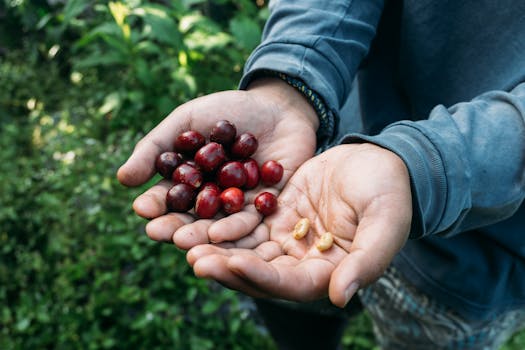 Coffee
Arabica Washed AA
Specialty-grade Arabica from Mt. Elgon. Floral notes, bright citrus acidity.
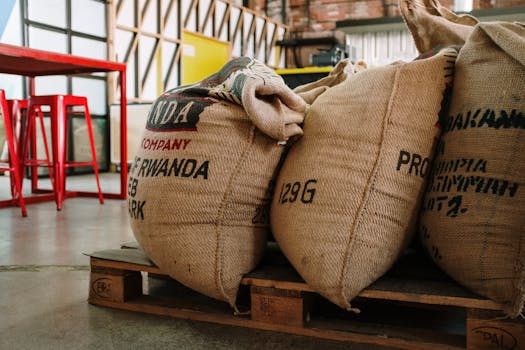 Coffee
Robusta Screen 18
Premium natural-dried Robusta. Bold body, chocolate and earthy notes.
 Vanilla
Gourmet Vanilla Beans
Vanilla planifolia, 15–20 cm. High vanillin content (>1.8%). Moist and pliable.
Our Impact in Numbers
* 800+ tonnes of coffee + 60+ tonnes of vanilla · 45% female farmers · 3 solar drying units · 12,000+ shade trees planted
Ready to Import Uganda's Finest?
Whether you need green coffee beans, cured vanilla pods, or a mixed container – we are ready to partner with you. Ethical sourcing, transparent pricing, reliable delivery.
Request a Quote
Tell us what you need — coffee, vanilla, or both. Our team will get back to you with full specifications and pricing within 24 hours.